

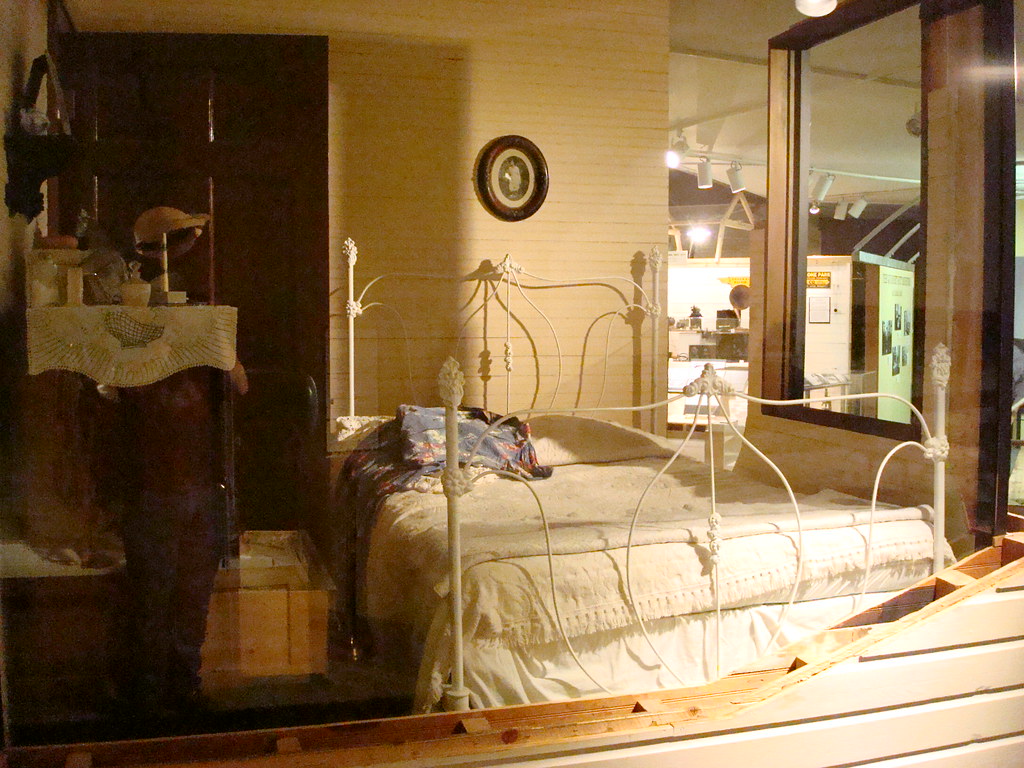

In 1987, 22 percent of every mattress sold in the United States was a waterbed, according to a Specialty Sleep Association retrospective on the industry’s own sales figures. That is not a novelty item moving out of a handful of headshops. That is nearly one in four American mattress buyers deciding to sleep on a vinyl bladder full of tap water, inside an industry the same trade group pegs at roughly two billion dollars just a few years earlier. Within a couple of decades, that 22 percent had collapsed to under 5. The rise and the fall both happened faster than anyone in the bedding business expected.
A College Kid, a Vinyl Bag, and a Patent Office That Said No
The waterbed’s origin story starts with a design student, not a mattress executive. In 1968, 24-year-old Charles Hall was working on a furniture project at San Francisco State University when he landed, after failed experiments with liquid starch and colored gelatin, on plain water sealed inside a vinyl pouch, according to a Deseret News account of the invention. His prototype, the “Pleasure Pit,” was an 8-foot-square cushion with built-in lighting, a stereo hookup, and temperature controls.
Hall filed for a patent, and the paperwork itself is a small piece of dry comedy. The application, filed July 27, 1970 and granted June 15, 1971 as US Patent 3,585,356, is titled, with zero flourish, “Liquid Support for Human Bodies.” It describes a liquid-filled flexible bladder held at body temperature inside a rigid frame, engineering language for a bed you could float in without getting wet.
Two Billion Dollars of Sloshing
Hall didn’t enforce the patent right away. He told the Deseret News he believed the industry was too young to police. That changed in 1985, when a competitor, Intex Plastics, challenged the patent’s validity outright. Hall fought back and won: a jury awarded him $6.6 million in 1991 for infringement tied to roughly $50 million worth of beds, plus additional licensing income from manufacturers who decided paying Hall beat fighting him in court.

By the time waterbeds hit their 1987 peak, the format had spent the better part of a decade climbing out of the counterculture and into ordinary suburban bedrooms. Waterbed retailers sold on the promise of better sleep and even backed it with orthopedic claims. Furniture stores that once treated waterbeds as a fringe product started stocking them as a standard line. The Specialty Sleep Association puts the total footprint by the late 1990s at an estimated 35 million American homes that had owned one at some point, a number the Deseret News piece also cites in describing the format’s staying power even after its sales share started sliding.
Why the Water Ran Out
The practical case against waterbeds was always right there in the name. A filled king-size bladder can weigh several hundred pounds, which meant reinforced flooring, insurance headaches for renters, and a genuine logistical project every time someone moved apartments. You couldn’t just call a couple of friends with a truck; you had to drain it first, and refilling it on the other end took a garden hose and an afternoon.
Add the slow leaks, the vinyl patch kits, and the algaecide tablets you had to dose the water with every few months, and the appeal of a mattress that just sits there and asks nothing of its owner starts to look obvious in hindsight. Waterbeds demanded a level of upkeep no other piece of bedroom furniture did, and by the 1990s, shoppers were increasingly unwilling to give it.
Competition didn’t help Hall’s original vision either. Cheaper, mass-produced imitators flooded the market almost as soon as demand proved real, undercutting the premium positioning his own company, Innerspace Environments, had built. Hall exited the waterbed business himself in 1973, years before the format’s commercial peak, choosing licensing fees over running a factory floor. By the time memory foam and pillow-top innerspring mattresses arrived in the 1990s and 2000s offering pressure relief without the plumbing, waterbeds didn’t have much of an argument left to make.
What’s left of the category today is a rounding error, a niche kept alive by devoted holdouts and a handful of specialty manufacturers. But for one stretch in the late 1980s, water was a serious contender for the future of how America slept, and for a moment it actually won.

Leave a Reply