

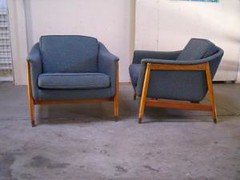
Two rival candidates sat in the exact same piece of Danish furniture on September 26, 1960, and neither of their campaigns had anything to do with picking it. According to MoMA’s own collection notes, “during the first nationally televised United States presidential debate in 1960, Richard Nixon and John F. Kennedy each sat in one of these armchairs” — a modest oak-and-cane design that a furniture maker in Copenhagen had finished eleven years earlier without any idea it would end up staring down a nation.
A Chair Designed to Disappear
Hans Wegner drew the chair in 1949, one entry among roughly 300 seating designs across his career, and it wasn’t built to shout. The frame is oak, the seat is hand-woven cane, and the joinery is the whole point: strong zigzag joints and a gently curved back and arms that ask to be touched more than looked at. Wegner’s own attitude toward the piece was almost dismissive of its later mythology — asked about the design, he reportedly said “this chair could have been created one hundred years ago — nothing new.” He wasn’t chasing a legacy. He was solving a joint.
It didn’t stay quiet for long. Less than a year after its debut, the American magazine Interiors devoted a special issue to the design, kicking off Wegner’s international career before a single American politician had ever sat in it. By the time it reached television screens a decade later, the piece had already earned a nickname simple enough to survive any translation: people just started calling it “the chair,” full stop, no further description required.
One Broadcast, Two Candidates, One Piece of Furniture
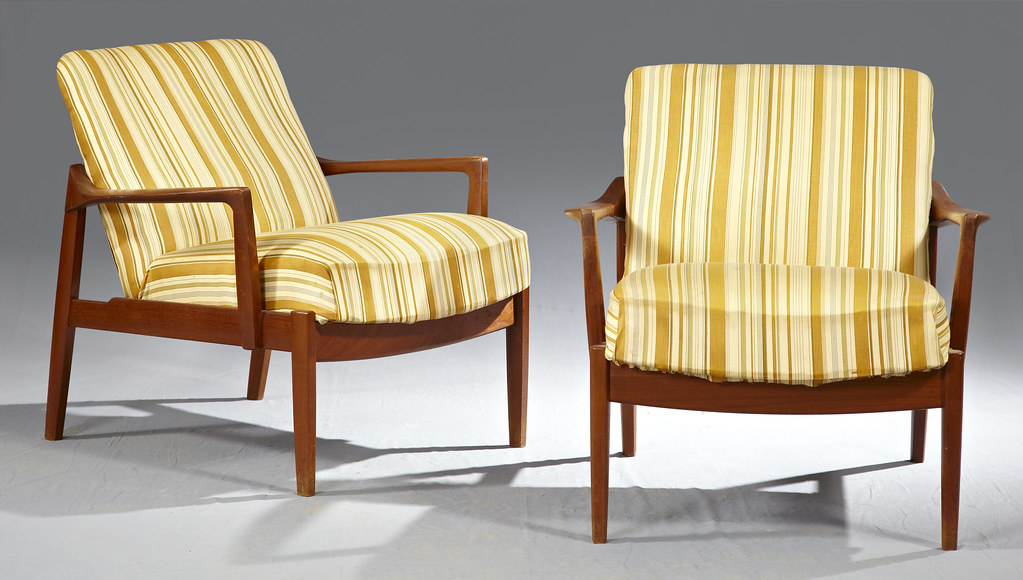
The 1960 debate stage didn’t need to dress up its furniture — it needed something sturdy, comfortable and unobtrusive enough not to upstage two men arguing about the Cold War on live television. Both campaigns ended up in the same Wegner design, with Kennedy reportedly favoring the upholstered PP503 variant for his own back troubles, while Nixon sat in the design’s other version nearby, according to Dwell’s account of the moment. Neither man was making a design statement. The chairs were simply what the studio had on hand — which is exactly why the coincidence became so sticky in design history. Nothing about the choice was curated, and that unstaged quality is precisely what made it feel authentic when Americans noticed.
The nickname that stuck afterward wasn’t subtle: manufacturer PP Møbler still lists the piece today under model numbers PP501 and PP503, marketed in shorthand simply as the “Kennedy chair,” a name that has outlasted the administration it’s attached to by more than six decades.
The craftsmanship behind that unobtrusiveness was anything but simple. Wegner’s philosophy, as MoMA’s own gallery notes put it, held that “a chair is only finished when someone sits in it” — meaning the design was engineered around the body first, ornament second. The armrests were carved from solid wood blocks rather than bent or laminated, a labor-intensive choice that let the curve follow the natural grain instead of fighting it. That single design decision is part of why the chair reads as warm and human on camera instead of stiff and formal, a quality that mattered enormously once it was broadcast into millions of living rooms sitting behind two men in dark suits.
Furniture as Accidental Endorsement
What makes the story worth retelling isn’t just the trivia value of two rivals sharing a chair — it’s what the moment reveals about how design reputations actually get made. Wegner had already built a career on craftsmanship and had already broken into the American market through a magazine feature a decade earlier. The debate didn’t invent his success. It just handed millions of unsuspecting viewers a single, unavoidable image of Danish Modern design at the exact moment television was becoming the dominant way Americans absorbed the world, cementing an aesthetic in the public imagination that trade magazines alone never could have.
A chair built to vanish into the background of a room ended up doing the opposite: it became one of the most photographed objects of an entire design movement, purely by accident, simply by being present when the cameras happened to be rolling.
Danish Modern furniture had already been quietly winning over American architects and department-store buyers throughout the 1950s, but it hadn’t yet crossed into mainstream household recognition the way French fashion or Italian sports cars had. A single unscripted broadcast did more for that crossover than a decade of trade coverage, because it happened to catch two of the most photographed men in the country sitting in chairs nobody had told them to choose. That’s the quiet lesson buried in the story: the objects that end up defining a design era are rarely the ones a marketing department planned. More often they’re the ones that simply happened to be in the room.

Leave a Reply