

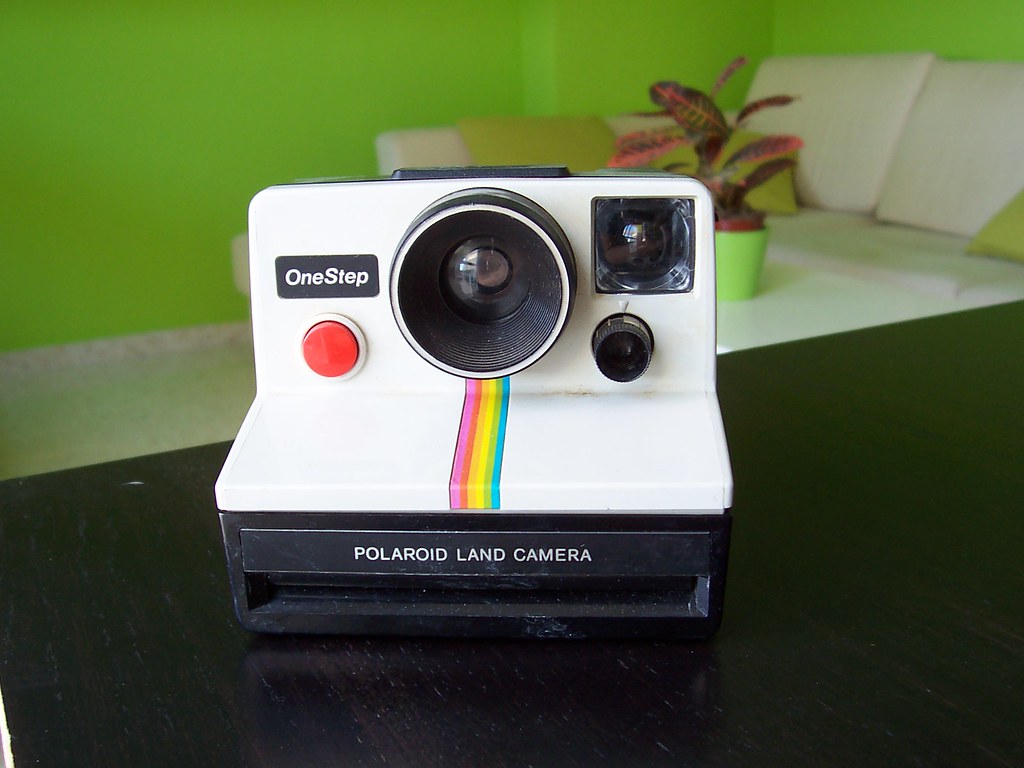
Three thousand Polaroid shareholders packed a warehouse in Needham, Massachusetts on April 25, 1972, and watched company founder Edwin Land pull a folded brick of leather and chrome from his pocket. He unfolded it into a camera, pointed it at the crowd, and pressed the shutter. A print slid out on its own, no darkroom, no waiting for a stranger at the drugstore counter. The camera cost $180 at launch — north of $1,200 today — and it rewired what a camera was allowed to look like.
A Warehouse, Not a Boardroom
Land didn’t unveil the SX-70 in a hotel ballroom. He staged it in a Polaroid warehouse, in front of the roughly 3,000 people who owned a piece of the company, because the SX-70 was as much a bet on Polaroid’s future as it was a product launch. Land had teased shareholders with a prototype a year earlier, pulling it from his pocket almost as a magic trick, according to IEEE Spectrum’s history of the camera’s electronics. By 1972 the trick had become a real, sellable object, and Land wanted the people who’d bankrolled it to see the payoff first.
What they saw folded flat enough to slide into a coat pocket, then popped open into a single-lens reflex camera that focused through the same lens it shot through — a first for an instant camera. Land called the process “absolute one-step photography,” and told the room that the camera created “a new kind of relationship between people in groups… when the members of a group are photographing and being photographed and sharing the photographs.” That was the pitch: not a better camera, but a different way of being together in front of one.
Three Hundred Transistors and a Fantasy
Getting there took nearly three decades. The instant-photography research that became the SX-70 traces back to a secret project Land started in 1944, according to Harvard Business School’s archival history of the SX-70 program, and Land’s own description of how the team worked has become a kind of design-world scripture: “You always start with a fantasy… then with the experiments you work back from the fantasy to reality, hacking away at the components.”
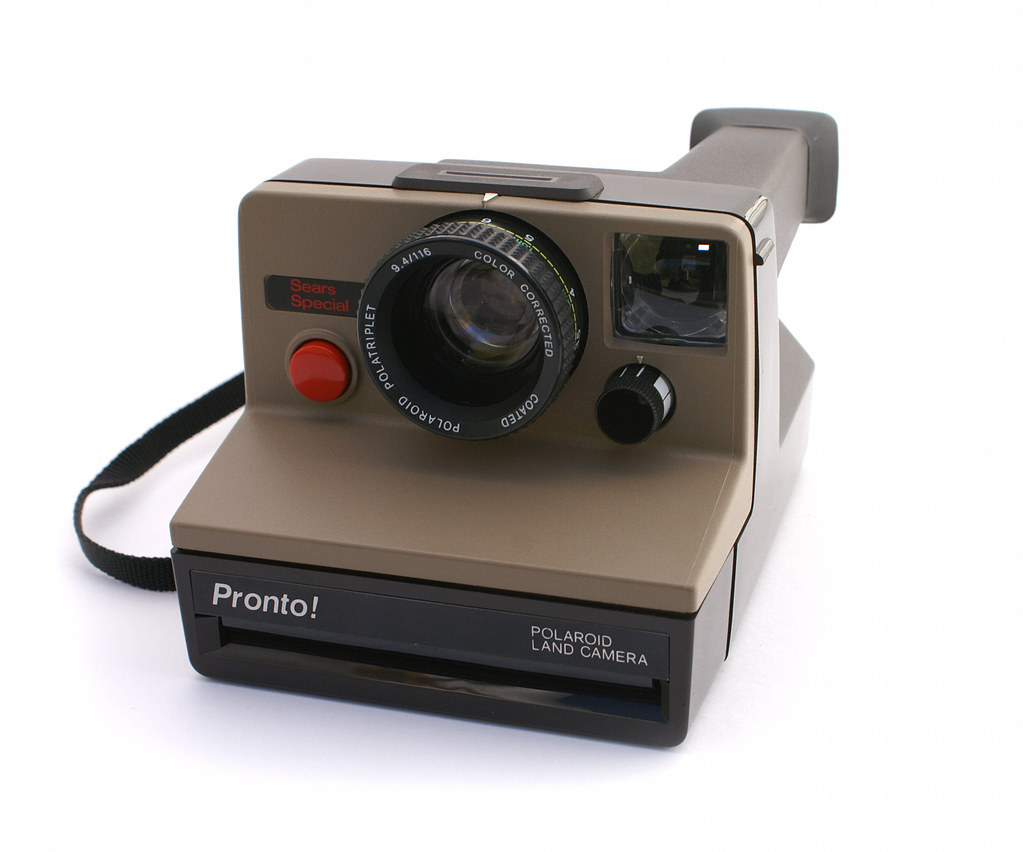
The reality they hacked their way to packed roughly 300 transistors into a camera small enough to fit a jacket pocket — a genuinely dense electronics load for 1972, when pocket calculators were still a novelty and home computers didn’t exist yet. Every one of those transistors was in service of a single goal: press a button, and the camera does the rest. No flash cube to fumble with, no film advance lever, no chemistry to touch or time. It just worked, which is precisely what made it feel like magic instead of machinery — and why engineers at rival chip makers reportedly fought over who got to solve Polaroid’s exposure-control problem, according to Spectrum’s account of the era.
The Slow Fuse and the Boom
The SX-70 didn’t sell fast at first. Polaroid tested it in a limited rollout around Miami in 1972 before pushing it nationwide, per Fast Company’s retrospective, and full national availability didn’t land until fall 1973 — production bottlenecks and that steep price kept the SX-70 out of most hands for over a year. Even TIME’s own retrospective notes the high launch price limited early sales momentum.
But the category Land had bet the company on eventually caught fire. By 1978, Polaroid and Kodak together sold just under 14 million instant camera units in what’s generally regarded as the peak year for the format — a number that would have sounded like science fiction to the shareholders watching Land squeeze a shutter button back in 1972. The SX-70 hadn’t just introduced a new camera; it had helped turn “instant” into a mainstream photographic category, one that would define birthday parties, road trips, and family kitchens for the rest of the decade.
Why a 1972 Camera Still Matters
The SX-70’s real legacy isn’t the folding hinge or even the square white-bordered print, though both outlived the company that made them famous. It’s the idea Land was selling to that warehouse full of shareholders: that a camera’s job is to disappear, so the moment can happen without a machine getting in the way. Every phone camera that fires off a photo with zero setup, zero waiting, and zero technical thought is still cashing the check Land wrote in Needham in 1972 — he just did it with 300 transistors instead of a chip nobody has to think about anymore.

Leave a Reply