

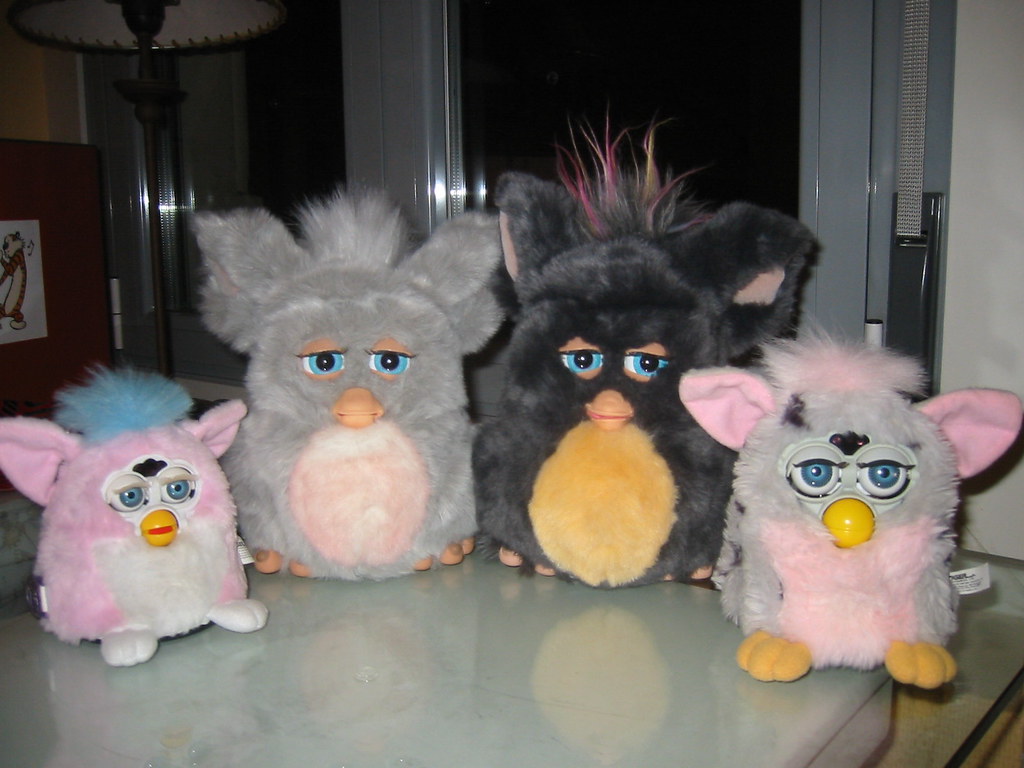
Furby hit store shelves on October 2, 1998, and by Thanksgiving it had already beaten every toy company’s forecast. Tiger Electronics — the Hasbro-owned company behind the Giga Pet craze — sold roughly 1.8 million of the furry, blinking creatures before the year was out, and most of those sales happened in the six frantic weeks before Christmas. Parents who couldn’t find one didn’t just miss out on a gift; they walked into a national shortage that made Furby the defining holiday panic of the decade.

A Toy That Learned to Talk
Furby’s pitch was simple and, for 1998, genuinely new: an animatronic owl-hamster hybrid that spoke only “Furbish” out of the box, then gradually mixed in English words as it “learned” from being played with, eventually working with a combined vocabulary of roughly 200 words between the two languages. That novelty, paired with the fact that it batted its eyes and giggled when tickled, is what turned it from a gadget into an obsession — according to TIME’s own retrospective on the toy’s history, Furby ultimately needed only one phrase, “I love you,” to win over kids and adults alike.
Sold Out Everywhere, All at Once
Tiger Electronics could not manufacture Furbies fast enough for the 1998 holiday season, and the shortage became its own news story. Parents waited in hour-long lines outside toy stores hoping a truck had come in, and when the shelves emptied anyway, the secondary market took over — a collector frenzy that pushed resale and auction prices well above the original sticker, according to FOX affiliate coverage of the Furby craze. The pattern didn’t stop after Christmas 1998; Tiger Electronics sold about 14 million more Furbies in 1999 alone, and worldwide sales passed 40 million units within the toy’s first three years on shelves.

The Toy the NSA Actually Banned
Furby’s biggest post-holiday headline had nothing to do with sales. On January 13, 1999, the National Security Agency issued an internal policy barring employees from bringing Furbies into its facilities, warning that the toys had “built-in recorders that repeat the audio” and could be used to capture classified conversations, according to CBS News’ reporting on the ban at the time. There was just one problem: it wasn’t true. Furby had no microphone and no recording function whatsoever — its “learning” was pre-programmed vocabulary triggered by light and touch sensors, not anything it picked up from the room. Tiger Electronics’ own leadership publicly disputed the NSA’s claim on the record, insisting the toy was physically incapable of recording a single word. The NSA never walked the policy back on camera, but the story stuck, and Furby spent years afterward being cited — inaccurately — as the toy that spied on the government.
Two Inventors, Nine Months, No Recorder
The toy behind all that chaos came from inventors Dave Hampton and Caleb Chung, who spent roughly nine months developing the concept and another nine months refining its design before toy inventor Richard Levy helped pitch it to Tiger Electronics executive Roger Shiffman, who bought the rights and debuted it publicly at the American International Toy Fair earlier in 1998, according to background on the toy’s development. Inside that plastic shell was a simple electric motor working a system of cams and gears to move the eyes, ears, and mouth, run by a microprocessor with less computing power than a pocket calculator. An infrared port between its eyes let one Furby “talk” to another Furby sitting nearby, and its actual microphone could only detect that noise was happening in the room, never record or play back what was said.
Why It Still Matters
Furby’s Christmas 1998 shortage previewed a shopping-season pattern that’s repeated with almost every big toy launch since, from Tickle Me Elmo’s earlier scramble to the PS5 restock panics of the 2020s: manufacturers routinely underestimate a genuinely novel toy, and the resulting scarcity becomes as much a part of the toy’s story as the toy itself. What made Furby different is that its fame outlasted the shortage by decades — a fuzzy, blinking gadget from a Hasbro subsidiary that briefly convinced a national intelligence agency it might be listening in.

Leave a Reply