

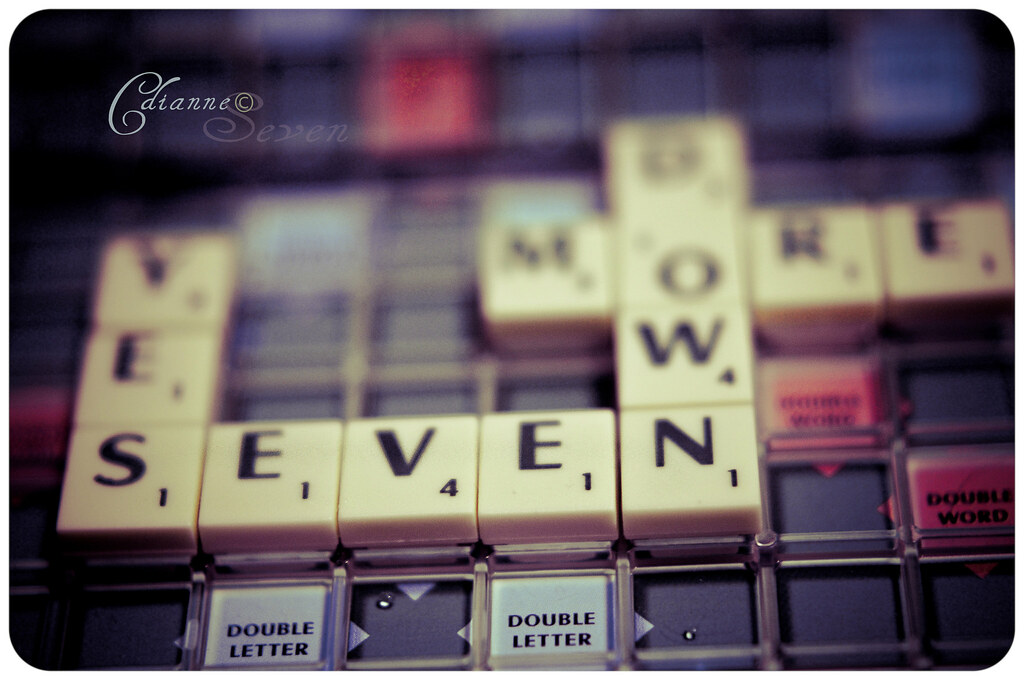
Two Montreal journalists sat down for a game of Scrabble on December 15, 1979, and discovered several tiles were missing from the box. Rather than buy a new set, Chris Haney and Scott Abbott spent the evening sketching out a replacement game instead — one built entirely around trivia questions. Neither man could have guessed that the game scribbled out that night would eventually sell more than 100 million copies in 26 countries and land in the National Toy Hall of Fame.

A Missing Scrabble Tile and a Cigarette Carton
At the time, Haney worked as a photo editor at Montreal’s The Gazette and Abbott was a sports editor at The Canadian Press, according to Wikipedia’s documented history of the game. The London museum record held by the Victoria and Albert Museum puts the origin story plainly: “on 15 December 1979 the two friends got together for a game of Scrabble but found that some of the pieces were missing.” Rather than let the night go to waste, the pair began mapping out their own game concept, reasoning that if a board game could get away with charging full price for a box with a few missing letter tiles, the game business itself must be more profitable than it looked. According to Wikipedia’s documented account, the entire game was sketched out in about 45 minutes on the back of a cigarette carton — the whole concept, rules included, fitting on a scrap of packaging before the night was over.
From a Cigarette Carton to a Company
Turning the idea into a product meant turning it into a business. Haney and Abbott brought in two more partners — Chris’s brother John Haney and corporate lawyer Ed Werner — and formed a company called Horn Abbott to develop and license the game, per Wikipedia’s account. Pursuing Trivia reports that the four raised roughly $40,000 by selling shares in units of $1,000 for five shares apiece, money that went toward licensing fees and trademark registration, which was formally filed on November 10, 1981. That first production run was tiny and, on paper, a money-losing proposition: 1,100 copies, each costing about $75 to manufacture, sold to retailers for just $15 apiece, according to the same account. Werner’s legal background and the Haney brothers’ newsroom instincts shaped the format from the start — the six color-coded question categories built into the original Genus Edition (Geography, Entertainment, History, Art & Literature, Science & Nature, and Sports & Leisure) read like something assembled by people used to organizing facts under deadline, not toy designers building a product from a focus group.

From a Canadian Curiosity to a Billion-Dollar Franchise
The turnaround came once Horn Abbott licensed the game to Selchow & Righter, the American games manufacturer behind Scrabble itself, which pushed Trivial Pursuit into the U.S. market with an aggressive publicity campaign, per Pursuing Trivia’s account. The results were dramatic: Wikipedia’s sourced timeline shows the game selling 100,000 copies in Canada by 1982, then exploding once it crossed the border — 20 million units sold by 1986, grossing roughly $600 million, and a five-year run between 1983 and 1988 that moved 30 million copies for $750 million in retail sales. By 2014, cumulative sales had passed 100 million games across 26 countries and 17 languages, according to the same sourcing, cementing Trivial Pursuit’s place as one of the best-selling board games ever produced. In 2025, the game earned formal recognition of that legacy with induction into the National Toy Hall of Fame, Wikipedia notes.
Still on the Shelf, Decades Later
What’s easy to miss in the sales figures is how ordinary the game’s origin really was — no market research, no corporate mandate, just two working journalists annoyed at an incomplete board game and unwilling to let the evening end early. Horn Abbott’s early gamble on a $75 game sold at a $60 loss per copy would have sunk most businesses before they started; instead it became the model that half the trivia-night industry has been copying ever since, from bar quiz nights to an entire genre of pop-culture card games. Scrabble had already trained a generation to sit around a table and think in categories — Trivial Pursuit just took the box of tiles away and asked better questions.

Leave a Reply