

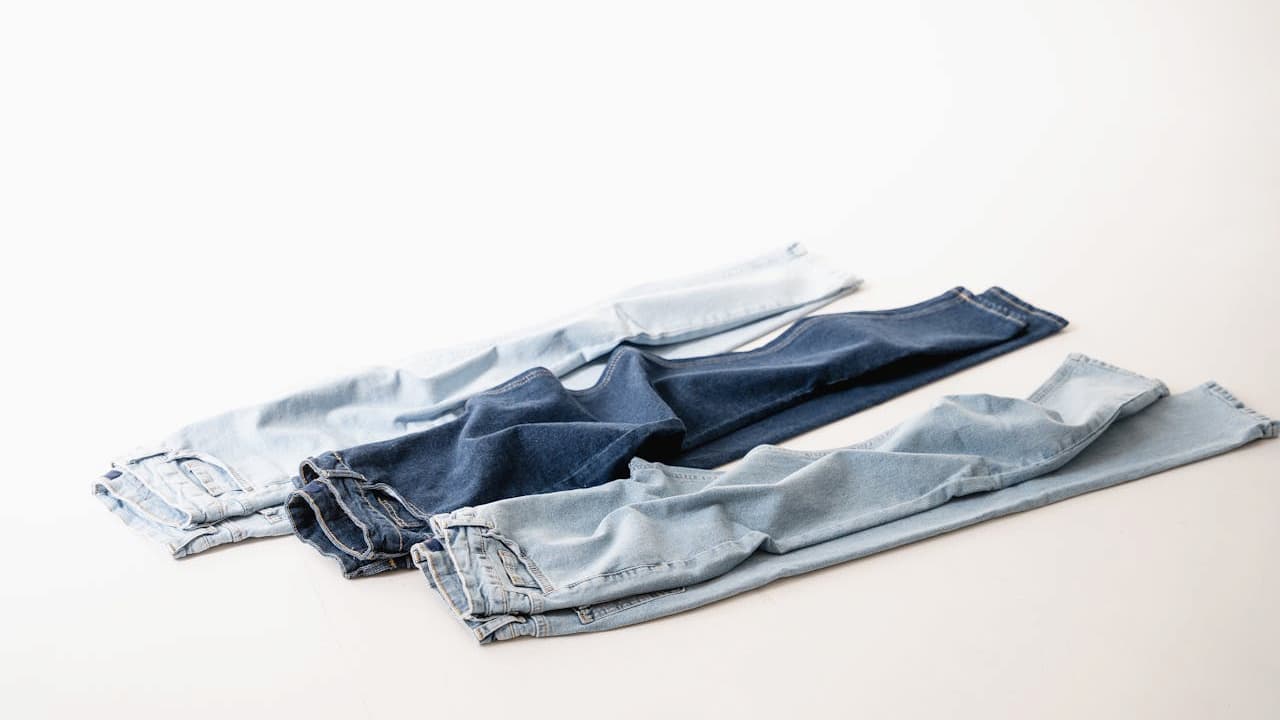
Patent number 139,121 doesn’t read like the birth certificate of a fashion icon, but that’s exactly what it is. On May 20, 1873, the U.S. Patent and Trademark Office granted a Reno tailor named Jacob Davis and a San Francisco dry goods merchant named Levi Strauss the rights to a reinforced pocket, and the modern blue jean was born that day. The garment wasn’t even called a “jean” for another 90 years — Levi’s referred to it as a “waist overall” well into the 1960s, according to Levi Strauss & Co.’s own company history. More than a century and a half later, the 501 is still cut from that same patent, and the company is marking America’s 250th birthday by opening its private archive to prove the design never really changed.
A Tailor’s Fix for a Torn Pocket
Davis wasn’t a designer. He was a customer. He bought bolts of denim from Strauss’s dry goods company to sew work pants for miners and laborers around Reno, and according to the U.S. patent record itself, his fix was mechanical, not stylistic: a metal rivet driven through the fabric at the corners of pants pockets, where the seams kept tearing out under the weight of tools and ore samples. Davis couldn’t afford the patent filing fee on his own, so he wrote to his supplier and proposed splitting the cost and the rights. Strauss said yes. The two men were issued patent No. 139,121 jointly, for what the filing calls “a fastening for pocket-openings” — the copper rivet that would end up on nearly every pair of jeans made for the next century and a half.
Why It’s Called the 501
The riveted “XX” waist overall sold well under Davis and Strauss’s exclusive patent for close to two decades, but 19th-century patents ran 17 years, and when that exclusivity lapsed in 1890, the company needed a way to catalog its now-competing product line. It assigned the reinforced overall lot number 501, according to Levi’s own archival history — the same year the business formally incorporated. The number was picked for warehouse bookkeeping, not branding. It has outlasted nearly every other piece of that era’s paperwork still in daily use anywhere in American retail, and it now sits on the back pocket of a garment sold in more countries than the company could have named in 1890.
A Vault Opens for the Semiquincentennial
This summer, Levi’s tied its own anniversary math to the country’s. To coincide with the U.S. Semiquincentennial — the 250th anniversary of American independence — the company opened a new exhibition of its private archive, announced in a company release titled “An American Original: From Innovation to Icon.” The show runs through December 2, 2026 at The Vault, Levi’s archive facility in San Francisco, with guided public tours added starting July 14. The pieces on display trace the 501’s path out of the mining camp: a trucker jacket that belonged to labor and civil-rights figure Al Smith, the denim NASA astronaut José Hernández wore during a shuttle mission, and a Jeep CJ-5 Renegade from a 1970s dealer promotion, upholstered top to bottom in Levi’s-branded denim.

One Design, A Century and a Half of Wearers
What the exhibit is really arguing is that the 501 never had to be reinvented to stay relevant, only re-worn. The company’s own materials for the show trace the same five-pocket, button-fly cut across an unusually wide cast: cowboys who wore it as functional gear on cattle drives in the 1880s, WWII-era women pilots who wore it on airfields when almost nothing else was made in their size, and later Sally Ride, who wore Levi’s off-duty between shuttle missions. Albert Einstein and Steve Jobs both wore it as a uniform of not having to think about clothes. Bruce Springsteen and Beyoncé both turned it into a stage costume decades apart, each one borrowing the same workwear cut for the same reason: it reads as unpretentious no matter who’s wearing it or when. None of them needed a different pair of jeans than the one a Nevada tailor was riveting together for miners a century and a half earlier.
That’s the actual trick behind a garment surviving 153 years without a redesign. It was never built to be fashionable. It was built to not rip at the pocket, and if you’re wearing a pair of jeans right now, there’s a decent chance the fix on your back pocket is still exactly the one Jacob Davis hammered in.

Leave a Reply