


Vintage Christmas candies are more than sugar; they are the flavors that defined childhood holidays, from ribbon-bright hard sweets to chocolate-covered cherries tucked into stockings. When you revisit these classics, you reconnect with the anticipation that built all December long as candy dishes filled and gift baskets arrived. Use this list to spark your own traditions so every Christmas feels as special as the ones you remember.
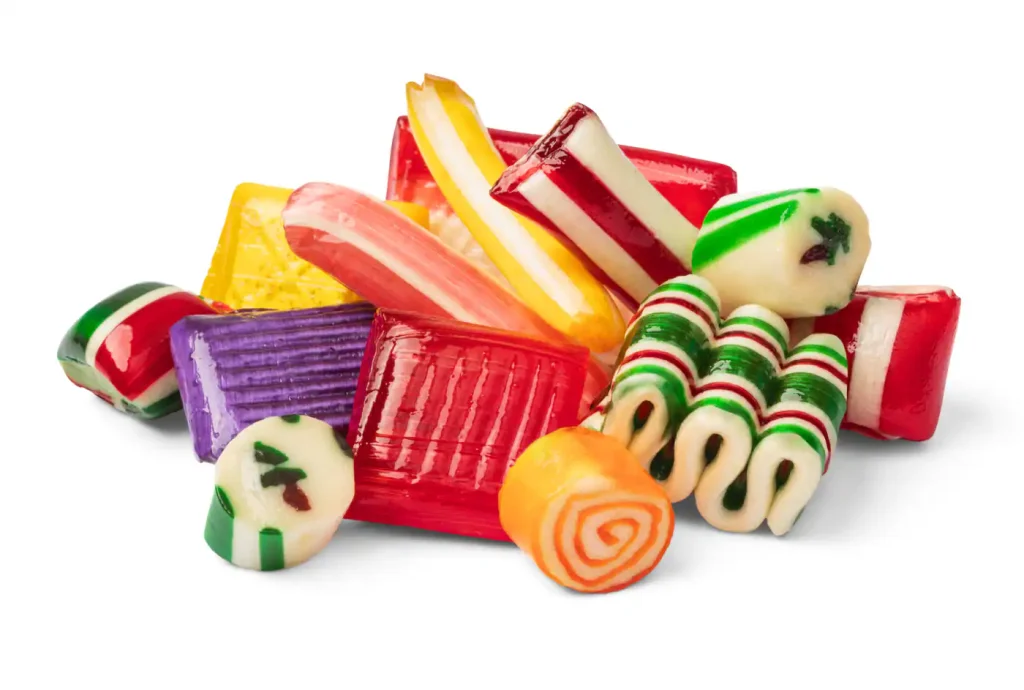
1) Ribbon Candy
Ribbon candy instantly signals a vintage Christmas, with its glossy folds and bright stripes stacked in glass dishes on coffee tables. You probably remember carefully peeling off one fragile piece, trying not to shatter the whole stack before guests arrived. The appeal is as visual as it is sweet, which is why it still fits naturally into modern spreads of homemade Christmas food gifts that double as décor. When you set out ribbon candy today, you are not just offering sugar; you are recreating the look of midcentury holiday entertaining.
For families, that matters because the candy becomes a shorthand for continuity, something grandparents and children instantly recognize. Its delicate shape encourages people to slow down, talk, and choose a piece together instead of grabbing a handful and walking away. That small ritual keeps the focus on shared time rather than just treats, which is exactly what many people say they want from a more nostalgic Christmas season.
2) Peppermint Sticks
Peppermint sticks are the workhorse of vintage Christmas candy, simple enough for everyday nibbling yet festive enough to tuck into stockings or mugs of cocoa. Unlike curved candy canes, the straight sticks often showed up in old-fashioned apothecary jars or were tied in bundles with red ribbon. Their clean mint flavor still pairs effortlessly with hot chocolate, coffee, or even crushed over ice cream, so they adapt well to modern dessert bars and holiday brunches.
From a tradition standpoint, peppermint sticks are a bridge between generations because they are easy for children to enjoy and familiar to older relatives who remember buying them by the pound. Including them in your holiday spread signals that you value straightforward, recognizable flavors over novelty for its own sake. That choice can calm the pressure to chase every new seasonal product and instead center your celebration on a few reliable, memory-rich staples.
3) Chocolate-Covered Cherries
Chocolate-covered cherries, often packed in small cardboard boxes with gold accents, felt like a grown-up indulgence you were allowed to sample at Christmas. The combination of glossy chocolate shell, syrupy center, and bright red cherry made them a staple in gift exchanges and office parties. Their presentation still fits neatly into curated Christmas gift baskets that mix nostalgic sweets with newer treats, giving recipients something instantly recognizable to savor.
Including chocolate-covered cherries in your holiday plans also underscores how Christmas candy can function as a small luxury during a busy season. The candies are rich enough that you rarely eat more than one or two, which encourages mindful enjoyment rather than mindless snacking. For hosts, that makes them a smart choice for dessert tables where you want to offer something special without overwhelming guests with heavy desserts after a big meal.
4) Old-Fashioned Peanut Brittle
Old-fashioned peanut brittle is the crunchy counterpoint to softer Christmas candies, with its amber sheen and roasted peanut aroma filling the kitchen as it cools. Many families still rely on handwritten recipes that involve watching the sugar carefully and working quickly before it hardens. Because it ships and stores well, brittle remains a practical choice when you are assembling tins of homemade candy to mail to relatives or share with neighbors.
From a broader perspective, peanut brittle highlights how vintage Christmas candies often doubled as budget-conscious gifts. A single batch can be broken into multiple packages, each wrapped in wax paper or tucked into small boxes. That approach keeps holiday giving focused on time and effort rather than price tags, which can ease financial pressure while still delivering something that feels thoughtful and substantial.
5) Candy Canes
Candy canes are arguably the most iconic Christmas candy, instantly recognizable hanging from tree branches, tucked into stockings, or stirred into steaming mugs. Their red-and-white stripes and curved shape make them as much decoration as dessert, which is why they appear in everything from wreaths to table centerpieces. Even when flavors expand beyond classic peppermint, the traditional look still anchors them firmly in holiday nostalgia.
For you, candy canes are a flexible tool: they can be crushed into bark, melted into fudge, or simply handed out to carolers and classroom parties. That versatility keeps them relevant even as tastes change, ensuring they remain a constant presence in December. Including them in your celebrations reinforces a shared visual language of Christmas that children instantly understand and adults associate with their own childhood trees.
6) Gumdrops
Gumdrops, with their jewel-like colors and sugar-dusted surfaces, often showed up in vintage Christmas scenes as both candy and craft supply. You might remember pressing them onto toothpicks to decorate gingerbread houses or threading them onto string for edible garlands. Their soft, chewy texture and simple fruit flavors made them a friendly option for younger children who found hard candies too intense.
Today, gumdrops still earn a place in holiday traditions because they invite creativity. Setting out bowls of gumdrops alongside cookies and frosting turns decorating into a hands-on activity that keeps kids engaged while adults talk. That interactive element matters for families trying to limit screen time and create shared experiences, proving that even the simplest vintage candies can support deeper connections.
7) Chocolate-Covered Nuts
Chocolate-covered nuts, whether almonds, peanuts, or cashews, were a staple in cut-glass bowls during vintage Christmas gatherings. They offered a slightly more sophisticated option than pure sugar candies, appealing to adults who wanted something less sweet with their coffee or after-dinner drinks. The mix of creamy chocolate and crunchy nuts still feels timeless, fitting easily into both casual open houses and more formal holiday dinners.
Including chocolate-covered nuts in your spread also reflects a broader trend toward balancing indulgence with a bit of substance. Nuts add protein and texture, which can make guests feel more satisfied with a small handful instead of grazing endlessly on lighter candies. That balance helps hosts manage portions and waste while still honoring the expectation that Christmas tables should feel generous and inviting.
8) Molasses or Blackstrap Taffy
Molasses or blackstrap taffy is one of the most old-fashioned Christmas candies, rooted in the era when families relied on pantry staples rather than specialty ingredients. Its deep, almost smoky sweetness and chewy texture set it apart from modern, brightly flavored taffies. Making it at home often involved pulling the warm candy by hand, a group effort that turned the kitchen into a workshop of sticky fingers and shared laughter.
For contemporary celebrations, this kind of taffy underscores how vintage candies can reconnect you with slower, more intentional holiday rhythms. The process takes time and attention, which naturally limits multitasking and encourages conversation. Serving homemade taffy at Christmas becomes a story in itself, reminding everyone that the experience of making the candy can be just as meaningful as eating it.
9) Orange Slices and Fruit Jellies
Orange slice candies and other fruit jellies were common stocking stuffers, their bright colors and citrusy aromas cutting through the heavier flavors of chocolate and spice. Shaped like wedges or simple squares, they were often sold in bulk and scooped into paper bags at local shops. Their soft, pectin-based texture made them easy to share with grandparents and young children alike, reinforcing their role as a cross-generational favorite.
Including fruit jellies in your holiday mix adds welcome variety to candy trays that might otherwise lean heavily on chocolate and mint. Their tangy sweetness pairs well with tea or coffee, giving guests a lighter option after rich meals. That variety can make your gatherings feel more thoughtful and inclusive, especially for people who prefer brighter flavors over dense desserts.
10) Rock Candy
Rock candy, with its crystalline clusters on strings or sticks, brought a sense of wonder to vintage Christmas celebrations. Children were fascinated by the way sugar seemed to grow like icicles, turning a simple ingredient into something almost magical. Clear or pastel versions often appeared in jars on sideboards, catching the light from nearby trees and candles.
Today, rock candy still works as both treat and science lesson, especially if you make it at home and let kids watch the crystals form over several days. That slow reveal builds anticipation, echoing the countdown feeling that defines December. Serving rock candy at Christmas reinforces the idea that the season is about curiosity and discovery as much as it is about gifts, giving families another way to create memorable traditions.
11) Chocolate-Covered Creams
Chocolate-covered creams, filled with vanilla, maple, or mint centers, were a hallmark of boxed Christmas assortments. You might recall carefully biting into each piece to see what flavor hid inside, or consulting the little paper map that never quite matched reality. Their smooth, fondant-like interiors contrasted with the snap of the chocolate shell, creating a texture that felt especially luxurious during the holidays.
Including these creams in your celebrations highlights how Christmas candy can function as a small ritual of choice and surprise. Guests linger over the box, debating which flavor to try, which naturally sparks conversation. That shared decision-making turns a simple candy into a social moment, reinforcing the idea that the best holiday treats are the ones that bring people together around the coffee table.
12) Classic Hard Candy Mix
A classic hard candy mix, filled with striped pillows, filled centers, and tiny fruit shapes, was a fixture in cut-glass dishes on side tables and mantels. Guests would casually pick out favorites while chatting, and children learned to recognize the patterns that signaled butterscotch, cinnamon, or fruit. These assortments still pair beautifully with handwritten Merry Christmas wishes tucked into small bags or tins, turning a simple handful of candy into a personal gift.
For modern hosts, a hard candy mix is an easy way to evoke a vintage atmosphere without extensive baking or elaborate desserts. The candies keep well, look festive in any container, and accommodate guests who prefer to savor something slowly. By setting out a bowl of these old-fashioned pieces, you signal that your Christmas table values continuity and quiet pleasure as much as spectacle.
More from Vinyl and Velvet:

Leave a Reply