


To nail the feeling of rifling through a 1970s junk drawer, you need the small, everyday objects that quietly defined the decade. These were the things you grabbed without thinking, tossed back when you were done, and forgot about until the next minor household crisis. Here are 10 items you would almost always find, each one a snapshot of how you organized, fixed, and entertained your life in the ’70s.
1) Ballpoint pens and dried-up felt-tip markers
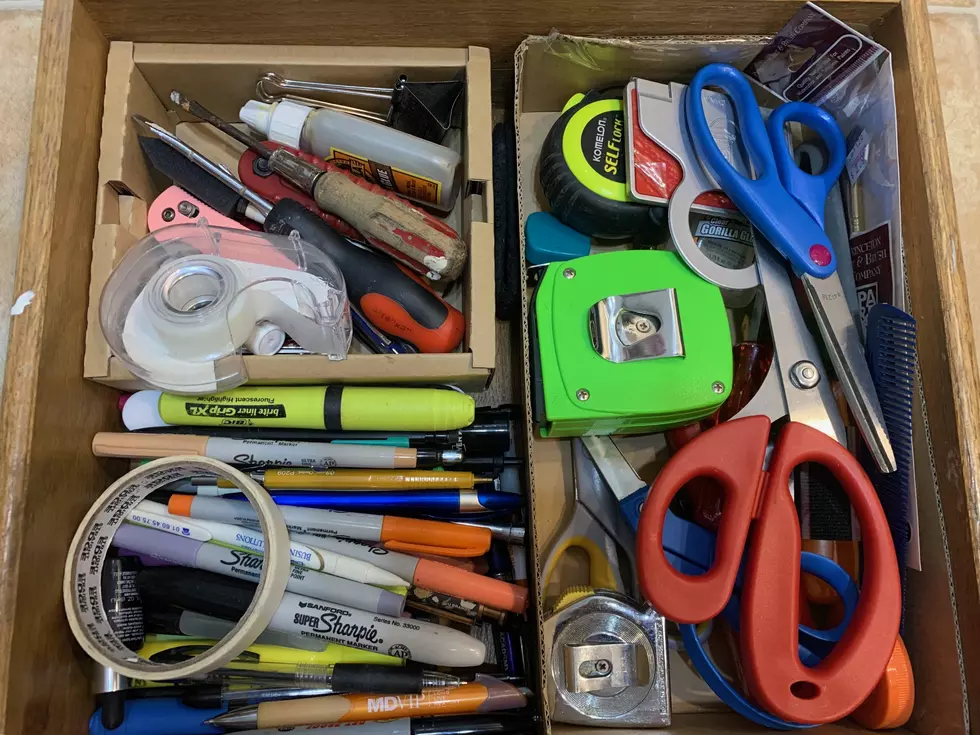
Ballpoint pens and felt-tip markers were the workhorses of a 1970s junk drawer, always nearby for signing checks, labeling school folders, or jotting phone messages. Disposable ballpoints surged after the success of the BIC Cristal, which turned cheap, reliable ink pens into a household staple. By the 1970s, you likely had a mix of promotional pens from banks, insurance agents, and local hardware stores, many of them half-dried but still too “useful” to throw away.
Felt-tip markers, popularized by products like the Pentel Sign Pen, added bright color to school projects and homemade labels. Their porous tips tended to fray and dry out, so they migrated from pencil cups to the junk drawer once they lost their precision. Keeping these pens close at hand reflected how much everyday life relied on handwritten notes, from phone messages to recipe tweaks, long before digital reminders replaced ink on paper.
2) Rotary phone address books and loose phone numbers
Rotary phone address books and loose scraps of paper with phone numbers were essential clutter in a 1970s junk drawer. Landline calling dominated household communication, and rotary sets like the push-button successors still relied on you to remember or record every number. Small spiral-bound address books, often branded by local businesses, stored relatives’ long-distance numbers, school contacts, and emergency services, all written in ballpoint ink that crossed out and rewrote as people moved.
Loose phone numbers, torn from envelopes or scribbled on the backs of receipts, piled up when you did not have time to update the book. The junk drawer became the unofficial archive for these fragments, a safety net in case you needed to call a neighbor, a babysitter, or the auto shop. That paper trail underscored how dependent you were on physical records, since there was no digital contact list to back you up if the address book went missing.
3) AA and 9-volt batteries for flashlights and gadgets
AA and 9-volt batteries were a constant presence in a 1970s junk drawer, powering flashlights, portable radios, and early electronic toys. Standardized dry-cell batteries had become widespread decades earlier, and by the 1970s, alkaline formats like AA and 9-volt were the default choice for home devices. You kept extras on hand because a dead flashlight during a power outage or a silent transistor radio during a big game felt like a minor emergency.
The junk drawer was where fresh batteries mixed with questionable leftovers, often tested by touching the terminals to your tongue or dropping them to see how they bounced. That informal system reflected how central battery-powered gadgets had become, from smoke detectors to handheld games. Stockpiling these cells in one catch-all spot made it easier to keep your household running, even if you were never entirely sure which batteries were still good.
4) Matchbooks from restaurants, motels, and gas stations
Matchbooks from restaurants, motels, and gas stations stacked up quickly in a 1970s junk drawer, doubling as both fire starters and tiny souvenirs. Smoking rates were still high, and free branded matchbooks were a standard courtesy item, often printed with logos, phone numbers, and simple artwork. As disposable lighters spread after products like the BIC lighter, matches remained common giveaways, especially in diners, cocktail lounges, and roadside stops.
Even non-smokers kept matchbooks around to light candles, pilot lights, or backyard grills. Tossed into the junk drawer after a road trip or dinner out, they formed a visual record of where you had been, from local pizza joints to vacation motels. Their presence highlighted how businesses used everyday objects as advertising, and how households relied on small, flammable tools long before electric igniters and scented candle lighters took over.
5) Phillips and flathead screwdrivers for quick fixes
Phillips and flathead screwdrivers were the practical backbone of a 1970s junk drawer, ready for quick fixes on toys, cabinet hinges, or loose outlet covers. The cross-shaped Phillips design, widely adopted in manufacturing after its industrial spread, made it easier to drive screws without slipping, while flathead drivers remained essential for older hardware and simple slotted screws. Keeping at least one of each style in the kitchen or hallway drawer meant you did not have to trek to the garage for every minor repair.
These tools often came from inexpensive household sets or as promotional giveaways, so they were small enough to live among rubber bands and tape. Their constant presence reflected how much home maintenance you handled yourself, from tightening furniture to opening battery compartments. In an era before cordless drills were common, a basic screwdriver was the quickest way to keep the household functioning between bigger weekend projects.
6) Measuring tape and wooden rulers for home projects
A measuring tape and a couple of wooden rulers almost always lived in a 1970s junk drawer, supporting everything from school homework to home improvement. Flexible metal tapes, often 10 or 16 feet long, followed the pattern of earlier pocket designs like the Stanley PowerLock, giving you a compact way to measure furniture, curtains, or lumber. Wooden 12-inch rulers, sometimes printed with local business ads, handled straighter, smaller tasks such as drawing lines or checking margins.
Stashing these tools in the junk drawer made them accessible for the entire household, whether a child was measuring for a science project or an adult was planning where to hang a new picture. Their presence underscored how often you needed quick, precise measurements in daily life, long before smartphone apps and laser tools. The mix of scuffed wood and dented metal told the story of countless small projects tackled on kitchen tables and living room floors.
7) Rubber bands, twist ties, and bread clips for organizing
Rubber bands, twist ties, and plastic bread clips formed the chaotic organizing system of a 1970s junk drawer. Rubber bands, mass-produced since the early twentieth century, were saved from newspaper deliveries and produce bundles, then reused to corral pencils, playing cards, or recipe stacks. Twist ties, which had become common on packaged foods and trash bags, were stripped from loaves and liners, then tossed into the drawer for future use.
Plastic bread clips, introduced by the Kwik Lok style of closure, added another tiny, reusable piece of hardware. You used them to reseal bags, label cords, or improvise quick fixes when something small needed fastening. Collecting these bits reflected a frugal mindset, where nothing with potential utility was thrown away. Over time, the drawer became a kind of micro hardware store, stocked with improvised solutions for everyday clutter and minor repairs.
8) Scotch tape, masking tape, and mystery rolls of adhesive
Scotch tape, masking tape, and half-used rolls of mystery adhesive were indispensable residents of a 1970s junk drawer. Transparent cellulose tape, popularized after 3M’s Scotch brand took off, handled gift wrapping, torn pages, and quick household fixes. Masking tape, with its paper backing and easy removal, was the go-to choice for labeling jars, marking paint lines, or temporarily holding school projects together.
As rolls aged, their edges collected dust and the adhesive yellowed, but they stayed in the drawer because they still “sort of” worked. You might also find electrical tape or double-sided strips, saved from home repairs or craft kits. Keeping these adhesives close at hand showed how often you relied on tape instead of more permanent solutions, patching and improvising rather than replacing items outright, especially when budgets were tight.
9) Spare keys on unmarked key rings
Spare keys on unmarked key rings were a small but crucial part of a 1970s junk drawer, offering backup access to doors, padlocks, and car ignitions. Metal keys had long been standard for home security, and by the 1970s, households often juggled multiple sets for front doors, garages, sheds, and mailboxes. Hardware stores and locksmiths used mechanical duplicators similar to the key-cutting systems that allowed you to make inexpensive copies in minutes.
Once cut, extra keys were tossed into the junk drawer “just in case,” often without labels, turning them into a small mystery pile over time. Their presence highlighted how physical keys controlled nearly every aspect of access, from family cars to workplace lockers. Losing track of which key fit which lock was inconvenient, but keeping them all in one drawer felt safer than scattering them around the house.
10) Loose change, foreign coins, and wheat pennies
Loose change, foreign coins, and the occasional wheat penny inevitably settled in a 1970s junk drawer, emptied from pockets at the end of the day. U.S. coins featuring designs like the Lincoln cent and Jefferson nickel piled up alongside dimes and quarters, some of them older issues that had quietly stayed in circulation. Wheat pennies, minted before the reverse design changed in 1959, were often pulled aside as curiosities or starter pieces for kids’ coin collections.
Foreign coins, picked up on military service, business trips, or family vacations, added a touch of exoticism even if you could not spend them at home. The junk drawer became a casual bank and memory box, holding bus fare, vending machine money, and small relics of travel. That mix of everyday currency and minor treasures captured how money and memory intertwined in the small corners of a 1970s household.
More from Vinyl and Velvet:

Leave a Reply