

In the 1960s, you really could walk into a five-and-dime with a pocketful of coins and walk out with a toy that still turns heads today. Many of those cheap playthings now trade for serious money, proving that pocket change in the ’60s sometimes bought future collectibles. Here are 10 toys that started as everyday allowance purchases and have since become prized pieces of pop culture history.
1) The Slinky
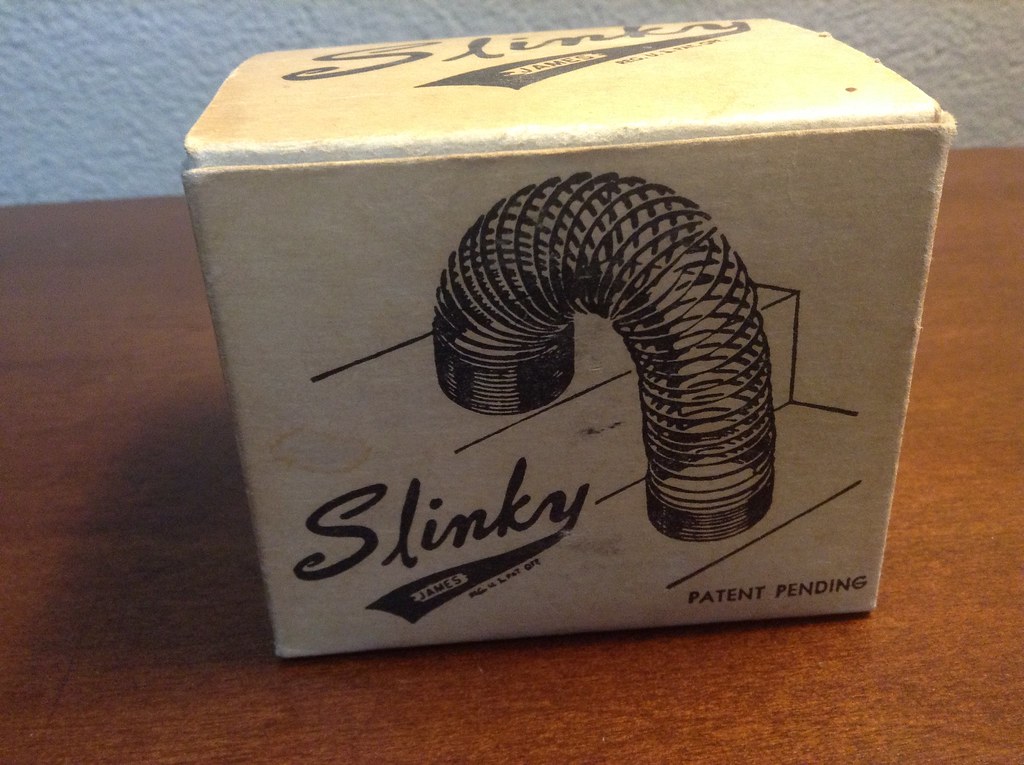
The Slinky was the classic metal spring you could buy for pocket change, retailing for just 49 cents in the early 1960s. That tiny outlay now looks astonishing when you see that mint-condition originals can sell for $100 to $200, according to detailed pricing on collectible toys from the 1960s. The toy’s appeal was its simplicity, letting you send a coil of steel “walking” down stairs or flipping between your hands for hours.
Because it was so inexpensive, parents often bought Slinkys as impulse treats, and kids could realistically save allowance coins to get one on their own. That affordability helped the Slinky become a fixture in American living rooms and classrooms, embedding it deeply in nostalgia. The modern collector market shows how mass-produced, low-cost toys can gain value when they survive decades of hard play in pristine condition.
2) Etch A Sketch
Etch A Sketch arrived in 1960 with a launch price of $2.95, a figure that sat comfortably within the realm of saved-up pocket change for many children. Reporting on valuable vintage ’60s toys notes that those early red-framed versions now fetch about $50 to $150 if they remain in good shape. The toy’s magic came from a simple internal mechanism that used aluminum powder and magnetic controls to let you “draw” with two white knobs.
That combination of affordability and mechanical wonder made Etch A Sketch a staple birthday or holiday gift, but also a realistic self-funded purchase for determined kids. Its durability meant it often survived multiple siblings, which is why intact early models are still around to be collected. The rising values highlight how analog creativity tools from the 1960s continue to resonate in a digital age, especially when they preserve their iconic red casing and crisp screen.
3) Chatty Cathy Doll
Chatty Cathy turned talking dolls into a must-have item, yet basic versions in 1960 could be bought for under $5 with enough pocket money. More elaborate editions were priced at $9.99, but the core idea was accessible: pull a string and hear phrases like “I love you” in a childlike voice. The Mattel Toy Company, led by Elliott and Ruth Handler, created Chatty Cathy as part of a broader push to redefine American play.
Those inexpensive dolls are now serious collectibles, with unopened 1960s examples reaching $200 or more according to pricing guides on classic toys. The transformation from everyday companion to high-value artifact shows how emotional attachment drives the market, especially for toys that “spoke” to children in a literal sense. For collectors, the link to The Mattel Toy Company and its founders Elliott and Ruth Handler adds another layer of historical significance to what once felt like an ordinary purchase.
4) Hula Hoop
The Hula Hoop craze of the late 1950s and early 1960s was powered by a price almost any kid could reach, with Wham-O’s plastic hoops selling for just 98 cents. That made them quintessential pocket change toys, often bought at corner stores or variety shops. Contemporary recollections of the Hula hoop in 1958 place it alongside other era icons like the Easy Bake Oven, underscoring how deeply it penetrated childhood culture.
While the standard plastic versions were everywhere, rare original bamboo prototypes have become the real prizes, reportedly selling for around $1,000 today. That contrast between a sub-dollar fad toy and four-figure collector pieces illustrates how scarcity and early production runs shape value. For you, the Hula Hoop represents how a simple ring of plastic, bought with coins from a pocket, could spark a nationwide waist-twisting phenomenon that still echoes in playgrounds.
5) Slip ‘N Slide
Slip ‘N Slide brought water-park thrills to suburban lawns when it debuted in 1961 for just $2.49, a price that put it within reach of a few weeks’ allowance. That affordability helped the backyard slide become a summer staple, as kids unrolled the yellow sheet, attached a hose, and sprinted headfirst into the spray. Nostalgic discussions of Slip ‘n Slide memories often start with “Dang, we loved that toy,” capturing both the fun and the occasional bumps and bruises.
Complete 1960s Slip ‘N Slide sets now sell for about $75 to $150, especially when the original box and accessories survive. That jump in value reflects how few of these heavily used outdoor toys remained intact after years of rough play. For families, the toy’s low initial cost democratized access to water play, while today’s collectors see it as a vivid symbol of mid-century backyard life and the risks parents once accepted in the name of fun.
6) Spirograph
Spirograph turned geometry into art when Kenner introduced the drawing kit in 1965 at a retail price of $4.95, a level that diligent savers could reach with pocket change. The set used interlocking geared wheels and colored pens to create hypnotic circular designs that felt almost mathematical in their precision. Pricing analyses of 1960s creative toys report that boxed originals from that decade now command about $100 to $300.
Because it rewarded patience and experimentation, Spirograph appealed to both kids and parents who wanted something more constructive than another plastic figurine. The relatively modest cost meant it often appeared under Christmas trees or as a special treat after a report card. Its modern collector value underscores a broader trend, where analog STEM-adjacent toys from the 1960s gain prestige as early gateways into design thinking and visual problem-solving.
7) Lite-Brite
Lite-Brite arrived in 1967 as a pocket-friendly way to make glowing art, with a retail price of $3.99 that many families could justify as an allowance-funded splurge. The toy used a backlit grid covered by black paper, and Kids poked small, translucent plastic pegs through to form pictures that lit up in color. Historical overviews of Lite-Brite’s simple design emphasize how its straightforward concept made it instantly understandable.
Mint 1960s versions with original patterns now fetch about $50 to $200, especially when the box art and peg assortments are complete, as detailed in modern collectible guides. That appreciation in value reflects both nostalgia and the enduring charm of light-based play in a pre-screen era. For you, Lite-Brite shows how a modestly priced toy could turn a dark bedroom into a miniature art studio, powered entirely by imagination and a single bulb.
8) Twister
Twister twisted party games into something physical when Milton Bradley released it in 1966 for $2.98, a cost that made it an easy group purchase or shared family buy. The game’s core mechanic was simple, with a spinner calling out color and limb combinations that left players tangled on a plastic mat. Collectors tracking first-edition Twister boxes now value those early sets at about $100 to $500.
That leap from under three dollars to hundreds reflects how Twister captured a cultural moment, becoming a staple at parties and youth gatherings. Its affordability meant nearly any household could add it to the game closet, which helped cement its status as a shared generational memory. For today’s buyers, pristine early mats and spinners are not just games, they are artifacts of changing social norms and living-room entertainment.
9) Rock ‘Em Sock ‘Em Robots
Rock ‘Em Sock ‘Em Robots brought mechanical boxing to the tabletop in 1966, with Hasbro pricing the battling robots at $5.95. Kids controlled the blue and red fighters with levers, aiming to land an uppercut that made the opponent’s head pop up in a satisfying “KO” signal. Guides to 1960s robot toys note that pristine pairs from that era now reach about $200 to $400.
Although $5.95 was a bit higher than some pocket change toys, it was still attainable for children who saved over several weeks or pooled money with siblings. The toy’s durability and kinetic action made it a centerpiece of many playrooms, which is why surviving sets often show heavy wear. Collectors now prize examples with crisp graphics and fully functioning mechanisms, seeing them as early examples of interactive, competitive play that prefigured video game battles.
10) Hot Wheels
Hot Wheels roared onto the scene in 1968 with die-cast cars priced at just 59 cents each, making them the ultimate pocket change purchase. Kids could walk into a store and choose a single car without needing parental approval, then gradually build fleets over time. Early “Spectraflame” redline models from that launch period now sell for about $50 to more than $1,000, depending on rarity and condition.
The low-friction wheels and bright paint jobs encouraged racing on plastic track sets, turning kitchen floors and driveways into improvised speedways. That mix of affordability and performance helped Hot Wheels dominate the die-cast market and embed itself in car culture. For collectors, the jump from 59 cents to four-figure prices shows how mass-market toys can become blue-chip assets when early examples survive with their original shine and red-striped tires.

Leave a Reply