

If you grew up with a black-and-white set humming in the corner, 1960s television did more than entertain you, it framed how you see politics, war, race, gender, and even outer space. These nine TV moments did not just fill primetime, they helped shape an entire generation’s worldview and still influence how you process breaking news and cultural change today.
1) The Live TV Coverage of JFK’s Assassination
The Live TV Coverage of JFK’s Assassination forced you to confront national tragedy in real time. As reports of President John F. Kennedy’s shooting in Dallas cut into regular programming, you watched anchors struggle for words while images of a stunned crowd and a speeding motorcade flickered across the screen. Accounts of 1960s events describe how this moment united viewers in grief and shock, while also planting early doubts about official explanations.
For Boomers, that wall-to-wall coverage set the template for crisis television. You learned to gather around the set when history turned dark, to expect continuous updates, and to question what you were told. The assassination coverage helped create a shared national memory, but it also opened a long era of skepticism toward authority that still shapes how you watch breaking news.
2) The Apollo 11 Moon Landing Broadcast
The Apollo 11 Moon Landing Broadcast flipped that sense of televised tragedy into televised triumph. When Neil Armstrong took his first steps on The Moon, you saw grainy images that still felt miraculous, proof that rockets and equations could carry humans to another world. In Britain, the mission inspired the first all-night broadcast, with television running continuously for 11 hours on 19–20 July 1969, as documented in coverage of the Apollo 11 broadcast.
Watching those ghostly footprints appear live, you absorbed a powerful message about American technological supremacy and the promise of science. The landing made space exploration feel personal, as if your own living room was connected directly to the lunar surface. That experience still shapes how you respond to big scientific milestones, from Mars rovers to private rockets, expecting them to be shared instantly on screen.
3) Civil Rights Marches and Speeches on Air
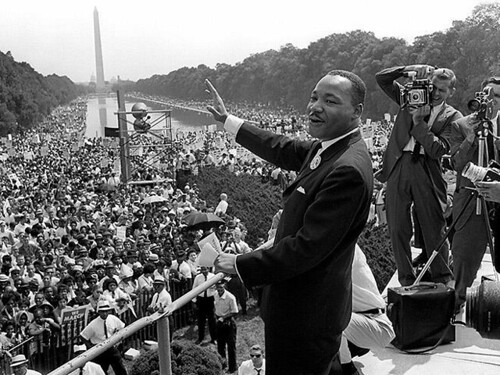
Civil Rights Marches and Speeches on Air turned your TV into a front-row seat for a moral reckoning. When Martin Luther King Jr. delivered his “I Have a Dream” speech, cameras carried his words into homes that might never have visited Washington, D.C. Reporting on how 1960s TV changed society notes that televised coverage of civil rights marches and mass protests made segregation and brutality impossible to ignore.
Seeing peaceful demonstrators attacked by police, or hearing King’s soaring rhetoric, you were pushed to take a side. Television compressed distance, making Southern streets feel as close as your own neighborhood. That exposure helped galvanize support for civil rights legislation and taught you that cameras could be tools for justice, a lesson that echoes today whenever protest footage goes viral.
4) Vietnam War Footage from the Tet Offensive
Vietnam War Footage from the Tet Offensive brought the horror of combat into your living room night after night. Graphic images of firefights, wounded soldiers, and devastated villages contradicted official claims of steady progress. Coverage of defining 1968 events highlights how CBS anchor Walter Cronkite reported directly from Vietnam and the Tet Offensive, helping many viewers reassess what they had been told about the war.
For Boomers, those broadcasts eroded trust in government and military leaders. You saw that the “light at the end of the tunnel” did not match the pictures on screen, and that disconnect fueled anti-war sentiment and broader anti-establishment views. The Tet footage taught you to weigh official statements against independent reporting, a habit that still shapes how you evaluate conflicts today.
5) The Beatles’ Ed Sullivan Show Appearance
The Beatles’ Ed Sullivan Show Appearance showed how quickly television could flip youth culture. When the band performed in 1964, their suits, haircuts, and sound exploded into American living rooms, turning curiosity into Beatlemania overnight. Analyses of 1960s TV point to this Ed Sullivan performance as a turning point in how music reached mass audiences.
If you were a teenager, that broadcast felt like permission to rebel, to scream, to choose your own idols instead of inheriting your parents’ crooners. It also previewed the modern music industry, where televised appearances and later videos could launch global careers instantly. The Beatles on TV taught you that pop culture revolutions would arrive through a glowing screen.
6) The Assassination of Martin Luther King Jr. on Live TV
The Assassination of Martin Luther King Jr. on Live TV confronted you with another shattering loss, this time at the heart of the civil rights struggle. As bulletins interrupted programming to announce King’s death, you watched anchors relay the news while images of anguished crowds and burning neighborhoods appeared soon after. Accounts of 1968 unrest describe how cities erupted in riots as the news spread almost instantly.
For young viewers, King’s assassination deepened both racial tension and determination to push for justice. You saw how quickly grief could turn to anger, and how television could both document and amplify that reaction. The coverage reinforced a sense that progress was fragile and that leaders who challenged the status quo were vulnerable, shaping your expectations about political risk and social change.
7) Star Trek’s Groundbreaking Diversity Episodes
Star Trek’s Groundbreaking Diversity Episodes slipped social commentary into prime-time science fiction. Seeing Lieutenant Uhura on the bridge and watching Captain Kirk share an interracial kiss with her in 1968 challenged the racial boundaries you saw elsewhere on TV. Analyses of 1960s programming emphasize how Star Trek’s diversity used futuristic storytelling to normalize integrated crews and cross-cultural respect.
Those episodes suggested that in a more advanced future, racism and sexism would be relics, not rules. If you were a young viewer, the show quietly expanded your sense of who could be a hero, scientist, or leader. Star Trek helped seed progressive ideals in mainstream entertainment, influencing how you later evaluated representation in movies, newsrooms, and workplaces.
8) Women’s Liberation Protests Broadcast Nationwide
Women’s Liberation Protests Broadcast Nationwide brought a new kind of activism into your home. Coverage of the 1968 Miss America protests, with women challenging beauty standards and objectification, made “women’s lib” impossible to dismiss as a fringe idea. Reports on women’s liberation highlights also point to figures like Gloria Steinem, whose media presence helped articulate demands for equal pay, reproductive rights, and workplace respect.
Watching those demonstrations, you saw that gender roles were not fixed, they were contested. Television turned slogans on picket signs into dinner-table debates about marriage, careers, and autonomy. For many Boomers, that exposure either sparked a feminist awakening or forced a reckoning with long-held assumptions, shaping how you later approached parenting, partnerships, and office politics.
9) The Rise of Color TV with Rowan & Martin’s Laugh-In
The Rise of Color TV with Rowan & Martin’s Laugh-In showed how technology and satire could collide to capture a restless generation. When the sketch show debuted in 1968, its rapid-fire jokes, political zingers, and psychedelic palette felt tailor-made for color sets. Analyses of 1960s television credit Rowan & Martin’s Laugh-In with modernizing comedy and helping drive adoption of color programming.
If you were a young viewer, the show’s jump cuts and catchphrases matched the pace of the era’s upheavals. Color TV made satire more vivid, turning politicians and cultural taboos into punchlines you could see and share. That blend of technology and irreverence trained you to expect your screens not just to report the news, but to mock it, a sensibility that still shapes late-night comedy and online humor.

Leave a Reply