

The early 2000s produced inventions that felt less like practical tools and more like props from a slightly awkward sci-fi movie. You watched familiar analog staples vanish almost overnight, replaced by gadgets that stored thousands of songs, balanced on two wheels, or vacuumed your floors unprompted. Looking back, these 10 strange creations did not just seem odd at the time, they quietly rewired how you consume media, move through cities, and even define everyday life online.
1) The DVD’s Emergence as a Quirky Video Format
The DVD arrived in 2000 as a shiny optical disc that promised to replace your chunky VHS tapes with digital precision. According to reporting on inventions that reshaped the 2000s, the DVD format was introduced specifically for storing and playing video, turning movie nights into a menu-driven experience of chapters, extras, and commentaries. For viewers used to rewinding cassettes, the ability to jump instantly to a favorite scene felt oddly clinical, almost like operating a computer rather than a living room appliance.
That strangeness mattered because it trained you to expect on-demand control over media, a mindset that later made streaming feel natural. The DVD’s crisp picture quality and compact size also accelerated the decline of analog formats that had dominated since the 1980s, when earlier breakthroughs like the compact disc and camcorder, documented in 1980s tech rundowns, first pushed home entertainment toward digital. In hindsight, the DVD’s menus and bonus features were a transitional oddity that previewed the interactive interfaces you now take for granted.
2) Apple’s iPod and Its Portable Music Oddity
Apple’s iPod, released in 2001, looked bizarrely minimal next to the portable CD players and cassette Walkmans you were used to carrying. Reports on early 2000s breakthroughs note that the original iPod music player squeezed thousands of songs into a pocket-sized device, controlled by a click wheel that felt more like a futuristic dial than a set of buttons. For many users, the idea of abandoning physical albums for a spinning list of digital tracks felt disorienting, even if the convenience was undeniable.
That odd interface ended up reshaping how you think about ownership and access to music, paving the way for streaming services that treat songs as endlessly scrollable data. The iPod also signaled a shift in design priorities, where sleek minimalism and software-driven features mattered as much as sound quality. By turning your entire library into a searchable database, it quietly nudged you away from the album era and into a playlist culture that still defines how artists reach listeners today.
3) The Segway’s Wobbly Personal Transport
The Segway personal transporter, unveiled in 2001, might be the purest symbol of early 2000s tech optimism colliding with reality. Described in lists of the weirdest inventions of the era, the Segway balanced on two wheels and used gyroscopes to keep you upright, promising a futuristic alternative to walking. Yet its upright stance, helmeted riders, and awkward turning radius made it look more like a novelty than a revolution, especially in crowded city streets.
Despite its odd image, the Segway hinted at how personal mobility devices could reshape urban transport and tourism. You now see its DNA in rentable e-scooters, hoverboards, and delivery robots that share the same self-balancing logic. The Segway’s struggle to fit into existing sidewalks and regulations also exposed a key tension of the 2000s, when ambitious hardware often arrived before cities, laws, or social norms were ready to accommodate it.
4) Roomba’s Autonomous Cleaning Robot
The Roomba, introduced by iRobot in 2002, turned vacuuming into something you watched rather than did. Reporting on early 2000s breakthroughs highlights the disc-shaped Roomba as a robotic cleaner that navigated rooms on its own, bumping into furniture, spinning in place, and occasionally getting stuck under couches. For early adopters, the sight of a low-slung robot quietly patrolling the floor felt equal parts helpful and uncanny.
That odd behavior was a preview of the domestic robotics wave that would follow, from smart speakers to connected thermostats. By trusting a machine to roam your home unsupervised, you were effectively beta-testing the idea of ambient automation. The Roomba’s quirks, including its sometimes chaotic pathfinding, also underscored how messy real-world environments can be for robots, a challenge that continues to shape everything from warehouse automation to self-driving cars.
5) Bluetooth’s Invisible Wireless Connections
Bluetooth, finalized as a wireless standard in 2000, asked you to believe that devices could talk through thin air over just a few meters. Coverage of early 2000s tech milestones notes that Bluetooth connections were designed for short-range data exchange, letting phones, headsets, and laptops pair without cables. In practice, the invisible nature of the link, combined with cryptic pairing codes and blinking LEDs, made the whole process feel strangely mystical and often frustrating.
Despite those quirks, Bluetooth quietly rewired your expectations about how gadgets should interact, setting the stage for wireless earbuds, car infotainment systems, and wearable trackers. The standard’s low power consumption and modest range also encouraged designers to think in terms of personal-area networks rather than sprawling infrastructure. That shift in mindset helped normalize the idea that your body, not just your home or office, could be surrounded by a mesh of constantly communicating devices.
6) Xbox’s Bulky Gaming Revolution
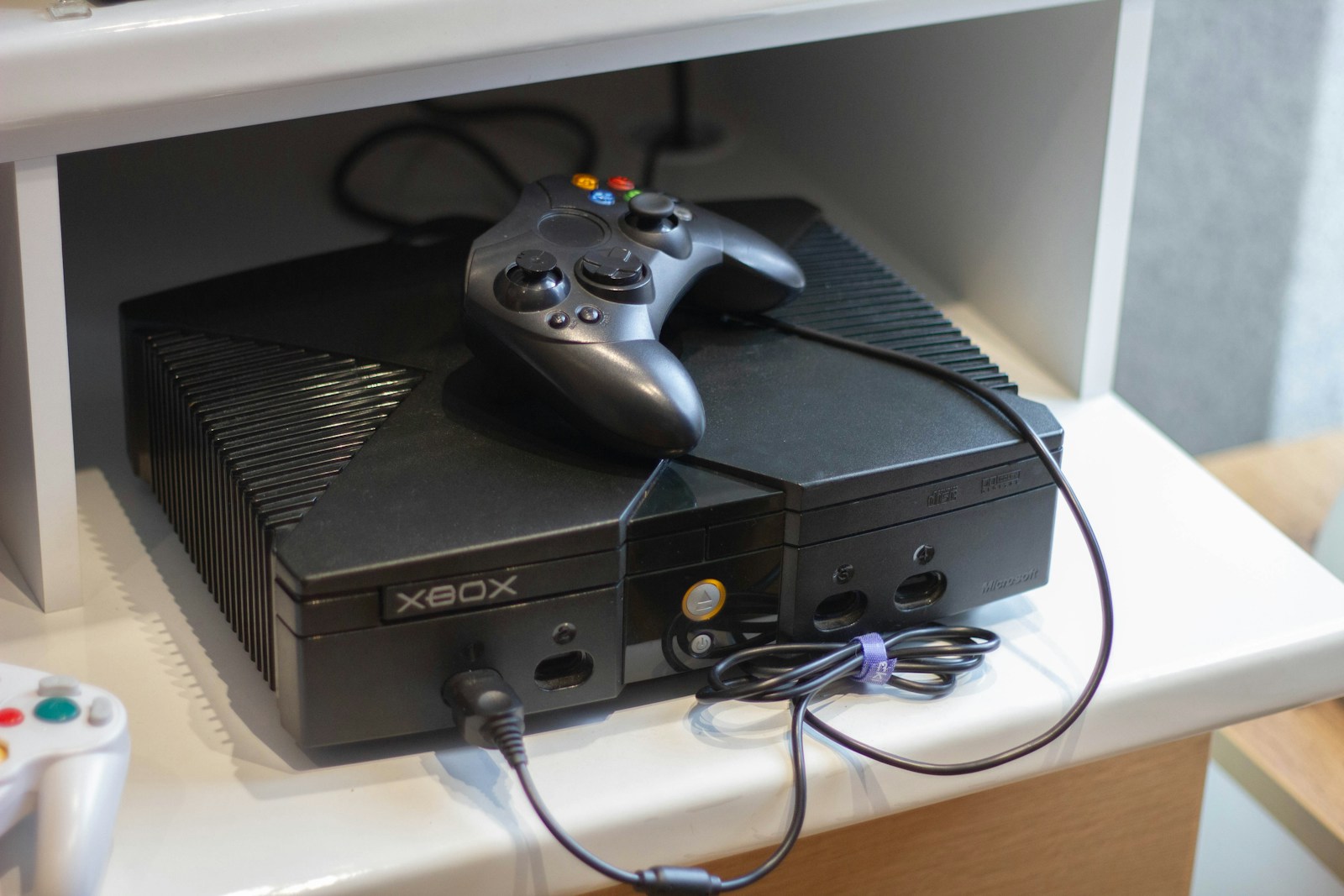
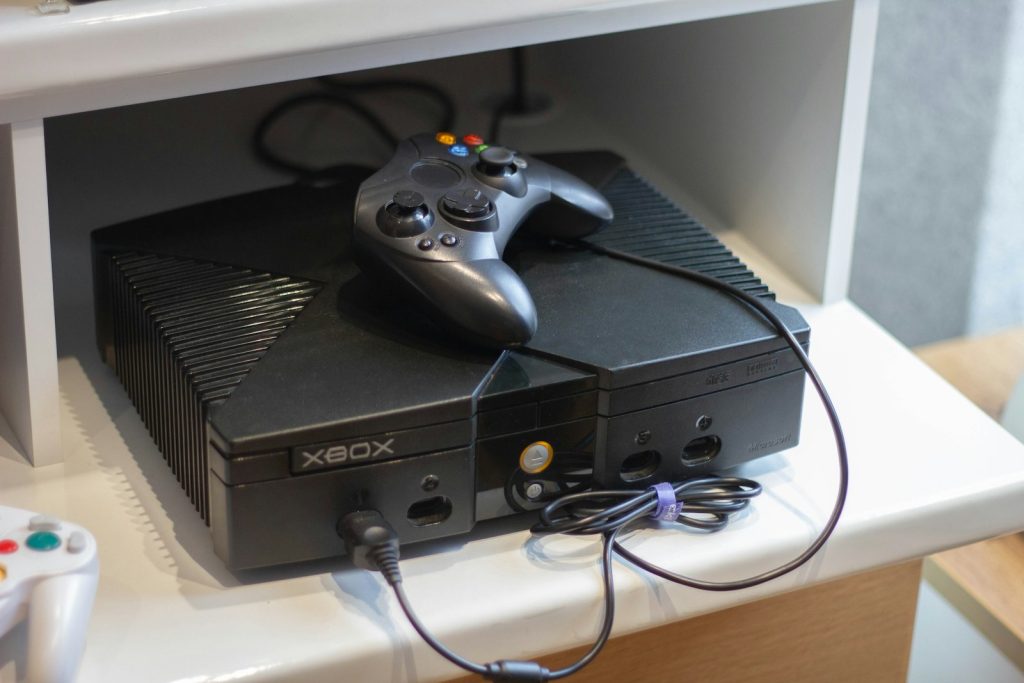
When Microsoft launched the Xbox in 2001, the console’s sheer bulk and aggressive styling made it look more like a piece of industrial equipment than a living room toy. Accounts of early 2000s inventions emphasize that the original Xbox console brought powerful hardware and built-in networking to home gaming, turning your TV into a portal for online multiplayer. For players used to cartridges and memory cards, logging into remote servers from a couch felt oddly like borrowing a PC gamer’s world.
That strangeness had lasting consequences, because it normalized subscription services, downloadable content, and persistent online identities tied to gamer tags. The Xbox also pushed console design toward media-center ambitions, foreshadowing the streaming apps and cross-platform ecosystems you now expect. Its hulking presence and oversized controller may have looked out of place, but they marked a turning point where gaming stopped being a niche hobby and became a central pillar of home entertainment.
7) Wikipedia’s Crowdsourced Knowledge Base
Wikipedia, founded in 2001, took the familiar concept of an encyclopedia and handed the editing keys to virtually anyone with an internet connection. Reports on early 2000s breakthroughs describe crowdsourced projects as inherently risky, and Wikipedia’s open-edit model looked especially strange to readers raised on carefully vetted reference books. The idea that anonymous contributors could update entries in real time challenged long-held assumptions about authority and expertise.
Yet that oddity became its strength, allowing Wikipedia to expand rapidly across languages and topics, from pop culture to specialized science. For you as a reader, it shifted research habits toward quick, hyperlink-driven overviews rather than slow trips through printed volumes. The platform’s talk pages, edit histories, and citation requirements also turned the act of knowledge creation into a visible, collaborative process, influencing how later communities, from open-source software to citizen science, organize themselves online.
8) Skype’s Ethereal Internet Calling
Skype, created in 2003, made the idea of talking through your computer feel both magical and precarious. Coverage of early 2000s communication tools notes that Skype internet calling used voice-over-IP technology to let you place free or low-cost calls over broadband connections, often with grainy webcams and echoing audio. For users accustomed to landlines with fixed rates and clear signals, the occasional lag and robotic distortion made conversations feel like they were bouncing off satellites, even when they were not.
Despite those glitches, Skype redefined expectations for long-distance communication, especially for families, freelancers, and global teams. You began to see geography as less of a barrier, normalizing remote interviews, virtual meetings, and cross-border collaboration. The platform’s blend of chat, voice, and video also previewed the unified communication tools that now underpin remote work, showing how a slightly awkward interface could still transform daily routines.
9) Facebook’s Exclusive Social Network
Facebook, launched in 2004 for Harvard students, started as a digital yearbook that felt oddly insular and playful. Reports on early 2000s social platforms describe the initial Facebook network as a closed system where you poked classmates, wrote on walls, and curated a profile that mirrored campus life. For users, the idea of broadcasting relationship statuses and party photos to a semi-public audience was both thrilling and unsettling.
As the platform expanded beyond universities, that strange mix of intimacy and exposure scaled into a global phenomenon that reshaped how you present identity online. Features like the News Feed and the “Like” button turned casual updates into a constant stream of social data, influencing everything from political campaigns to mental health. What began as an exclusive club quickly became a default infrastructure for social interaction, blurring the line between offline relationships and their digital shadows.
10) YouTube’s Viral Video Upload Phenomenon
YouTube, founded in 2005, invited you to upload and share videos at a time when most people still associated broadcasting with television networks. Accounts of early 2000s media shifts highlight YouTube’s user uploads as a radical break from top-down programming, opening the door to cat clips, amateur stunts, and niche tutorials that would never have cleared traditional gatekeepers. The platform’s simple interface, with its play button and comment threads, masked a profound change in who could reach an audience.
That democratization of video turned everyday users into creators, influencers, and even full-time entrepreneurs, while forcing legacy media to adapt to on-demand viewing and algorithmic recommendations. For you as a viewer, it normalized the idea that any moment, from a product review to a protest, could be captured and shared globally within minutes. The early chaos of viral hits and low-resolution uploads laid the groundwork for today’s creator economy, where the line between hobbyist and professional is often just a subscriber count.

Leave a Reply