

Baby boomers often look back at childhood and wish they had held on to the everyday items that quietly defined their youth. Many of those objects now carry emotional weight, financial value, and a sense of connection they want younger generations to experience. From toys to photos, these are the childhood items boomers most wish they had saved.
1) Baseball Cards
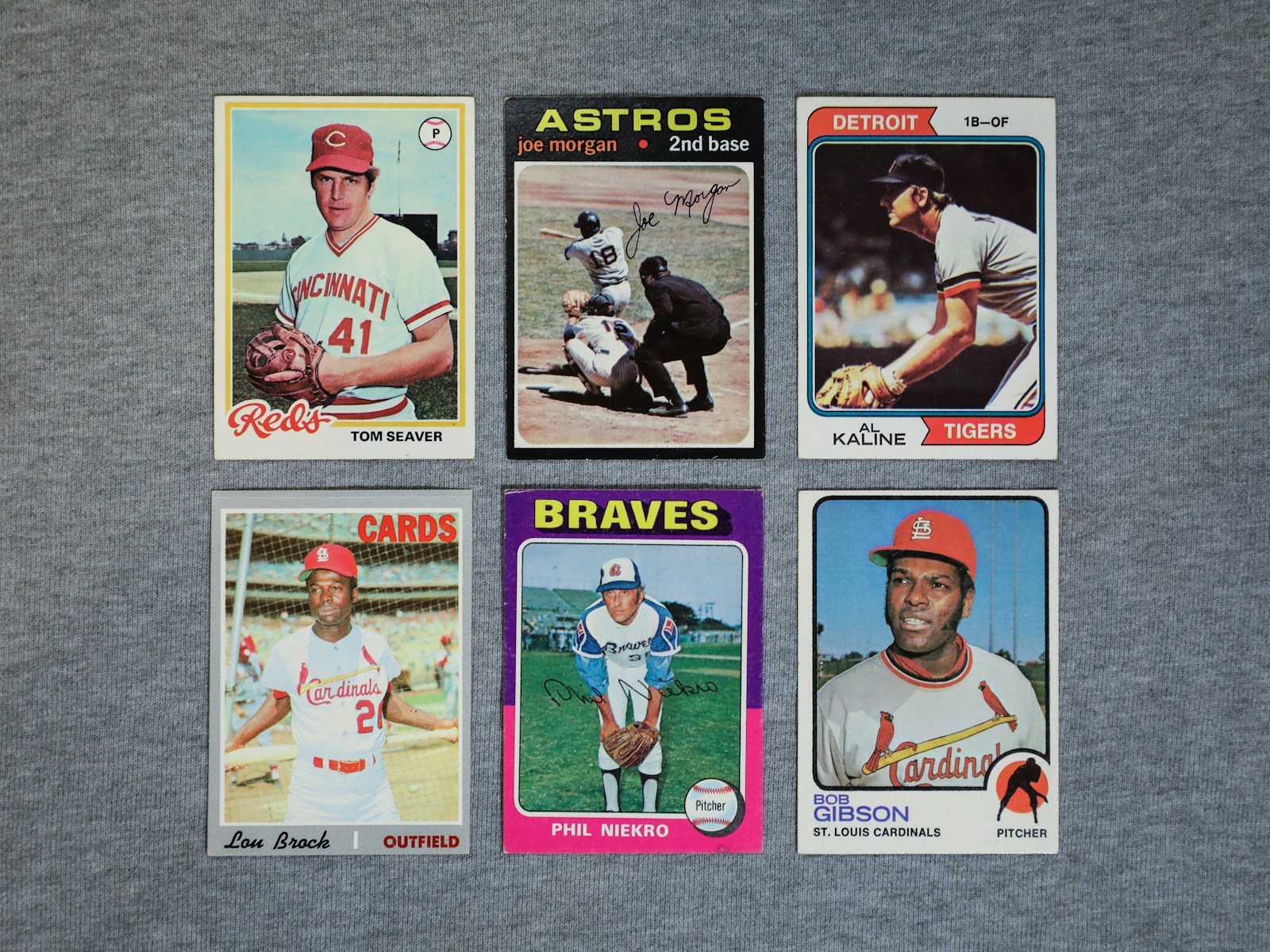
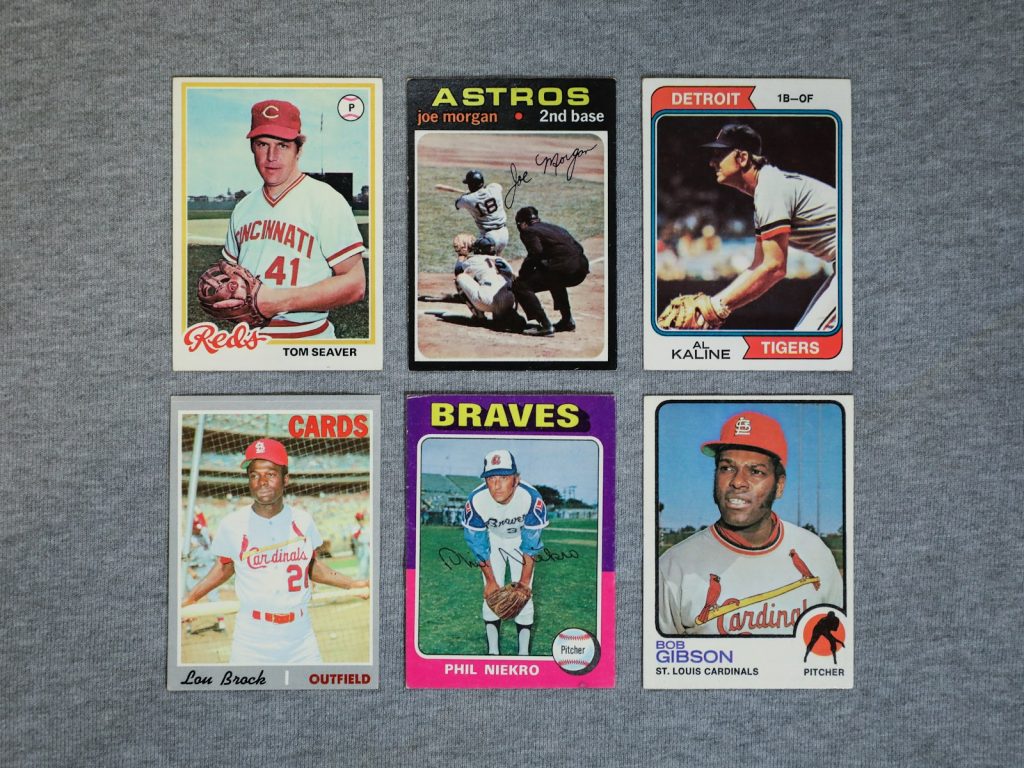
Baseball cards top the list of childhood items boomers wish they had never tossed. Older fans remember when stacks of cardboard heroes meant afternoons of trading on the sidewalk, a ritual many say younger people should be able to experience firsthand. In conversations where boomers and Gen Xers share things they grew up with, baseball cards often stand in for a slower, more tangible kind of fandom built around local parks and neighborhood games.
The regret is not just sentimental. Modern coverage of sports trading cards notes that items like the 1952 Topps Mickey Mantle are now treated as the “holy grail” of boomer collectibles, worth far more than the pocket change kids once paid. When you combine that financial upside with the cultural memory of Baseball and Film imagery that also shows up in nostalgic childhood memes, it is easy to see why so many wish they had kept every last card.
2) Comic Books
Comic books are another category where boomers often feel a sharp pang of regret. Many remember towering piles of issues that were read, traded, and eventually recycled without a second thought. In the same spirit that collectors now wish they had kept more childhood items, boomers talk about comics as portals into magical worlds that shaped their imaginations long before streaming or smartphones.
Those thin, colorful pages also carried early lessons about heroes, justice, and friendship that boomers wish younger readers could discover in the same tactile way. When you held a comic, you were not just consuming a story, you were curating a personal universe that grew with every new issue. Today, as first editions and rare runs climb in value, the loss feels doubly painful, blending missed financial opportunity with the disappearance of a shared cultural language.
3) Vinyl Records
Vinyl records sit at the intersection of memory, sound, and design, which is why so many boomers wish they had kept their childhood collections. Recent reflections on vinyl and other household items boomers refuse to throw out highlight how records capture the “sound of the past” in a way digital playlists cannot. For boomers, flipping through albums was a social ritual, from studying cover art to carefully dropping the needle for friends.
That analog experience is exactly what older generations hope younger listeners could feel for themselves. Owning a record meant committing to an artist, not just sampling a single track. The pops and crackles of worn grooves became part of the memory of a specific summer, relationship, or road trip. When those collections were sold or donated, many boomers lost not only potential collector value but also a physical soundtrack to their coming-of-age years.
4) Classic Board Games
Classic board games like Monopoly, Clue, and Life are another category of childhood items boomers wish they had saved. These games were more than cardboard and plastic; they were the centerpiece of family nights that stretched for hours around the kitchen table. In the same way that TOYS only Baby Boomers will remember are now resurfacing in nostalgic videos, old board games have become symbols of a time when entertainment required everyone to sit in the same room and negotiate rules face to face.
For you, revisiting those games can mean reconnecting with a style of interaction that is increasingly rare. There were no notifications, only dice rolls and arguments over house rules. Boomers often say they wish they had kept their original sets, complete with worn money and missing tokens, so grandchildren could see how simple objects once created deep family bonds and taught patience, strategy, and sportsmanship.
5) Etch A Sketch Toys
Etch A Sketch toys represent a kind of low-tech creativity that many boomers feel is missing from childhood today. Turning the two knobs to draw wobbly lines required patience and practice, and every picture felt like a small achievement. Coverage of vintage playthings, from Etch A Sketch to Barbie, has highlighted how people like Chris Goodman in Playa del Rey hold on to favorite childhood toys as more than just plastic, treating them as physical links to earlier versions of themselves.
Boomers who let their Etch A Sketch devices go often say they wish they had kept at least one to show younger kids how much fun “drawing with mistakes” could be. Unlike digital art apps with endless undos, one shake erased everything, teaching you to accept imperfection and start again. That simple red frame now stands for a broader regret about losing hands-on, imagination-first toys that did not need batteries or Wi-Fi to feel magical.
6) Childhood Photo Albums
Childhood photo albums are among the most painful losses boomers describe. Reporting on 10 heartbreaking regrets 98% of boomers admit to once they hit their 70s underscores how deeply older adults mourn not safeguarding images of early family life. Those albums captured birthdays, first days of School, and quiet everyday scenes that no one thought to back up or scan.
When albums are lost to moves, downsizing, or water damage, the impact goes far beyond missing pictures. Without them, it becomes harder for you to trace family stories, remember faces, or share visual history with children and grandchildren. For boomers, the regret is often sharpened by the contrast with today’s endless digital photos, which can make the absence of those few precious prints from the past feel even more stark.
7) Old School Yearbooks
Old school yearbooks are another item that many boomers wish they had protected. The same reporting that notes people discarding yearbooks and school papers shows how easy it is to underestimate their future value. For boomers, those thick volumes held not only class photos but also handwritten notes, inside jokes, and signatures from friends who later scattered across the country.
By the time someone reaches their 70s, the names in those pages often belong to people who have moved away or passed on, which is why 98% of boomers reporting late-life regrets include sorrow over losing such records. If you still have your own yearbooks, they can serve as a social archive, reminding you of who you were and how your community once looked, long before social media timelines existed.
8) Handwritten Letters
Handwritten letters occupy a special place in boomer nostalgia, and their absence is often felt acutely in later life. When older adults describe the regrets that 98% of boomers share in their 70s, lost personal correspondence frequently surfaces as a quiet heartbreak. Letters from parents, grandparents, first loves, and childhood friends once lived in shoeboxes that seemed disposable at the time.
For you, saving even a few of these notes can preserve voices and handwriting that no text message can replace. Each envelope carries context, from the stamp to the date, that situates a moment in history. Boomers often say they wish they had kept more of these tangible connections, both for their own comfort and to give younger relatives a way to feel the emotional texture of relationships that shaped the family long before email.
9) Vintage Trading Cards
Beyond baseball, vintage trading cards of all kinds are a major source of regret for boomers who tossed them. Among the 10 heartbreaking regrets cited by 98% of boomers, losing collections that once fueled trades and friendships stands out. These cards covered everything from comic heroes to TV shows, and they were often the currency of childhood deals on playgrounds and front porches.
Modern coverage of items from your childhood that could be worth money reinforces how dramatically the market has changed, with certain Sports Trading Cards now commanding eye-popping prices. For you, the lesson is twofold: sentimental objects can become serious assets, and the social value of collecting with friends can be just as important as any future appraisal. Boomers frequently wish they had preserved both the cards and the stories that came with them.
10) Polaroid Cameras
Polaroid cameras close out the list because they combine technology, memory, and play in a way few other childhood items can match. Nostalgic posts tagged #kidsthesedayswillneverknow often feature Polaroid Film alongside Baseball Cards, underscoring how central instant photos were to boomer-era fun. You snapped a picture, shook the print, and watched an image slowly appear, turning every gathering into a small event.
As 98% of boomers reflecting on late-life regrets explain, letting go of those cameras meant losing a tool that documented spontaneous childhood moments in a uniquely physical way. Unlike today’s endless digital shots, each Polaroid cost money and felt precious, so people chose their moments carefully. If you still have an old instant camera, keeping it in working order can offer younger relatives a rare, hands-on glimpse into how their parents and grandparents once captured everyday joy.
More from Vinyl and Velvet:

Leave a Reply