

You probably toss spare change into a jar without a second thought, but some of those coins can quietly be worth four, five, or even six figures. Recent reporting has highlighted three rare dimes in circulation that could bring up to $132,000 at auction, along with a Peace dollar and several cents and quarters that routinely sell for far more than face value. If you know what to look for, your next handful of coins could turn into serious cash.
1) 1916-D Mercury Dime
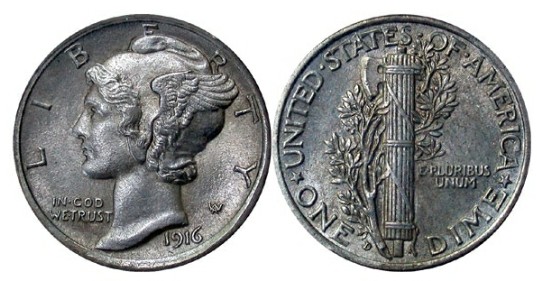
The 1916-D Mercury dime is one of the classic key dates in American coinage and is singled out among the three rare dimes that could be worth up to $132,000. The value comes from its low mintage and the tiny “D” mintmark on the reverse, which is easy to miss if you are not looking closely. In high grades with full details, this coin has brought six-figure prices, far beyond its ten-cent face value.
For you as a casual change-checker, the stakes are straightforward: a coin that looks like any other Mercury dime could cover a year of rent or a major debt payment. Because worn examples still command strong premiums, it is worth examining every Mercury dime you encounter. Even if your find is not a top-graded showpiece, the combination of scarcity and collector demand means it will be far too valuable to spend at the grocery store.
2) 1942/1 Mercury Dime
The 1942/1 Mercury dime is a dramatic overdate variety, created when a 1941 die was punched again with the 1942 date, leaving traces of both years visible. It appears alongside the other rare dimes worth money that collectors aggressively pursue. On genuine pieces, you can see the underlying “1” beneath the “2” in the date, a small detail that transforms a common silver dime into a coin worth hundreds or thousands of dollars depending on condition.
Because this variety can circulate undetected, it fits perfectly into the idea that life-changing coins might be hiding in your pocket. If you search bank rolls or inherited jars of old silver, checking the date area with a magnifier can pay off. The broader trend, reflected in guides that list which dimes are worth money, is that minting quirks and overdates are no longer obscure specialist topics, they are mainstream targets for anyone hoping to turn spare change into a serious windfall.
3) 1975 No-S Roosevelt Dime
The 1975 No-S Roosevelt dime is one of the most dramatic modern mint errors, a proof coin that left the San Francisco Mint without its expected “S” mintmark. A detailed account of this variety notes that a Proof Roosevelt Dime of this type has sold for well over $500,000 at auction, illustrating how a tiny missing letter can create enormous value. Only a handful are known, which is why collectors scrutinize every 1975 proof set they encounter.
Although these coins were not intended for circulation, proof coins do sometimes get broken out of sets and spent, especially when non-collectors inherit them. That possibility keeps the 1975 No-S on every serious change-hunter’s radar. The lesson for you is that mintmarks matter, and that checking for small anomalies can be the difference between spending ten cents and discovering a coin that rivals high-end real estate in value.
4) 1928 Peace Dollar
The 1928 Peace dollar, specifically the Philadelphia issue, is the standout key date in the Peace silver dollar series and is highlighted in guidance urging you to check your spare change for this coin because it could be worth up to $132,000 in top condition. A complementary analysis of Peace dollars explains that the rarest and most valuable circulated example is the 1928-P from Philadelphia, with a mintage of exactly 360,000 coins, a tiny output for a silver dollar.
For anyone sorting old silver, that low mintage and strong collector demand translate into substantial premiums even for moderately worn pieces. Prices for high-grade survivors can climb into five or six figures, especially when certified by major grading services. If you come across a Peace dollar in a relative’s coin box, checking the date and mintmark before cashing it in for bullion value could prevent you from accidentally giving away a small fortune.
5) 1943 Bronze Lincoln Cent
The 1943 Bronze Lincoln cent is one of the most famous wrong-planchet errors, a coin that should have been struck on zinc-coated steel but instead was minted on leftover bronze blanks. Coverage of rare coins worth money that you can find in pocket change consistently places this cent near the top of the list. Authentic examples have sold for tens or even hundreds of thousands of dollars, because only a small number escaped the mint.
From your perspective, the key is to recognize that a 1943 cent that sticks to a magnet is ordinary steel, while one that does not could be a bronze rarity. Stories of these coins surfacing in inherited collections or old coffee cans show how long they can hide in plain sight. As more people learn to test their 1943 cents, the odds of new discoveries may shrink, which only increases the urgency for you to check any you already own.
6) 1955 Doubled Die Obverse Lincoln Cent
The 1955 Doubled Die Obverse Lincoln cent is a textbook example of a dramatic die error that became a household name. Guides to Your coins could make you a lot of cash often point to this cent because the doubling on the date and inscriptions is visible to the naked eye. Instead of needing specialized equipment, you can simply look at “LIBERTY” and the date to see the doubled letters that signal a valuable coin.
Collectors prize this variety so highly that even heavily circulated pieces bring strong prices, while uncirculated examples can reach into the tens of thousands. For you, that means every 1955 cent deserves a quick inspection before it goes into a coin jar or counting machine. The broader implication is that obvious visual oddities, especially on older cents, are rarely trivial, they are often the very traits that transform pocket change into a serious collectible asset.
7) 1969-S Doubled Die Obverse Lincoln Cent
The 1969-S Doubled Die Obverse Lincoln cent is another major variety that can lurk in ordinary rolls of pennies. It appears in lists of Three USA Coins Hiding in Your Change, where the focus is on Rare Mint Errors and Shocking Discoveries You Won Believe In. On genuine pieces, the date and “IN GOD WE TRUST” show strong, spread-out doubling, a feature that has led to auction prices in the high five-figure range for top examples.
Because this coin was once mistaken for a counterfeit by some observers, authentication by a reputable grading service is essential if you think you have found one. For everyday searchers, the takeaway is that modern-era cents can be just as lucrative as older wheat pennies when they feature dramatic die varieties. Checking 1960s and 1970s rolls with a loupe is no longer just a specialist’s hobby, it is a practical way to hunt for life-changing errors.
8) 2004-D Extra High Leaf Wisconsin Quarter
The 2004-D Extra High Leaf Wisconsin quarter is a state quarter variety that proves even recent pocket change can carry a premium. In discussions of 5 rare dimes and other small-denomination coins hiding in your pocket, this quarter stands out because the extra leaf on the ear of corn was likely caused by an unusual die event. The added “high leaf” detail, not present on standard coins, has turned an everyday quarter into a sought-after collectible.
For you, the practical step is to examine the reverse of any 2004-D Wisconsin quarter, looking closely at the corn stalk. While values vary with condition and market demand, the premium over face value can be significant, especially for well-preserved examples. The broader trend is that state and America the Beautiful quarters are now fertile ground for variety hunters, so dismissing them as too new to matter could mean missing out on easy money.
9) Pre-1982 Copper Lincoln Cent
Pre-1982 Lincoln cents, struck primarily from copper rather than zinc, have taken on new relevance as policymakers move to end penny production. Reporting that asks what to do with the penny now that it is no longer made emphasizes that these older coins contain more metal value than their face amount when copper prices rise. That has led some savers to separate copper cents from newer zinc issues in anticipation of potential future gains.
At the same time, guidance such as Before you dump them into a coin machine, and reminders that Are your old pennies worth a lot, stress that Some pennies could be worth hundreds or more as collectibles. For you, that means sorting by date and scanning for errors or key dates before cashing in jars of change. Even if melting remains illegal, holding onto copper cents can be a low-risk hedge on metal prices and numismatic interest.
10) 1982 No Mintmark Roosevelt Dime
The 1982 No Mintmark Roosevelt dime is a modern variety that shows how small design details can have big financial consequences. In overviews of three rare dimes that might be hiding in your change, this coin is highlighted because Philadelphia omitted its “P” mintmark on some 1982 dimes, creating a collectible subtype. On genuine pieces, the area where the mintmark should appear is completely blank, a subtle difference that can multiply the coin’s value many times over.
For everyday searchers, this variety reinforces the importance of checking modern dimes just as carefully as older silver issues. As more people learn which dates and mintmarks to watch for, competition for unsearched rolls and bags of coins is likely to intensify. If you start paying attention now, you give yourself a better chance of spotting a no-mintmark or other anomaly before it slips back into circulation, taking its hidden value with it.

Leave a Reply