

Vintage linens, tablecloths, and quilts that once felt purely sentimental are now documented as serious money-makers, with certain handmade and historic pieces appraising for hundreds or even thousands of dollars. If you inherited a stack of textiles from a grandmother or great-aunt, you may be sitting on valuable folk art and finely woven fabric rather than just “old bedding.” Here are 10 specific categories experts flag as worth a close look when you sort through those closets and cedar chests.
1) Handmade Patchwork Quilts, Early 20th Century
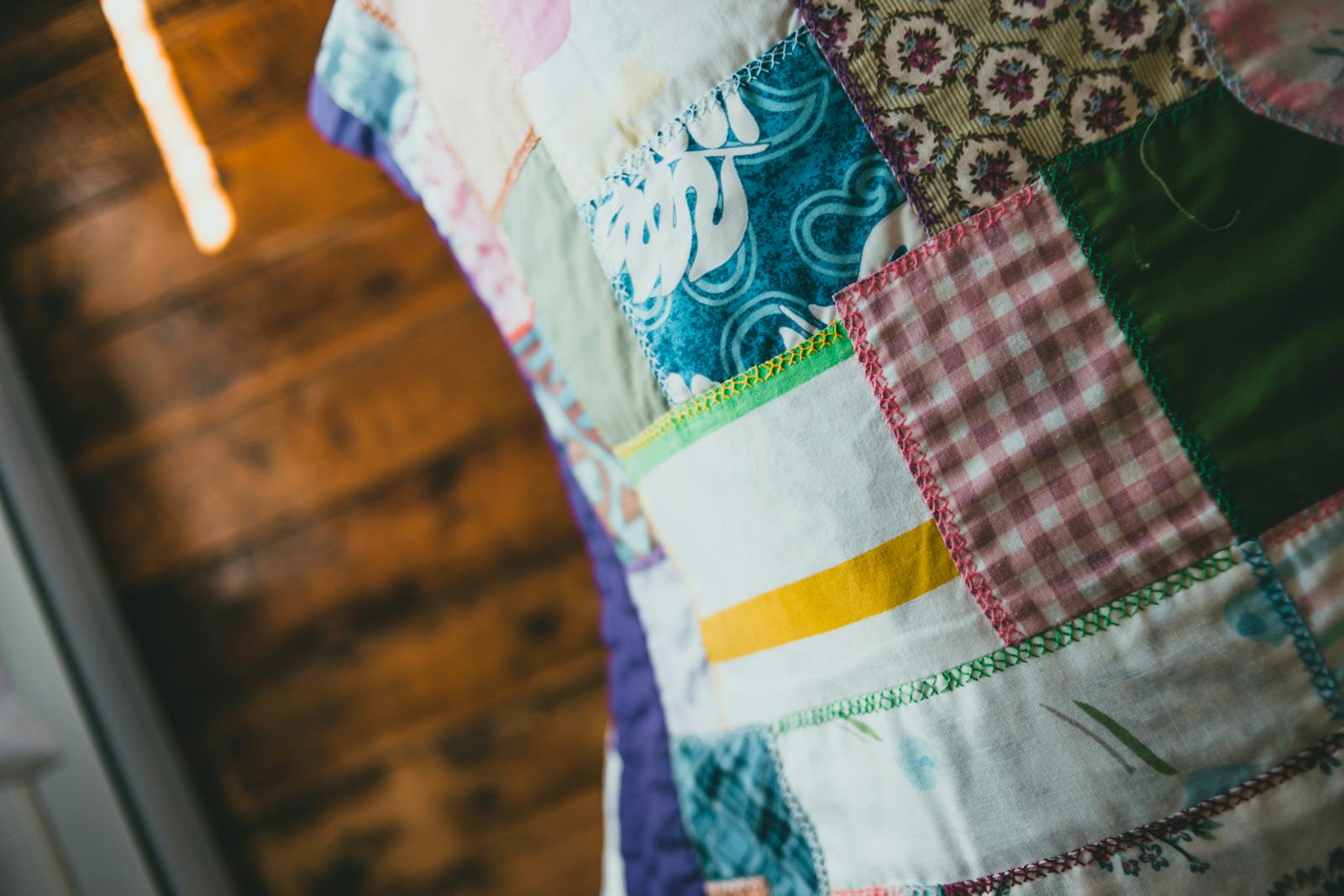
Handmade patchwork quilts from the early 20th century are among the most valuable textiles you can uncover, with documented sales in the thousands of dollars when condition and craftsmanship align. Auction records show that vintage handmade quilts from this period, especially those with intricate patchwork and strong color contrast, are treated as collectible folk art rather than simple bedding. Guides on how to tell if a thrifted quilt is valuable emphasize that Vintage quilts rise in value when they are clearly handmade, show consistent stitching, and retain their original batting.
For you as an owner, the stakes are high, because what looks like a faded bedcover might actually be a museum-worthy textile. Early 20th century patchwork often reflects regional patterns and family histories, so appraisers look for recognizable designs, intact borders, and minimal fading. If your quilt has been stored carefully, with no musty odor or major tears, it can appeal to both folk art collectors and interior designers seeking authentic period pieces, which helps explain why these quilts routinely cross the thousand-dollar mark at auction.
2) Irish Linen Damask Tablecloths, Victorian Era
Irish linen damask tablecloths from the Victorian era, particularly those woven in the 1800s, are prized for their tight weave and elaborate patterns that only skilled looms could produce. Antique Irish linen tablecloths with damask motifs from this period are documented as commanding high prices because the craftsmanship is difficult to replicate with modern mass production. Collectors look for crisp, repeating floral or geometric designs, a substantial weight in the hand, and the subtle sheen that signals high-quality flax fibers.
Estate-sale experts note that Victorian Irish damask often survives in family collections because it was reserved for formal occasions, which limited wear and tear. When you find a large, intact cloth with minimal staining and no fraying, it can attract serious interest from buyers who specialize in 19th century dining textiles. These tablecloths also fit into the broader trend of rediscovering heirloom-quality household goods, so their value reflects both historical importance and current demand for durable, reusable pieces.
3) Monogrammed Embroidered Linens, 1800s Doilies and Napkins
Monogrammed embroidered linens from the 1800s, including napkins and doilies, occupy a special niche because they combine fine needlework with family history. Reporting on valuable household textiles notes that embroidered linen napkins and doilies from the Victorian era, especially those marked with family monograms, have sold for up to $1,000 per set when the embroidery is dense and the set is complete. These pieces often feature satin stitch initials, floral borders, and delicate drawn-thread work that signal hours of hand labor.
Specialist sellers of Vintage linens highlight how intact monogrammed sets appeal to buyers who want both decorative impact and a tangible link to the past. For you, that means a stack of seemingly old-fashioned napkins could represent a four-figure asset if the fabric is sound and the initials are still crisp. Because many sets were broken up or heavily used, surviving complete services of eight or twelve pieces are particularly attractive to collectors and decorators staging period dining rooms.
4) Feed Sack Quilts, Great Depression Designs
Feed sack quilts from the Great Depression era are valued as much for their social history as for their colorful prints. During the 1930s, thrifty home sewers repurposed cotton feed sacks into patchwork tops, turning utilitarian packaging into cheerful bedcovers. Today, quilts made from these printed sacks are recognized as historically significant, and collectors pay a premium for examples that clearly showcase the original patterns and logos.
Guides to valuable vintage household items, including those focused on what you might “borrow” from a grandmother’s home, point out that Great Depression textiles like feed sack quilts capture a specific moment of resourcefulness. For owners, the financial upside lies in quilts that retain multiple distinct feed sack prints, have strong stitching, and show minimal shredding along the seams. These pieces appeal to historians, folk art collectors, and buyers who want authentic Depression-era storytelling in their décor, which keeps prices strong.
5) Silk Crazy Quilts, Late 19th Century
Silk crazy quilts from the late 19th century stand out immediately, with irregular shapes, jewel-toned fabrics, and elaborate embroidery that can include feather stitching, fans, and spiderweb motifs. Documentation on antique textiles notes that crazy quilts made with silk and velvet scraps from this period often include such intricate embellishment that they are valued at $2,000 or more when well preserved. The combination of luxury materials and exuberant design makes them showpieces rather than everyday bedding.
Because silk can shatter over time, condition is critical for you as an owner. Collectors look for quilts where the majority of patches remain intact and the embroidery threads have not faded to the point of invisibility. When those elements survive, late 19th century crazy quilts are treated as wall-worthy art, not just covers, which explains why they appear in high-end auctions and specialist sales with price tags that reflect both artistry and rarity.
6) Tufted Chenille Bedspreads, 1940s-1950s Styles
Tufted chenille bedspreads from the 1940s and 1950s are enjoying a resurgence, with documented prices in the $300 to $800 range for standout examples. These spreads are known for their raised, tufted patterns that create a plush texture across cotton ground cloth, often in bright white with colorful accents. Sellers who specialize in authentic chenille encourage buyers to Discover sustainable vintage bedding from the 1930s through the 1990s, positioning these midcentury pieces as both eco-friendly and stylish.
Listings for Vintage chenille bedspreads highlight how the most sought-after designs feature intricate flowers, peacocks, and geometric motifs, often hand-sewn rather than machine-tufted. For you, that means a bold pattern, strong color, and intact fringe can significantly increase value. As cottagecore and boho interiors remain popular, these spreads function as statement pieces, so collectors and decorators are willing to pay premium prices for clean, full-size examples without bald spots or heavy staining.
7) Floral Appliqué Quilts, 1930s Motifs
Floral appliqué quilts from the 1930s showcase a different kind of craftsmanship, with carefully cut fabric motifs hand-stitched onto solid backgrounds. Sales records indicate that appliqué quilts with floral or animal designs from this decade have brought between $1,500 and $5,000, depending on condition and complexity. The layered construction requires precise needlework, so appraisers look closely at how smoothly the edges are turned and how evenly the stitches are spaced.
For owners, the key indicators of value include vibrant colors, minimal fading, and a quilt top that lies flat without puckering. Because many 1930s appliqué patterns were published in newspapers and magazines, some designs are more common than others, which can influence price. Still, any well-preserved example with strong visual impact can attract serious interest from collectors who focus on interwar American quilting traditions and from buyers seeking a dramatic focal point for a bedroom or gallery wall.
8) European Linen Table Runners, Early 1900s Hemming
European linen table runners and cloths from the early 1900s, especially those with hand-hemmed edges and damask patterns, are another category that commands premium prices. These pieces often came from respected mills that exported fine household linens across Europe and North America, and their quality is evident in the tight weave and crisp, reversible designs. Collectors value runners that still show sharp pattern definition and that have not been shortened or machine-hemmed in later decades.
For you, the financial upside lies in identifying original hand-finishing, which typically appears as tiny, even stitches along the edge rather than bulky machine seams. Early 20th century European damask runners fit neatly into formal dining settings and are also repurposed as decorative accents on sideboards and dressers, which broadens their market. As interest in sustainable, long-lasting textiles grows, these runners are increasingly seen as investment pieces rather than disposable décor.
9) Quilted Edwardian Petticoats, Fine Stitching
Quilted Edwardian petticoats and underlinens are rare survivors, and textile experts value them at $500 or more when the stitching remains crisp. These garments were designed to add warmth and structure under skirts, with fine quilting that created channels of insulation without bulk. Because they were worn close to the body and subjected to frequent laundering, relatively few have endured in good condition, which pushes prices higher for intact examples.
When you examine an Edwardian petticoat, look for consistent quilting lines, original waistbands, and minimal fabric thinning along stress points. Collectors of historic clothing treat these undergarments as important evidence of everyday dress, while museum curators seek them to complete period ensembles. That dual interest from private and institutional buyers helps sustain strong valuations, especially for pieces with documented provenance or distinctive regional quilting patterns.
10) Arts and Crafts Linen Sheets, 1910 Natural Dyes
Hand-loomed linen sheets and pillowcases from the Arts and Crafts movement around 1910 combine simple design with high-quality materials, making them surprisingly valuable. Appraisals show that sets using natural dyes and traditional weaving techniques can be worth between $400 and $1,200, depending on size and condition. These linens typically feature understated borders, subtle color variations from plant-based dyes, and a slightly slubby texture that signals hand production rather than factory output.
For you as an owner, the appeal lies in both aesthetics and sustainability, since these sheets align with modern preferences for natural fibers and low-impact dyes. Collectors of Arts and Crafts furnishings seek out textiles that harmonize with oak furniture and handcrafted ceramics, so original linens can complete a period room. When pieces remain free of large stains and retain their original hand-stitched hems, they are especially likely to attract high-end buyers who appreciate their quiet luxury and historical integrity.
More from Vinyl and Velvet:

Leave a Reply