

Vintage dishes and glassware are no longer just nostalgic keepsakes from a relative’s cupboard. As collectors chase rare patterns and decorators lean into retro style, certain pieces are now selling for serious money, with some kitchen staples commanding four-figure price tags. If you know what to look for, these 12 categories of classic tableware can shift from everyday objects to high-value assets in your cabinets.
1) Vintage Casserole Dishes
Vintage casserole dishes have become one of the most surprising big-ticket categories, with documented sales reaching into the thousands of dollars for scarce patterns and complete sets. Collectors are paying premiums for colorful, patterned bakeware from the mid-20th century, and recent coverage of vintage casserole dishes selling for thousands underscores how intense the demand has become. That kind of pricing power instantly elevates these once-humble kitchen workhorses into serious collectibles.
For you as a buyer or seller, the stakes are clear: a dish you might have treated as a $10 thrift-store find could actually be worth hundreds or more if it features a sought-after colorway, lid, and original markings. As prices climb, condition and completeness matter, so chips, faded graphics, or missing lids can sharply reduce value. At the same time, the surge in interest is pulling more pieces out of cupboards and estate sales, which can create both new opportunities and more competition in the market.
2) Depression Glass
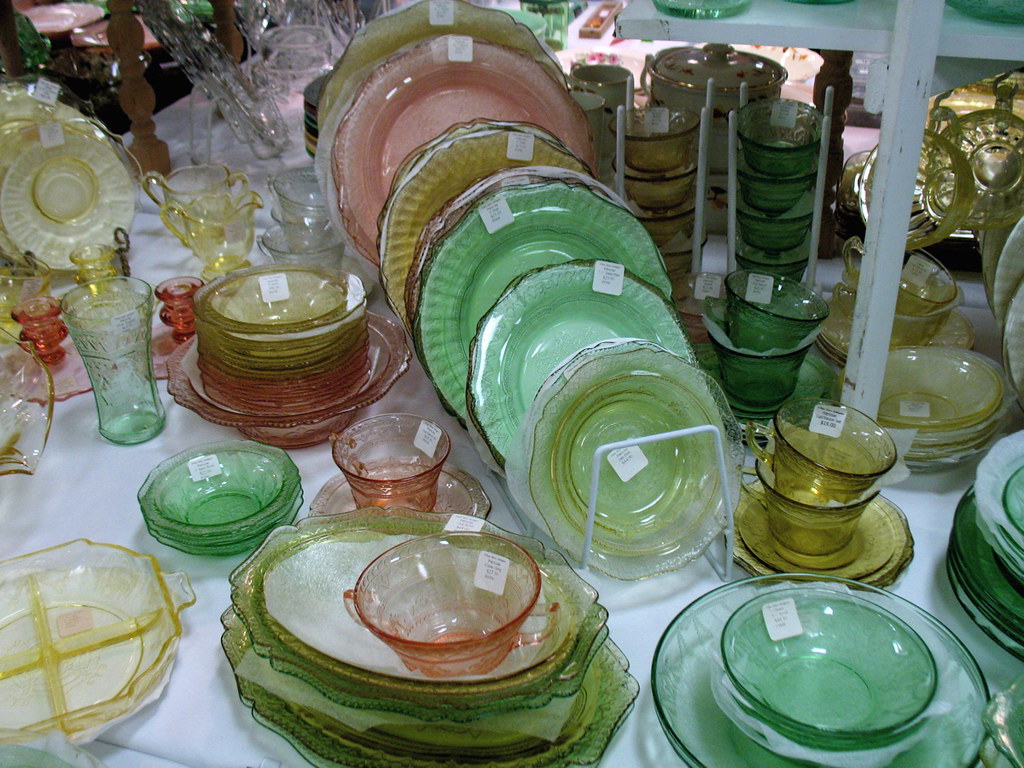
Depression Glass is one of the most accessible entry points into collectible tableware, yet it is also seeing renewed attention that can translate into higher prices for the right patterns. Defined as clear or colored translucent glassware distributed in the Canada and United States during the Great Depression, Depression Glass was originally inexpensive and often given away as a premium. Today, its pastel hues and simple pressed designs are being rediscovered as a budget-friendly way to set a vintage-inspired table.
Because it was mass-produced, not every piece will command big money, but scarcity within specific colors and motifs is starting to matter more as collectors refine their focus. You are likely to see stronger prices for complete place settings, serving pieces, and unusual forms that survived decades of everyday use. As more people learn the history behind these pieces and incorporate them into daily dining, the line between decorative nostalgia and investment-grade glassware continues to blur.
3) Fiesta Dinnerware
Fiesta dinnerware, with its bold glazes and stackable shapes, has long been a favorite for mixing and matching on casual tables, and it is now positioned for another wave of popularity. Design experts tracking antique and vintage trends for 2025 point to colorful, personality-filled table settings as a key direction, which aligns perfectly with the way Fiesta plates, bowls, and mugs are used in modern homes. That renewed spotlight can push up demand for discontinued colors and older backstamps.
For collectors, the opportunity lies in early production runs and rare hues that were made for only a short time, which often sell for more than contemporary pieces. You can also see value in assembling cohesive sets that appeal to buyers who want an instant, display-ready collection. As more stylists feature Fiesta in open shelving and social media-ready tablescapes, the market for standout pieces is likely to tighten, rewarding those who recognize desirable colors and condition.
4) Jadite Glassware
Jadite glassware, the opaque green milk glass that defined so many mid-century kitchens, is another category benefiting from the broader appetite for nostalgic decor. Mixing bowls, tumblers, and storage pieces in this distinctive shade are prized for their retro charm and the way they pop against wood or white cabinetry. As vintage-focused decorators lean into authentic period details, Jadite’s scarcity in pristine condition is helping prices climb, especially for matching sets and marked examples.
Because Jadite was heavily used, many surviving pieces show utensil wear, staining, or heat damage, which makes intact examples more valuable. You should pay close attention to mold lines, logos, and weight, since those details help distinguish older production from later reproductions that may not carry the same resale potential. With collectors competing for standout pieces to anchor open-shelf displays, Jadite’s combination of color, history, and limited supply keeps it firmly in the big-money conversation.
5) Cambridge Glass
Cambridge Glass brings a different kind of luxury to the table, with etched crystal stemware, compotes, and serving pieces that sparkle under candlelight. The market for these items is supported by a steady flow of Gently Used Cambridge Glass Company Serving Dishes and Pieces, including Champagne Coupes, Cocktail Glasses, Cocktail Sets, and Glassware Sets that highlight the brand’s refined craftsmanship. Collectors are especially drawn to patterns that balance intricate cutting with practical shapes for entertaining.
Specific designs such as the Cambridge Caprice line, seen in listings for a vintage Cambridge Caprice serving bowl or trinket dish, illustrate how rarity and condition can push values higher. For you, the implication is that even a single bowl or set of coupes can represent meaningful resale value if it carries a desirable pattern and remains free of chips or clouding. As formal glassware returns to favor in home bars and dining rooms, Cambridge pieces are well positioned to command premium prices.
6) Heisey Glass
Heisey glass is renowned among collectors for its clarity, weight, and crisp cutting, qualities that make decanters, vases, and barware especially appealing. While not every piece will reach four-figure territory, the brand’s reputation for quality means well-preserved examples often outperform generic vintage glass. In a market where antique glassware is increasingly curated, Heisey’s consistent craftsmanship gives buyers confidence that they are acquiring something built to last.
For your collection or resale strategy, that reliability translates into strong interest in complete decanter sets, matched pairs of candlesticks, and distinctive patterns that photograph well for online listings. As home entertaining trends emphasize curated bar carts and cocktail rituals, Heisey’s mix of function and elegance fits neatly into what buyers want. The result is a category where knowledge of patterns and marks can directly influence how much money you can command.
7) Fostoria Glass
Fostoria glass, particularly its hand-pressed serving pieces from the 1930s, is enjoying a quiet resurgence among those building heirloom-style tablescapes. The brand’s delicate etching and balanced proportions give cake stands, relish trays, and compotes a subtle elegance that pairs well with both vintage and contemporary china. As decorators look for ways to layer history into modern dining rooms, Fostoria’s understated patterns are becoming more visible in styled shoots and curated collections.
From a value perspective, the renewed attention means that complete sets and harder-to-find serving forms are seeing stronger demand. You may find that pieces once overlooked at estate sales now attract multiple bidders when properly identified and photographed. Because Fostoria produced a wide range of patterns, learning to recognize popular designs can help you separate everyday glass from items with real earning potential.
8) Lenox China
Lenox china, known for fine porcelain dinner sets with intricate gold rims, sits at the intersection of luxury and collectability. As interest in formal dining returns in cycles, these early 1900s patterns are being reconsidered not just as wedding registry staples but as investment pieces that hold or grow their value. The combination of high-quality porcelain and real gold detailing gives Lenox a tangible sense of permanence that appeals to serious buyers.
For you, the key is completeness and condition: full services with serving platters, gravy boats, and covered dishes tend to command higher prices than scattered plates. Chips, crazing, or worn gilding can significantly reduce value, so careful inspection is essential before you buy or list. With more people mixing vintage Lenox into eclectic table settings, demand is broadening beyond traditional collectors, which can support stronger pricing for standout patterns.
9) Wedgwood Dinner Plates
Wedgwood dinner plates, especially in classic blue jasperware and refined bone china patterns, bring centuries of design history to the table. Motifs that date back to the 18th through 20th centuries give these plates a distinctive look that works as well in a gallery wall display as it does in an eclectic place setting. As interest in historically grounded decor grows, Wedgwood’s recognizable reliefs and borders are gaining fresh attention.
From a market standpoint, older backstamps, limited-edition designs, and plates in excellent condition are the ones most likely to attract premium bids. You can also see value in assembling curated sets that mix compatible patterns, appealing to buyers who want a collected-over-time look without doing the hunting themselves. With decorators using Wedgwood as a visual anchor in open shelving and china cabinets, demand for visually striking plates is likely to remain strong.
10) Royal Doulton Figurines and Teaware
Royal Doulton figurines and teaware, including detailed porcelain teacups and character jugs, offer a narrative quality that sets them apart from plainer tableware. Each piece often tells a story through expressive faces, costumes, or themed scenes, which makes them ideal for display cabinets and curated shelves. As collectors seek items with personality and provenance, these story-rich designs are attracting higher bids at auctions and online marketplaces.
For you, the most promising opportunities lie in limited runs, well-documented series, and pieces that retain their original vivid colors and crisp detailing. Character jugs tied to specific historical figures or cultural icons can be particularly desirable. Because these items straddle the line between functional teaware and decorative art, they appeal to multiple buyer segments, which can support stronger resale values when you market them effectively.
11) Bohemian Cut Glass
Bohemian cut glass, with its deeply faceted surfaces and rich color overlays, delivers the kind of Old World sparkle that instantly elevates beverage service. Pitchers, decanters, and large bowls from the 19th and early 20th centuries were designed to catch and refract light, turning a simple table into a showpiece. As collectors and decorators look for statement pieces that photograph beautifully, these dramatic forms are gaining renewed traction.
Because many Bohemian pieces were handmade, variations in cutting and color can significantly influence desirability and price. You should pay attention to weight, clarity, and the sharpness of the cuts, all of which signal quality to experienced buyers. With interest in antique glassware growing across platforms like Love Antiques, standout Bohemian examples are increasingly recognized as high-value centerpieces rather than background decor.
12) Pyrex Mixing Bowls
Pyrex mixing bowls, especially the iconic multicolored sets from the 1950s, have moved from everyday kitchen staples into the realm of serious collectibles. Their durable glass construction and cheerful hues make them both functional and visually appealing, which is why they feature prominently in retro-inspired kitchens. As interest in vintage casserole dishes and other bakeware climbs, these bowls are commanding premium prices alongside matching lids and coordinating pieces.
For collectors and resellers, the most valuable Pyrex bowls tend to be complete nesting sets with strong color, clear markings, and minimal scratching. Rare patterns or promotional releases can push values even higher, particularly when they appear in near-mint condition. With social media communities devoted to showcasing vintage Pyrex collections, demand is being fueled by both nostalgia and the desire to own pieces that feel simultaneously practical and special.

Leave a Reply