

If you grew up in the 1950s, snack time meant bright boxes, catchy jingles, and treats you begged your parents to buy. These retro brands did not just fill lunchboxes, they helped define childhood in the postwar boom. Each of the following snacks earned that status by pairing clever marketing with flavors kids could not forget.
1) Hostess Twinkies
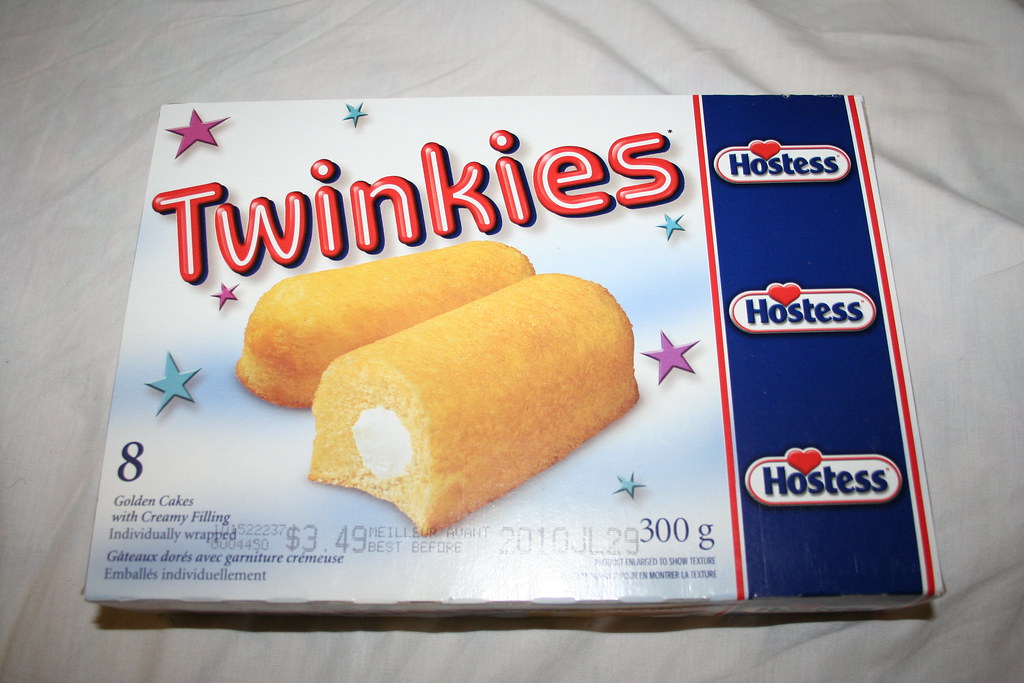
Hostess Twinkies were already a couple of decades old by the time 1950s kids discovered them, but that did not stop the brand from feeling brand new. James Dewar launched Twinkies in 1930 at the Hostess bakery in Schiller Park, Illinois, creating a portable sponge cake that fit perfectly into the emerging grab-and-go culture. By the time television entered living rooms nationwide, the company had a ready-made star that could be unwrapped in a single shot.
In the 1950s, nationwide TV campaigns turned that simple cake into a must-have lunchbox prize. A 1953 issue of Advertising Age reported that the “It’s Twinkie time!” slogan helped drive a surge in demand, especially among children who saw the snack as a daily reward. For parents navigating the era’s new supermarket aisles, that pressure mattered, signaling how broadcast advertising could turn a regional bakery product into a national childhood obsession.
2) Jell-O Pudding Pops
Jell-O pudding pops, as a frozen treat, would not arrive until decades later, so 1950s kids were actually begging for the boxed pudding mixes that paved the way. The Jell-O brand, founded in 1897, was already a pantry staple when it expanded its pudding line, giving families an easy dessert that felt modern compared with scratch-made custards. Those mixes let you whisk together a chilled, creamy bowl that looked like something out of a midcentury cookbook photo.
According to a 2015 retrospective, the brand’s 1952 merger with General Foods brought brighter packaging and colorful boxed mixes that “every child begged for at the grocery store.” Radio jingles in the 1950s helped cement pudding as a nightly ritual, even if the frozen pudding pops themselves would not appear until the 1970s. That distinction matters, because it shows how the decade’s marketing and shelf presence built the kid loyalty that later made the frozen version an instant hit.
3) Hershey’s Kisses
Hershey’s Kisses had been around since 1907, but the candy’s midcentury glow-up made it feel tailor-made for 1950s children. The introduction of the foil-wrapped “kiss” packaging in 1947 gave each piece a tiny sense of ceremony, as kids twisted the silver wrapper and pulled the paper plume. That tactile ritual, combined with the familiar milk chocolate, turned a simple drop of candy into a small event.
The company’s own records show how strongly that resonated. Hershey’s 1955 annual report, cited in a detailed history, noted that 1950s sales of Kisses hit 25 million pounds annually, much of it through penny candy stores where children could buy just a few at a time. That purchasing pattern underscored a broader trend, as postwar kids gained small allowances and used them to exercise real influence over which brands dominated the candy counter.
4) Cracker Jack
Cracker Jack had deep roots by the 1950s, having been trademarked in 1896 by F. W. Rueckheim and branded with its “sailor boy” mascot in 1912. Yet the snack’s strongest emotional pull for midcentury kids came from its connection to baseball. Caramel-coated popcorn and peanuts, plus a small prize in every box, made it feel like a complete experience rather than just another sweet.
Television amplified that appeal. A 1954 Chicago Tribune feature described how 1950s TV commercials used the jingle “Buy me some peanuts and Cracker Jack” to link the brand directly to ballpark outings. Children watching games on TV or from the stands learned to associate the song with a treat they could demand between innings. That connection helped solidify Cracker Jack as a staple of American leisure, showing how sports tie-ins could turn a snack into a cultural ritual.
5) Popsicles
Popsicles trace back to 1905, when Frank Epperson accidentally invented the frozen treat in Oakland, California, but the 1950s gave the brand a new identity. Under Good Humor’s stewardship, Popsicles were rebranded for a generation that spent hot afternoons outside, chasing ice cream trucks and neighborhood carts. The product’s simplicity, flavored ice on a stick, made it affordable enough for kids to buy with their own coins.
The real breakthrough came with the 1953 launch of dual-stick “twin pops,” which encouraged sharing and doubled the visual impact. According to 1955 Good Humor marketing logs, twin pops sold over 100 million units in the 1950s and were described as “the ultimate summer treat kids screamed for.” That volume showed how frozen novelties could dominate warm-weather sales and pushed competitors to rethink portion sizes, flavors, and formats to capture the same playground buzz.
6) Necco Wafers
Necco Wafers, created in 1847 by the New England Confectionery Company in Cambridge, Massachusetts, offered a very different kind of 1950s indulgence. Instead of gooey fillings or chocolate coatings, these pastel disks delivered a chalky crunch and nostalgic flavors that parents and grandparents already knew. Their long history made them feel trustworthy in an era when packaged foods were rapidly multiplying.
A company newsletter excerpted in a Smithsonian profile reported that by 1958, annual production had reached 500 million rolls, much of it sold as penny candy that kids begged for at corner stores. That scale highlighted how even modest-looking treats could dominate shelf space when they were cheap, portable, and non-messy. For retailers, Necco Wafers proved that small, individually affordable items could keep young customers coming back several times a week.
7) Planters Peanuts
Planters Peanuts brought a slightly more “grown-up” snack into the 1950s kid universe. Amedeo Obici founded the Planters Peanut Company in 1906 in Wilkes-Barre, Pennsylvania, and later moved operations to Suffolk to be closer to peanut growers. The creation of the Mr. Peanut mascot in 1916, with his top hat and monocle, gave the brand a recognizable character that could charm both adults and children.
The company leaned into that appeal with 1950s radio spots that opened with the line “Planters presents… the world’s largest peanut party,” a phrase highlighted in a 1952 feature on the brand’s marketing. Those ads pushed salted nuts in red oval tins as a fun, sharable snack rather than a purely adult bar mix. A separate history of Mr. Peanut underscores how Obici’s early branding decisions gave the company a mascot sturdy enough to anchor that midcentury kid-focused push.
8) Tootsie Rolls
Tootsie Rolls, invented in 1896 by Leo Hirschfeld in New York City, were ideally positioned for the 1950s candy boom. The chewy chocolate logs were durable, did not melt easily, and could be wrapped individually, which made them perfect for lunchboxes, movie theaters, and Halloween bags. After years of wartime rationing, families were ready to spend more freely on sweets, and Tootsie Rolls were among the most accessible options.
According to Tootsie Roll Industries’ 1956 sales data, postwar demand pushed sales to more than 10 million pounds yearly by 1955, with many pieces sold individually for a penny. Children could walk into a corner store and walk out with a small handful, turning spare change into a tangible treat. That purchasing power helped cement Tootsie Rolls as a fixture of midcentury childhood and illustrated how low price points could translate into massive volume in the youth market.

Leave a Reply