

Some of the best “new” board games you can put on your table are actually very old. If you are tired of apps and endless scrolling, these seven retro titles show why classic designs still hit hard today, from ancient Indian race games to cult tabletop epics that fans keep begging to revive.
1. Pachisi
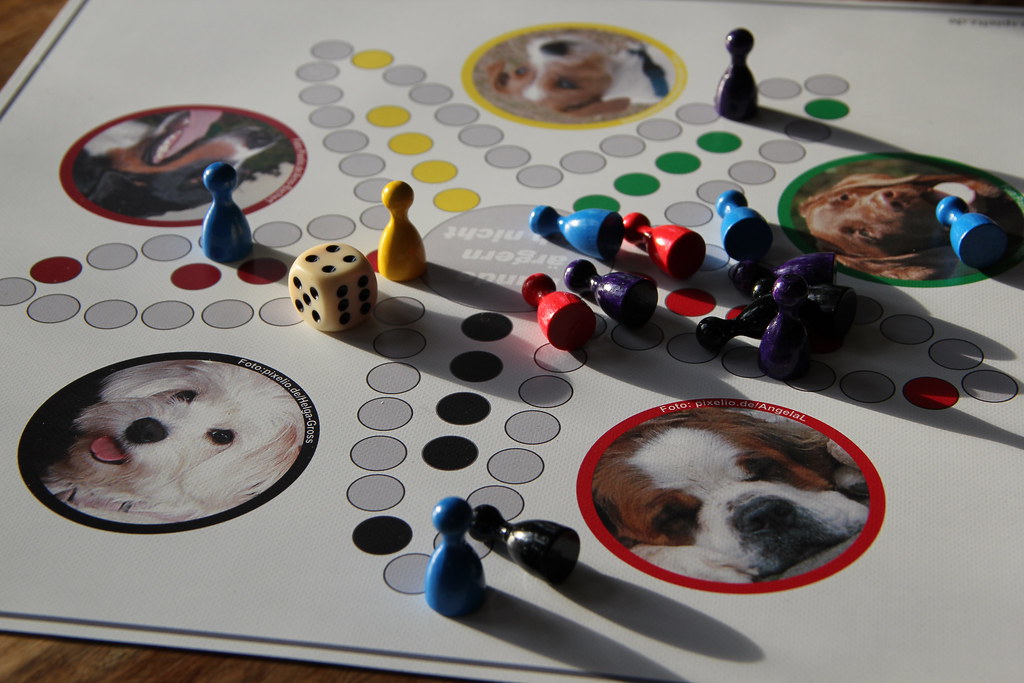
Pachisi is the cross-and-circle race game you probably know through its descendants, but the original deserves its own comeback. Traditionally played on a cloth board with cowrie shells as dice, it turns simple movement into sharp positional play and negotiation. Modern coverage of traditional Indian games that deserve a comeback highlights how titles like Pachisi once anchored family time, long before screens took over evenings. Bringing it back is not just nostalgia, it is a way to reconnect with an ancient Indian design that still feels surprisingly modern.
When you sit down with Pachisi, you get a built-in lesson in probability, risk and patience. Kids learn to read the board, plan safe spots and decide when to race ahead or hang back, while adults rediscover how much tension you can squeeze out of a handful of shells. For designers and publishers, reviving Pachisi in its classic form, rather than only as branded spin-offs, would tap into a growing appetite for culturally rooted games that feel authentic instead of generic.
2. Snakes and Ladders
Snakes and Ladders started life in India as Moksha Patam, a game about karma where ladders reward virtue and snakes punish vice. Modern descriptions of Snakes and ladders trace it to a family of Indian dice board games that also includes gyan chauper and pachisi, later adapted into English titles like Ludo and Parcheesi. That moral backbone is exactly why it deserves a smarter revival, instead of being written off as a throwaway roll-and-move for very young kids.
If you lean into those roots, Snakes and Ladders becomes a conversation starter about choices and consequences, not just a race to the top. You can already see demand in the sheer variety of Snakes & Ladders Educational Board & Traditional Games sets that promise to “Expand your options of fun home activities.” A thoughtful reprint that restores the original virtues and vices, or even updates them for today, would give families a quick, values-driven game that still fits into a 15-minute window.
3. Chaupar
Chaupar, sometimes written as Chausar, is the medieval Indian cousin of Pachisi that turns a simple race into a tactical knife fight. Historical notes on Pallanguzhi and Chausar point out how these Indian designs are quietly making a cultural comeback, helped by hobbyists who want more than imported Eurogames. Chaupar’s cloth boards, wooden pieces and race-to-home structure feel familiar, but the way pieces stack, block and capture gives it a sharper edge than many modern family titles.
Earlier enthusiasts cataloguing Traditional board games of India listed Chaupar alongside Pallanguzhi, Navakankari, Adu Huli and Chauka Bara, treating it as part of a broader heritage worth saving. For players, a revival would mean a portable, social game that rewards reading opponents as much as reading dice. For cultural institutions and cafes, Chaupar offers a ready-made centerpiece for game nights that celebrate regional history instead of just the latest Kickstarter hit.
4. Ashta Chamma
Ashta Chamma is another Indian race game, popular across South India, that feels like a bridge between folk play and modern strategy. Coverage of Popular Traditional Games notes how people “Enjoy” titles like Pachis, Ashta Chamma, Snakes and Ladders and Daadi as part of a broader board game comeback in the digital age. Ashta Chamma’s crossing paths, safe squares and capture rules create a constant push and pull, where alliances form and collapse in a single lap of the board.
For families, it is a perfect “teach your parents” game: kids can learn it in minutes, then start outplaying adults by spotting clever blocks and traps. Designers looking for fresh mechanics could mine Ashta Chamma’s movement patterns and team play for modern remixes. As more players hunt for games that feel local and personal, a polished edition with clear rules in multiple languages could turn this South Indian staple into an international sleeper hit.
5. Pallanguzhi
Pallanguzhi is a pit-and-pebble counting game from Tamil Nadu, part of the wider mancala family, and it might be the most meditative title on this list. Guides that Explore the revival of Indian games like Pallanguzhi and Chausar frame it as both cultural artifact and modern brain workout. You drop tamarind seeds into carved wooden pits, trying to end your turn in the right spot to scoop up big captures, which quietly trains arithmetic, pattern recognition and planning.
Earlier hobby projects documenting Pallanguzhi and other traditional titles helped pull it back from the brink of disappearing, but it still rarely shows up in mainstream game stores. A comeback would matter for more than nostalgia, it would keep a specifically Tamil tradition alive at kitchen tables from Chennai to Chicago. For educators and parents, Pallanguzhi offers a tactile alternative to math apps, turning counting practice into a calm, almost fidget-toy-like ritual that kids actually ask to repeat.
6. Man O’ War
Man O’ War, released in 1993, is Games Workshop’s cult naval warfare board game set in the Warhammer universe, and fans have not stopped asking for its return. A detailed plea that argues Man O’ War needs a comeback points to its ship miniatures, wind rules and fantasy fleets as a unique mix that later titles never quite replaced. On the table, it delivers sprawling sea battles where a single bad tack can send a flagship into enemy broadsides or straight into a sea monster’s jaws.
For Warhammer veterans, a re-release would scratch a very specific itch: big narrative moments without the time and cost of a full army game. For newer players raised on digital tactics, Man O’ War could be their gateway into analog miniatures, with campaigns that feel like a physical strategy video game. Given how many retro board games are suddenly back in print, it is hard to ignore a design that already has a built-in fanbase and a fully fleshed-out world waiting offshore.
7. Luton Designer’s Stolen Board Games
The last “game” on this list is not a single title but a collection that almost vanished. A recent report on a board game designer’s plea for the return of £800 worth of stolen games in Luton shows how fragile unique designs can be. After the theft from his car, prototypes and rare editions were suddenly at risk of never being played again, which hits differently when you realise each box might be the only copy of a future classic.
That loss mirrors the way family traditions disappear when a recipe card goes missing, which is why coverage of classic holiday recipes that deserve a comeback resonates so strongly. Board games work the same way: if you do not protect and reprint them, they quietly fade out of circulation. Treating prototypes and small-run designs with the same care you give heirloom dishes is how you make sure the next wave of “retro” games actually survives long enough to earn that label.
More from Vinyl and Velvet:

Leave a Reply