

Before anyone hauls another cracked bin to the curb, it is worth remembering that the most valuable vintage Christmas decorations are often the ones quietly packed away in parents’ or grandparents’ closets. Collectors actively hunt for early blown glass, quirky mid-century lighting, and other old-school pieces that rarely show up in stores now. A quick, careful dig through family holiday storage could reveal items that are both emotionally meaningful and surprisingly collectible.
Blown-Glass Ornaments
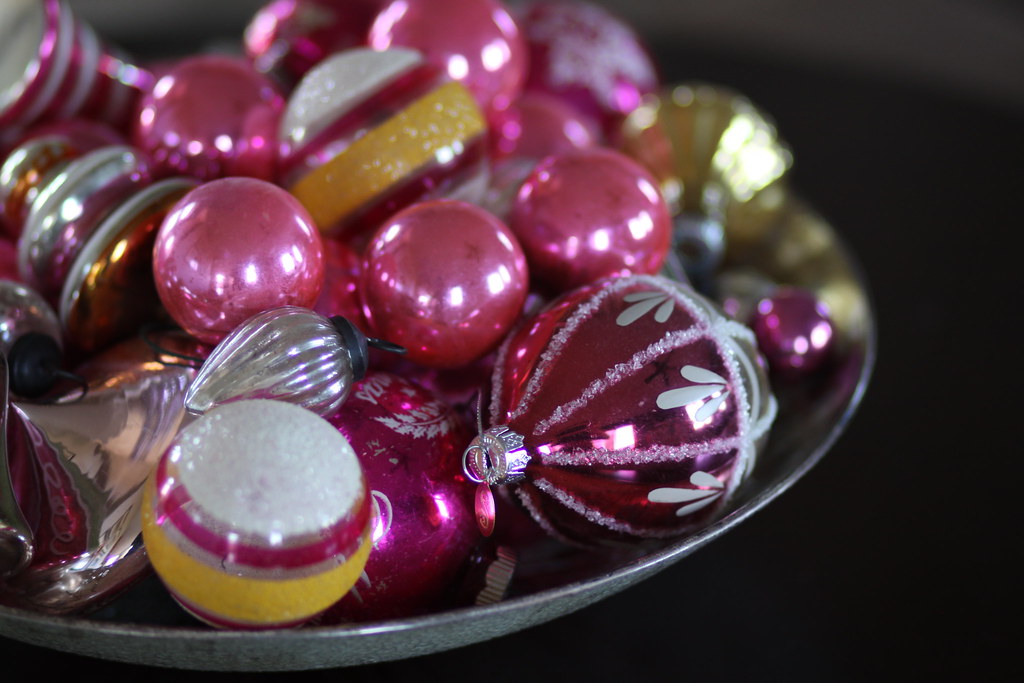
Blown-glass ornaments are the classic attic sleeper, especially fragile pieces from the late 1800s and early 1900s that were hand-shaped rather than mass-produced. Guides to valuable vintage Christmas decorations point out that early glass ornaments, including figural fruits, birds, and icicles, can command strong prices because so few survived decades of tree falls and curious kids. When those ornaments still have bright paint, original metal caps, or even their cardboard boxes, collectors pay attention.
Broader rundowns of valuable Christmas collectibles echo that ornaments are often the first thing experts look for in thrift stores and attics. For families, that means the delicate baubles everyone is afraid to hang might actually be the most valuable items in the box. Checking for hand-painted details, thin glass, and old country-of-origin stamps can help separate everyday tree fillers from pieces worth a professional appraisal.
Vintage Santa Figurines
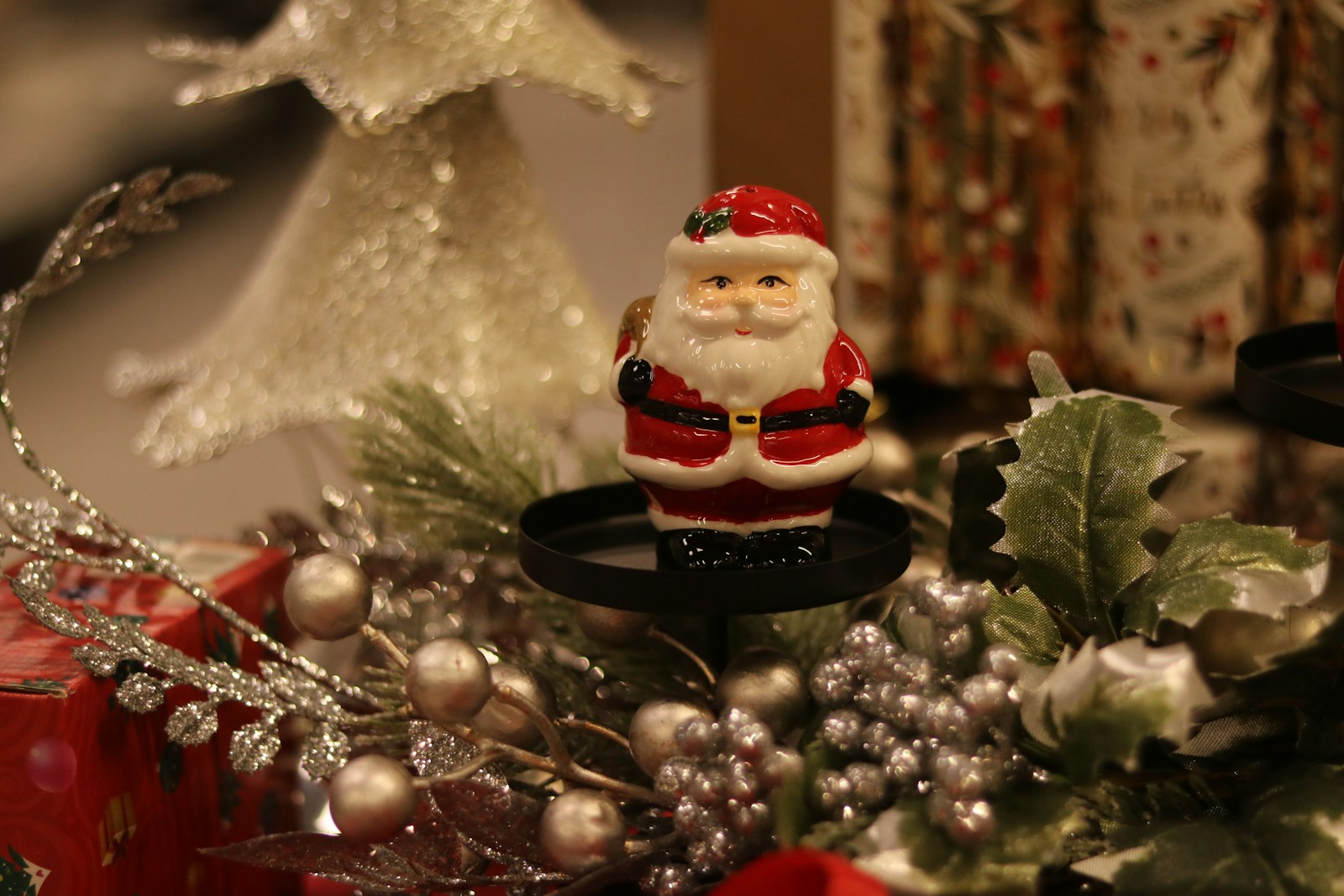
Vintage Santa figurines, especially chalkware or composition versions from roughly 1920 to 1950, sit right at the intersection of nostalgia and serious collecting. Lists of Vintage Glass Ornaments and Santa Ornaments highlight how early 20th-century Santas, along with Holt Howard Santa Mugs And other character pieces, routinely show up on collectors’ wish lists. The charm is in the details, from faded red coats to slightly stern faces that look nothing like modern cartoon versions.
Because these figurines were often displayed on mantels or windowsills, many picked up chips and scuffs, so examples with intact paint and no major cracks are especially desirable. Families who kept a whole “Santa collection” lined up every December may unknowingly have a small archive of holiday history. For sellers, that can translate into strong prices for rare poses or makers, while for heirs it raises the stakes on deciding what to keep versus what to cash in.
Bubble Lights
Bubble lights, those quirky 1940s string lights with bubbling liquid in each tube, are another holiday decoration that can quietly gain value in storage. Collectors prize working sets because the combination of vintage wiring and fragile glass means many were tossed out over the years. Overviews of Christmas ornaments and toppers worth big money consistently flag unusual lighting as a category where older designs can outperform newer LED strings.
For anyone sorting through family boxes, intact bubble lights with original cords, clips, and packaging are worth testing carefully and then researching before donating. Even nonworking strands can appeal to decorators who use them in non-electrified displays. The broader trend is clear: as people recreate mid-century holiday looks, demand for authentic lighting grows, turning what once seemed like outdated fire hazards into collectible conversation pieces.
Lead-Based Tinsel
Lead-based tinsel from before the 1960s is a strange mix of hazardous and highly collectible. Earlier tinsel strands used lead to create a heavy, draping effect that modern plastic versions cannot quite copy, which is why vintage-focused guides to You might be shocked by valuable decorations often mention old tinsel as something to research before discarding. The key is that unopened packages or neatly stored bundles are far more appealing to collectors than tangled clumps.
Because of safety concerns, lead tinsel is not something families should let kids handle or hang, yet that very scarcity in everyday use is part of what drives interest. Collectors who stage historically accurate trees or photograph period interiors look for the distinctive shimmer that pre-1960s tinsel provides. For families cleaning out basements, the implication is simple: treat any heavy, metallic-looking strands as potential collectibles first, and only then decide how to store or sell them safely.
Feather Tree Toppers
Feather tree toppers, especially early 20th-century angels or stars designed for small feather trees, are another category where modest-looking pieces can carry real value. Vintage-focused marketplaces show how a Vintage Mid Century Gold Angel Christmas Tree Topper, Made In Japan, can be listed for $26.95, illustrating that even relatively recent toppers attract buyers. Earlier examples, particularly those with spun glass, mica, or delicate paper trims, often command more.
Because toppers were handled every year and stored loosely, many lost arms, wings, or glitter over time, which makes intact survivors more collectible. Families who still have the same angel or star that has crowned the tree for generations may be looking at a small but meaningful asset. The broader trend toward recreating feather trees and minimalist vintage displays only increases demand, turning these toppers into focal points for both decorators and serious collectors.
Putz Village Houses
Putz village houses, usually cardboard or ceramic buildings from 1930s to 1950s nativity or mantel scenes, are a favorite target for people hunting holiday collectibles in thrift stores and attics. Guides to valuable Christmas collectibles note that small decorative houses and similar tabletop pieces often sell well when they retain original glitter, cellophane windows, and bottlebrush trees. Complete sets that still match old family photos or catalog images can be especially appealing.
For families, those slightly shabby cardboard villages that once circled train sets may actually represent a cohesive collection. Individual houses with unusual colors, churches with steeples, or buildings marked “Japan” on the bottom tend to draw extra interest. As more people build elaborate holiday vignettes, demand for authentic mid-century putz houses grows, giving heirs a reason to inventory every little cottage before tossing anything in the donation box.
Die-Cut Christmas Cards
Die-cut Christmas cards, especially ornate embossed examples from the Victorian era through the 1940s, turn up in old shoeboxes and scrapbooks more often than on mantels now. Collectors treat these as ephemera, valuing intricate shapes, layered paper, and rich printing. Overviews of Rare Ornament Sets and other heirlooms explain that Ornaments are not the only paper-based holiday items with value, pointing to Waterford Crystal 12 Days of Christmas pieces and similar themed designs as examples of how artwork and narrative can drive prices.
Old cards with handwritten notes, family names, or signatures from notable senders can be even more desirable, since they capture a specific moment in time. Some families also tucked die-cut cards into boxes with Family Christmas Ornaments Gifts and other keepsakes, which helps preserve condition. For anyone sorting through inherited paper piles, the stakes are clear: those delicate cards are not just sentimental, they may also be quietly collectible.
More from Vinyl and Velvet:

Leave a Reply