

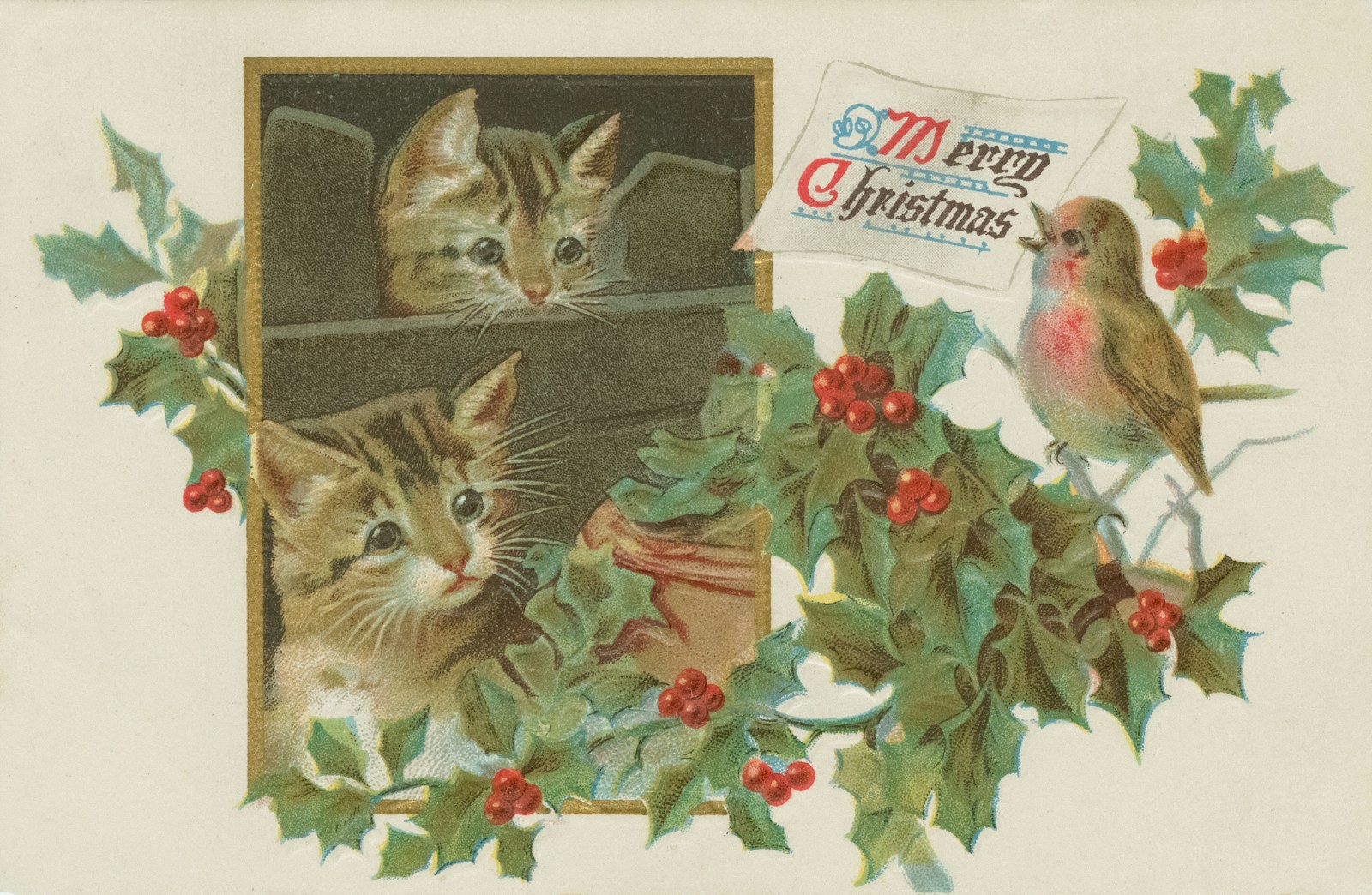
If you have a shoebox of old holiday mail stashed away, you might be sitting on more than just nostalgia. Antique Christmas cards have become a surprisingly hot corner of the collectibles world, and certain designs can sell for serious cash. Here are eight types of vintage cards to look for if you are hoping your old Christmas greetings might actually be worth money.
Victorian Chromolithographed Christmas Cards
Victorian chromolithographed Christmas cards are the blueprint for almost every holiday card that came after them, which is exactly why collectors chase them. Early chromolithography in the 1870s let printers layer rich color scenes of snowy villages, robins, and holly, turning simple greetings into tiny works of art. Guides to antique Christmas cards point out that these early examples can be especially valuable when the colors are still bright and the cardstock is not creased.
Condition is everything, because these cards were meant to be handled, displayed, and then tossed. When you find one that survived without heavy writing on the front, with intact corners and no tape marks, you are looking at the kind of piece that can move from “cute” to “collectible.” For sellers, that historical significance is the hook: you are not just offering a card, you are offering one of the first mass-market Christmas images people ever mailed.
Louis Prang’s Angelic Designs
Louis Prang’s angelic designs are the crown jewels of early American Christmas art. The Boston lithographer introduced lush, full-color cards in the 1870s, and his 1875 debut Christmas cards with cherubs, holly, and religious scenes set the standard for what a holiday greeting should look like. At the height of his influence, Prang Christmas competitions paid artists up to $1000 for winning designs, a huge sum that shows how seriously he took card art.
Original cards By Louis Prang featuring angels and Victorian Christmas imagery, like the kind described as a “Neat original antique Victorian Christmas?card religious image with angels” and promoted as a NICE ADDITION to a COLLECTION, are exactly the sort of pieces advanced collectors hunt. When the printing is crisp and the colors have not faded, these angel cards can bring high prices because they combine fine art, early American printing history, and classic holiday themes in one small rectangle.
Raphael Tuck & Sons’ Embossed Beauties
Raphael Tuck & Sons’ embossed beauties show how luxurious a Christmas card could be in the late 19th century. The company produced Original Victorian designs with raised gold lettering, snowy landscapes, and sentimental verses, often tied to royal events and Queen Victoria’s jubilees. Collectors pay attention to any Raphael Tuck Christmas card that is die-cut or heavily embossed, because those details were more expensive to produce and are harder to find undamaged.
Listings for a Victorian Raphael Tuck Die, Cut Embossed Christmas Card Small Artistic Series VTG show how sellers highlight every bit of embossing and original finish. If you find one of these cards with the gold still gleaming and the intricate edges intact, you are looking at a piece that can stand alongside other high-end Victorian Christmas collectibles. For buyers, the royal connection and elaborate craftsmanship make these feel less like paper and more like miniature sculptures.
Die-Cut Pop-Up Christmas Cards
Die-cut pop-up Christmas cards from the 1880s and early 1900s are where engineering meets holiday cheer. These mechanical designs fold out into 3D Santas, churches, or trees, and the more complex the construction, the more collectors perk up. Vintage guides to valuable Christmas decorations remind you that unusual paper pieces hiding in attics can be worth a second look, especially when they still stand upright and have all their moving parts.
Because these cards were meant to be displayed on mantels, many were crushed or torn after a season or two. Surviving examples with unbroken tabs and vivid printing can command strong prices, especially when they feature early depictions of Santa or elaborate winter scenes. If you open an old box and a card literally pops into a three-dimensional village, you should treat it like a fragile collectible, not a throwaway decoration.
Hand-Tinted Watercolor Holiday Greetings
Hand-tinted watercolor holiday greetings from the 1890s and early 1900s blur the line between card and original art. These pieces often started as simple printed outlines, then artists added watercolor washes by hand, so no two cards are exactly alike. Collectors of Victorian Christmas items know that hand-printed or limited-edition cards can sell for hundreds to thousands of dollars, according to Betpack, especially when the artwork is clearly individualized.
Because the paint sits on the surface, these cards are vulnerable to smudging, water damage, and fading, which makes crisp survivors more desirable. When you spot delicate brushstrokes in the sky or on a child’s face, rather than flat printed color, you are likely holding something closer to a miniature painting. That personal touch is what pushes prices up, particularly for buyers who want a one-of-a-kind piece instead of a mass-produced design.
Themed Prohibition-Era Christmas Cards
Themed Prohibition-era Christmas cards from the 1920s lean into sly humor, which is exactly what makes them collectible now. These novelty designs wink at speakeasies, flasks hidden in stockings, and “holiday spirits” that are clearly not just eggnog. Broader lists of Christmas collectibles that could be worth a fortune show how anything that captures a specific cultural moment, from Belsnickel Father figures to limited-run decor, can gain value over time.
Cards that pair classic holly borders with jokes about bootleggers or dry laws appeal to both holiday collectors and history buffs. The crossover audience matters, because it means more bidders chasing the same small pool of surviving cards. If your family saved a stash of 1920s greetings with cheeky toasts or cartoon bartenders, it is worth checking recent sales to see whether those jokes now translate into three-figure price tags.
Celebrity-Illustrated Festive Notes
Celebrity-illustrated festive notes from the early 20th century tap into the same nostalgia that drives the market for old toys. Collectors who hunt for childhood favorites that are now worth thousands, like the pieces highlighted in lists of toys worth thousands, often branch into related paper ephemera. When a card features early artwork tied to big names, such as Norman Rockwell prototypes or other recognizable illustrators, it suddenly appeals to both art fans and Christmas specialists.
These cards can be tricky to identify, so signatures, publisher credits, or documented series matter a lot. Once a design is linked to a known artist, the value usually jumps, especially if the image echoes a later famous painting or magazine cover. For you as a seller, that means flipping cards over, reading the fine print, and researching any unfamiliar artist names before you assume a charming Santa sketch is just generic clip art.
Ornate German Nutcracker Motif Cards
Ornate German nutcracker motif cards from pre-World War I Bavaria bring traditional European Christmas lore straight into your mailbox. These designs weave in folk art elements like carved nutcrackers, toy soldiers, and alpine villages, often with dense borders and Gothic lettering. Collectors tracking the most valuable antique Christmas cards, such as those highlighted in roundups of Christmas cards worth money, consistently point to early German examples as standouts.
Because many of these cards were mailed across borders, complete postmarks and legible messages can actually add interest, documenting how Christmas, Once, traveled between continents. Surviving nutcracker cards in bright color, without heavy creases, tend to sell well to buyers who already collect German ornaments or wooden nutcrackers. If your family has old European mail tucked into albums, those stern little nutcracker faces might be the most valuable images on the page.
More from Vinyl and Velvet:

Leave a Reply