

A woman shared her experience of dealing with a cherished keepsake from her late mother that was accidentally damaged by her husband. In a candid post on Reddit, she described how this incident stirred up memories of her childhood, shaped by her mother’s hoarding tendencies.
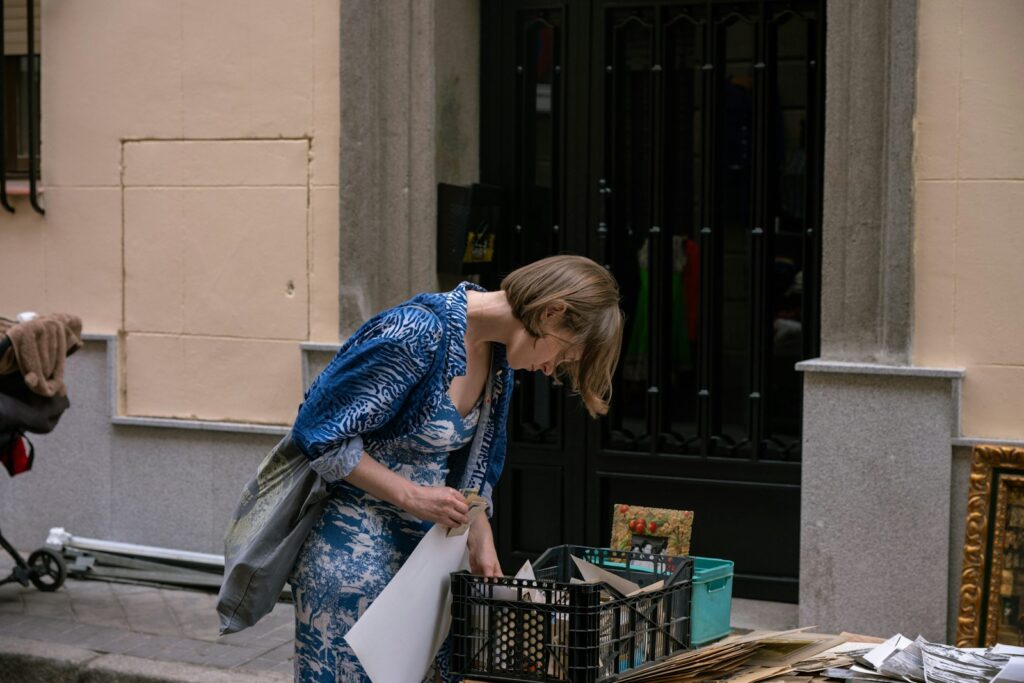
According to the woman, she was not upset with her husband for the mishap. He was genuinely apologetic, suggesting they could repair the piece or that she could still use it despite the damage. But for her, the damage meant something far deeper—it triggered feelings rooted in a childhood filled with clutter and a lack of closure around possessions.
The woman reflected on her upbringing, where the culture of saving everything, regardless of its condition, was the norm. Her mother, it seems, was a serial collector of damaged goods, leaving her daughter to grow up in a space devoid of organized sentimentality. “Leaks were not repaired, the cat’s health was not managed, so she would wee on things,” she recalled, illustrating the neglect that led to a home filled with ruined items.
In her childhood, the idea of throwing things away was unacceptable; everything was somehow sentimental, even if it was garbage. As she processed her husband’s attempt to salvage the damaged item, she felt the urge to go against that ingrained mentality. “The damaged item became garbage today,” she stated decisively. “My home is not a landfill.” This realization marked a shift in her perspective—she was ready to let go.
Her lack of sentimentality, she explained, stems from the overwhelming expectation that everything held value. This belief, which dominated her upbringing, has impacted her emotional attachments as an adult. Now, even a personal keepsake has to meet her new standards of worth, and once it is deemed unworthy, it exits her life without hesitation.
This moment with her husband highlighted a contrasting approach to belongings. While he sought to preserve the past, she was eager to move on—a reaction many can relate to, especially those who have faced similar childhood experiences. One reader responded to her story, saying, “Sometimes it’s healthier to let go than to hold onto broken memories.”
Another commenter empathized with her feelings about sentimentality, stating that growing up in a hoarding environment can leave lasting impressions. “It’s like we’re programmed to hold on forever, even to the trash,” the commenter shared, reinforcing the woman’s perspective on attachment.
The clash of their worldviews—the woman’s desire to discard and her husband’s inclination to repair—brings into focus the complexities surrounding personal belongings and memories. She is not alone in feeling the impact of past experiences on current relationships. “I get it,” another reader chimed in. “You just want to create a space that feels right to you.”
Yet, the path to a clutter-free life comes with its own set of challenges, especially when facing items that hold emotional significance. The woman described her reluctance to keep anything that she feels burdened by. “If it doesn’t bring joy, what’s the point?” she questioned succinctly. This philosophy reflects a growing movement towards minimalism—a lifestyle in which each item is carefully considered for its value and significance.
Her story illustrates how emotional baggage can manifest in unexpected ways. A simple accident became a lens through which she examined her past, leading her to a firmer resolve about her personal belongings. She characterized her home not just as a space but as a sanctuary free from the weight of unnecessary items. “It’s time for a clean slate,” she concluded firmly.
In the end, the woman is left contemplating how to reconcile her feelings about the past with her present life. While her husband may have good intentions, her resolve to prioritize her emotional well-being remains strong. “I’m not questioning his feelings,” she expressed, “but I need to create my own boundaries.”
This incident serves as a poignant reminder of how experiences from our childhood can shape our adult lives, particularly in how we view possessions and sentimentality. As the woman’s thoughts linger on the complexities of attachment and loss, she faces an ongoing decision about what to keep and what to let go.
More from Vinyl and Velvet:

Leave a Reply