

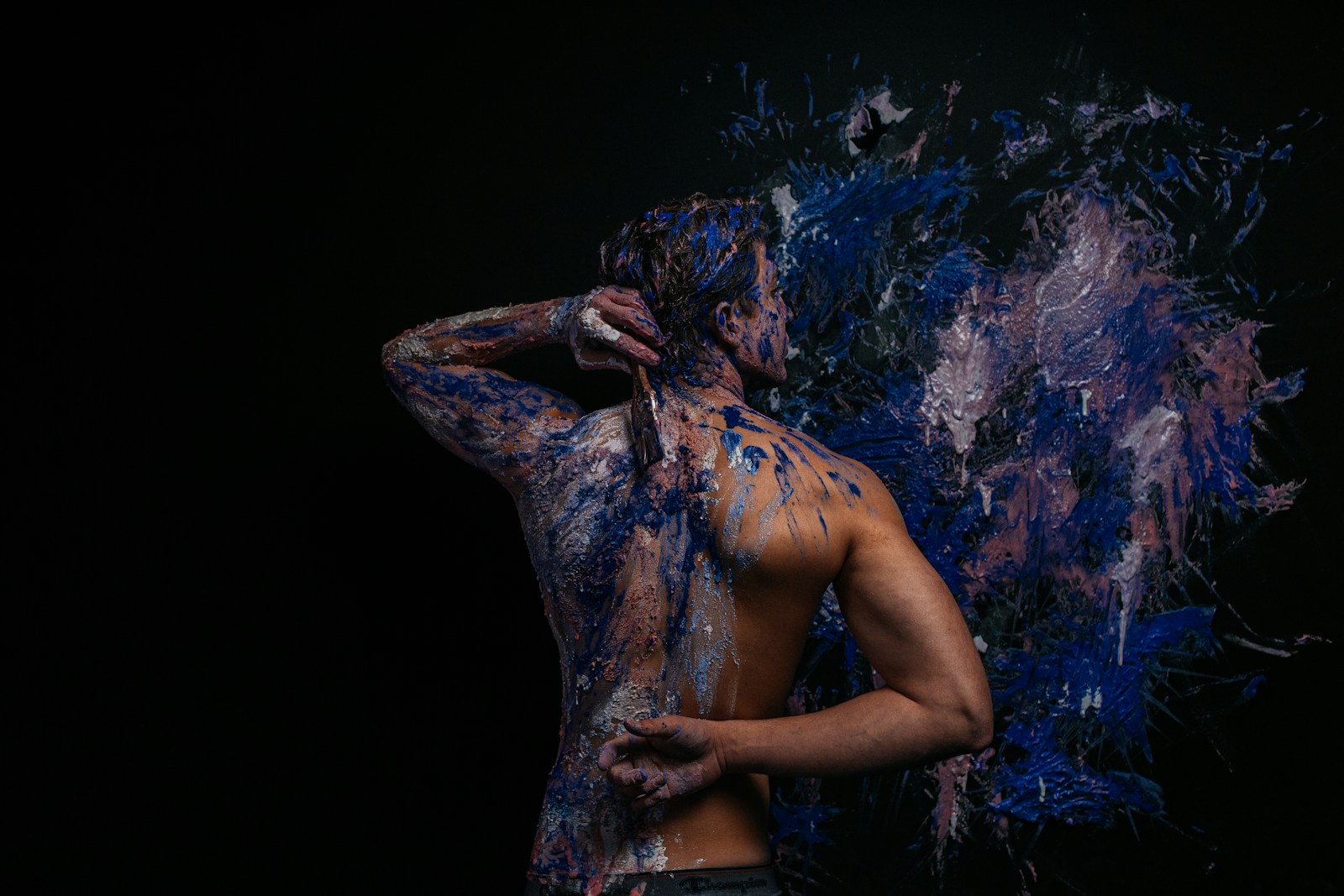
An artist’s ambitious plan to set up a body-marbling booth hit an unexpected snag when a technique that produced beautiful results on paper consistently failed when applied to human skin. The artist discovered that traditional marbling methods, which create stunning swirled patterns on paper and fabric, don’t simply transfer to body art despite seeming like they should work the same way.
The core problem lies in how paint interacts differently with paper versus skin, with variables like surface tension, viscosity, and absorption rates creating wildly inconsistent results that even experienced practitioners struggle to control. BLVisuals pioneered body marbling at festivals starting in 2011, but the artist’s experience highlights how the technique remains temperamental even after years of refinement.
The frustrating reality is that body marbling is highly sensitive to subtle changes in materials and techniques, making it difficult for newcomers to replicate the vibrant arm-dipping videos that have gone viral online. While paper marbling follows established rules, body marbling exists in a sweet spot of precise conditions that artists are still working to understand and document.
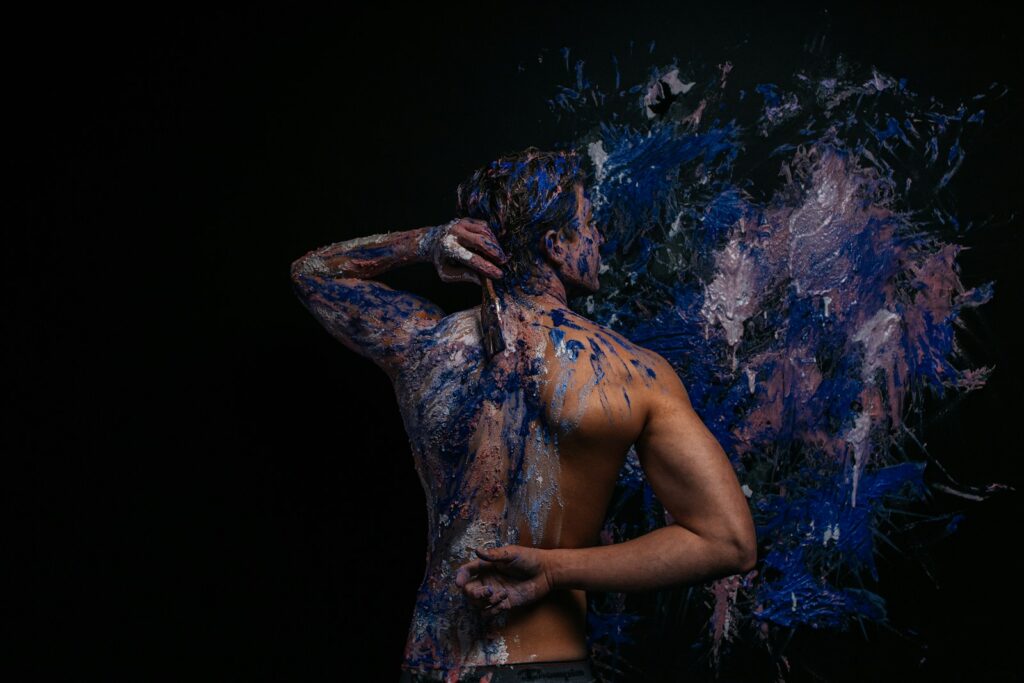
Why Body Marbling Works on Paper But Not on Skin
The artist discovered that traditional paper marbling relies on porous, absorbent surfaces and oil-based paints, while skin presents a non-porous, flexible barrier that rejects standard marbling paint formulations and requires completely different chemistry to achieve pattern transfer.
Traditional Marbling Techniques vs. Body Application
Paper marbling has used oil-based paints for centuries because paper’s porous fibers absorb and lock in pigments almost instantly. The artist found that this traditional marbling technique depended on capillary action—the paper literally drank the paint from the water surface.
When she tried applying the same method to skin, the oil-based marbling paint just slid off. Skin’s outer layer is designed to repel water and oil, protecting the body from environmental threats. The body marbling process requires water-based, skin-safe acrylic paints mixed with a body-safe binder instead of traditional oils.
She learned that successful body artists use neon or ultraviolet reactive colors that are water-based and non-toxic, completely different from the traditional Turkish paper art approach. The temporary body art application demands paints specifically formulated to grip skin without causing irritation.
Role of Surface Tension and Viscosity
The marbling medium’s surface tension determines whether marbling paint droplets spread properly or sink. The artist thickened her water bath with carrageenan to create the right viscosity, but she initially made it too thin for body work.
Her paint kept sinking because the medium wasn’t viscous enough to support the heavier water-based acrylics. Paper marbling uses a thinner consistency since gravity helps transfer patterns during the brief contact time. Body marbling needs a thicker medium—closer to light cream—because skin contact is less controlled than laying paper flat.
Surface tension also affects how patterns hold together during the dip. She noticed that when she adjusted the marbling medium to the proper thickness, the paint floated better but still transferred poorly. The issue was that her paint-to-binder ratio was off, creating droplets that didn’t maintain their structure on skin the way they did on paper.
Paint Adhesion to Skin vs. Paper
Paper’s cellulose fibers create microscopic hooks that grab pigment particles, but skin’s smooth keratin surface offers nothing for paint to grip. The artist mixed skin-safe acrylic paint with various binders, trying to find a formulation that would stick without irritating volunteers.
She discovered that a 2:1 ratio of paint to binder worked better than pure acrylics. Paper doesn’t need binders because absorption does the work, but skin requires chemical adhesion. Her early attempts wiped off immediately because she skipped the binder entirely, assuming skin would behave like paper.
The marbling paint also needed different viscosity than paper versions. Too thick and it clumped on the water surface; too thin and it dissolved into the marbling medium rather than floating. She spent weeks testing batches to find the balance between spreadability and skin adhesion.
Common Failures and Troubleshooting Body Marbling
The artist’s booth kept producing blurred, patchy designs that looked nothing like her crisp paper samples. Her main problems included paint that wouldn’t transfer, colors that mixed into mud, and patterns that smeared during the dip.
| Problem | What Caused It |
|---|---|
| Paint sinking | Marbling medium too thin or paint too heavy |
| Poor transfer | Wrong binder ratio or contaminated water |
| Muddy colors | Too much paint dropped or medium too runny |
| Fading quickly | Skin not properly prepped or design touched before drying |
She realized volunteers needed clean, dry skin without lotions or oils for the marbling technique to work. One participant had applied sunscreen that morning, and the pattern slid right off. She also learned that the design needed to air dry completely—rushing this step caused smearing that ruined the effect.
Her biggest mistake was not doing a patch test on volunteers before full-body application. One person developed mild irritation because she used craft acrylics instead of verified skin-safe acrylic paints. After switching to body-safe products and letting the marbling medium sit overnight to properly hydrate, her results finally started matching her paper work.
Modern Body Marbling: Materials, Innovations, and Community
The contemporary body marbling scene emerged from traditional water marbling practices and festival environments, requiring specific skin-safe materials and formulations that differ significantly from paper-based techniques. Black Light Visuals pioneered this art form starting in 2011, transforming it from therapeutic experimentation into a full-fledged festival attraction.
Evolution from Ebru and Festival Culture
Body marbling adapts ancient paper marbling methods to create swirling patterns on skin and fabric using water-based paints floated on viscous liquid baths. The traditional Turkish art of Ebru focused on decorating paper and silk, but modern practitioners reimagined the process for temporary body art.
Brad Lawrence brought body marbling to mainstream festival culture when BLVisuals debuted at Electric Forest Festival in 2013. The technique gained traction at music festivals where participants could dip their arms or feet into paint baths and instantly receive unique psychedelic designs. Festival environments proved ideal for body marbling booths because attendees sought interactive, memorable experiences that doubled as wearable art.
Essential Ingredients for Safe Body Marbling
Creating body marbling paint requires careful formulation to ensure skin safety while maintaining the floating properties needed for pattern creation. The base typically consists of distilled water thickened with carrageenan or similar binding agents to increase viscosity.
Body-safe acrylic paints must be specifically formulated to float on the thickened water surface without immediately sinking or dispersing. LumniMarble supplies cater to experienced practitioners who purchase materials in bulk for multiple projects. The paint-to-binder ratio remains critical—too much binder prevents pattern formation while too little causes paints to sink rather than float.
Art Therapy and the Origins of Body Marbling Booths
Brad Lawrence developed the body marbling technique after chronic tendonitis in his wrists at age 23 prevented him from drawing or sculpting. Motivated by friend and Purple Heart Marine Michael Zach, Lawrence explored abstract painting as art therapy, which led to the creation of Black Light Visuals.
The rehabilitation journey became a traveling business model centered on festival booking and interactive art experiences. Body marbling served dual purposes—providing therapeutic value for the artists while offering festival-goers participatory art that required no prior skill. When not traveling to events, BLVisuals operates a shop producing one-of-a-kind apparel using the same marbling techniques perfected through years of festival appearances.
More from Vinyl and Velvet:

Leave a Reply