

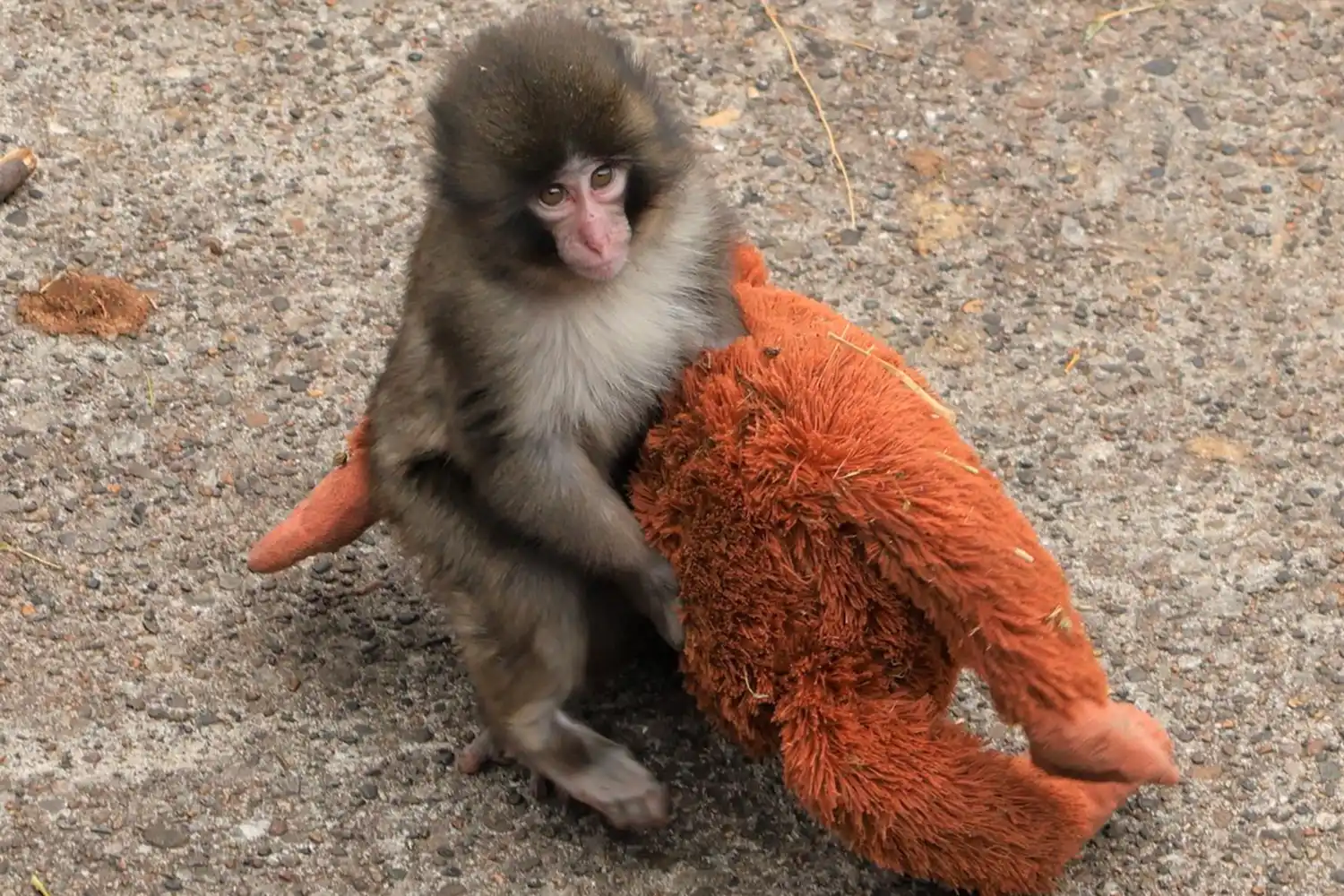
You’ll want to know why a tiny macaque clutching a stuffed orangutan has sent people online into a frenzy. Punch‑kun was abandoned at birth, raised by zookeepers, and now carries his plush companion everywhere—an image that explains both his vulnerability and his growing social comeback.
Punch‑kun’s bond with the toy gives a clear window into how caretakers helped him survive and begin joining other macaques, and that emotional detail is what made his story go viral.
Keep following to learn how his early life unfolded, how staff reintroduced him to the troop, and why his presence is changing visitor numbers and attention for the Ichikawa City Zoo.
Punch-Kun’s Story: From Orphaned Baby to Viral Star
Punch arrived at Ichikawa City Zoo as a fragile infant after being rejected by his mother. Caretakers stepped in immediately, providing round-the-clock feeding and social exposure while he learned to move among other macaques.
Abandonment and Early Hand-Raising
Punch, a baby Japanese macaque born in July 2025, was abandoned by his mother soon after birth. Zoo staff at Ichikawa City Zoo noticed he needed constant care and began hand-raising him to keep him warm, fed, and safe during the critical early weeks.
Keepers established a feeding schedule with formula and frequent small meals to mimic maternal feeding patterns. They used skin-to-skin contact and gentle handling to reduce stress and promote normal development. Staff documented his weight gains and behavioral milestones to track progress.
The team also staged controlled, gradual introductions to other juvenile macaques. Those supervised interactions aimed to teach Punch grooming, play, and social cues without exposing him to bullying or rejection. That careful protocol helped him build basic group skills before full integration.
Forming an Emotional Bond with the Stuffed Orangutan
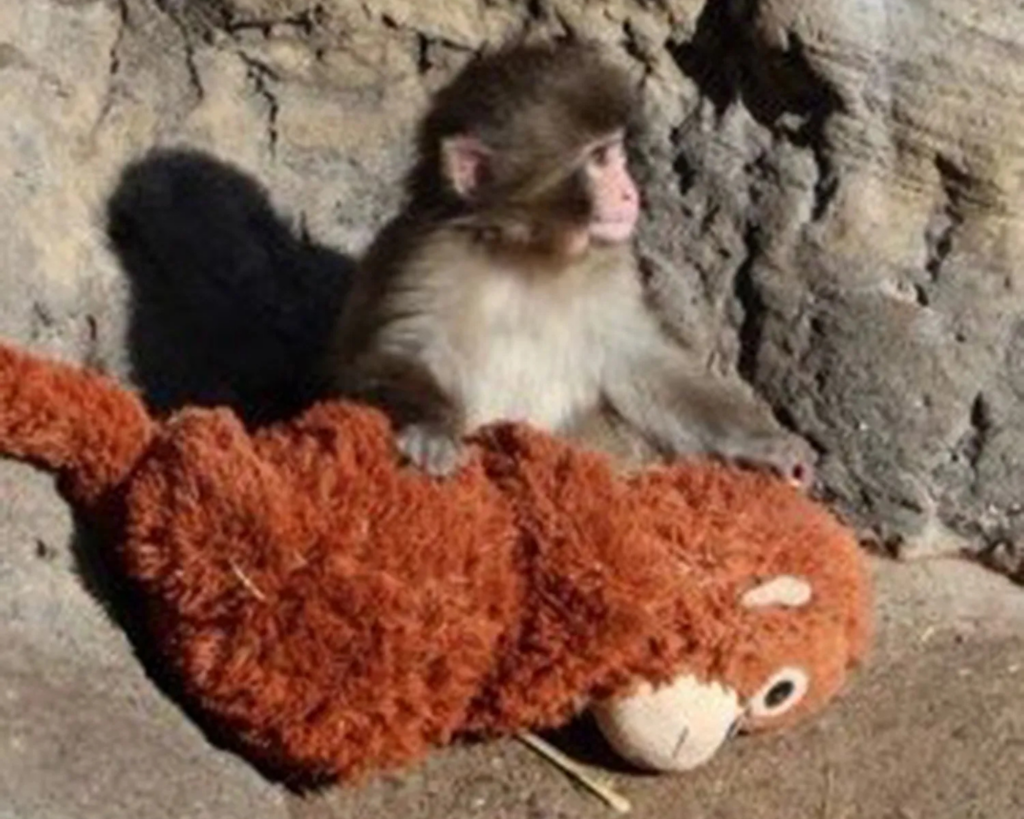
While under human care, Punch developed a clear attachment to an oversized stuffed orangutan toy provided by keepers. He used the plush orangutan as a comfort object—sleeping with it, carrying it around, and clutching it during moments of anxiety.
The stuffed animal functioned as a transitional object, helping him cope with separation from a mother and easing stress during social introductions. He treated the plush orangutan much like an infant macaque would treat a caregiver, seeking closeness and tactile reassurance.
Photos and short videos of Punch clutching the plush orangutan highlighted the emotional role of the toy. The image of a baby macaque with a large orangutan stuffed toy became the focal point of his public profile and explained why visitors flocked to the primate area.
Zoo Staff Support and Care
Ichikawa City Zoo keepers, led by experienced caretakers including Shumpei Miyakoshi among the team, coordinated Punch’s daily routine. They balanced direct human care with gradual exposure to conspecifics so he could learn natural macaque behavior.
The staff increased supervised group time as Punch showed readiness, providing grooming opportunities and brief, closely monitored play sessions to build his social confidence. They also adapted enclosure access and visitor flow when crowds grew, prioritizing Punch’s welfare.
Keepers posted regular updates and adjusted interventions based on Punch’s responses. Veterinary checks, behavioral observations, and environmental enrichment—like safe toys and climbing structures—helped his physical and psychological recovery as he matured.
Social Media’s Reaction to Punch’s Journey
Images and short clips of Punch clutching the plush orangutan spread rapidly across platforms, sparking hashtags such as #がんばれパンチ and #hangintherepunch. Social feeds filled with supportive comments, photos from visitors, and shared videos that amplified interest in Ichikawa Zoo.
The viral attention drew large crowds, creating both positive outcomes—greater public engagement with the zoo—and logistical challenges, including visitor management and potential stress for other animals. The zoo issued statements thanking visitors and asking for patience during peak days.
Online discussion also prompted conversations about orphaned wildlife care, the emotional lives of baby macaques, and best practices for zoos. Many users praised the zoo staff for their hands-on work and for using a stuffed toy to support Punch’s transition into a group.
The Impact of Punch-Kun on the Zoo and Visitors
Punch‑kun’s story has changed daily life at Ichikawa City Zoo and shifted how visitors interact with the primate exhibit. Attendance patterns, staff routines, and the social dynamics inside the Monkey Mountain enclosure all show measurable effects.
Rising Popularity and Increased Attendance
Lines at the Ichikawa City Zoo lengthened after photos and videos of Punch‑kun with his orangutan plushie went viral. The zoo reported crowding around the primate viewing areas, with peak days drawing visitors who specifically wanted to see Punch. Ticketing and entry flow required adjustment to avoid congestion at the monkey observation points.
The surge also sparked media coverage and social posts that amplified visitation from local and regional guests. Some visitors arrived with small donations of toys or letters for keepers, increasing daily workload for staff who had to manage both animal care and public interaction. The heightened interest brought short‑term revenue but also new challenges in crowd control and welfare monitoring at the primate enclosure.
Integration with the Monkey Mountain Enclosure
Staff moved Punch‑kun into the Monkey Mountain troop to promote natural social learning with other macaques. Caretakers introduced him to the larger group gradually, supervising interactions to reduce stress and prevent aggressive behavior from older monkeys. The orangutan plushie remained with him as a comfort object during integration, helping him navigate initial social uncertainty.
Keepers observed both positive steps and setbacks: moments of grooming and play alongside episodes where Punch was temporarily ostracized. Veterinary and behavioral teams monitored his feeding, sleep, and social signals to ensure he received both veterinary care and opportunities to bond with troop members. Adjustments to enclosure enrichment and sightlines were made to support his inclusion without disrupting the established troop routines.
Future Hopes for Punch‑Kun
Ichikawa City Zoo aims to balance public interest with long‑term welfare goals for Punch‑kun. Plans include continued behavioral monitoring, targeted enrichment that encourages species‑typical interactions, and staff training to manage increased visitor attention without compromising primate health. The zoo hopes to gradually reduce his reliance on the stuffed toy as social bonds within the monkey mountain troop strengthen.
Officials also consider educational programs that explain macaque behavior and the needs of orphaned primates. Those programs could channel public enthusiasm into stable support—donations for veterinary care, funding for enclosure upgrades, and measured visitation policies that protect both Punch and the broader primate population.
More from Vinyl and Velvet:

Leave a Reply