

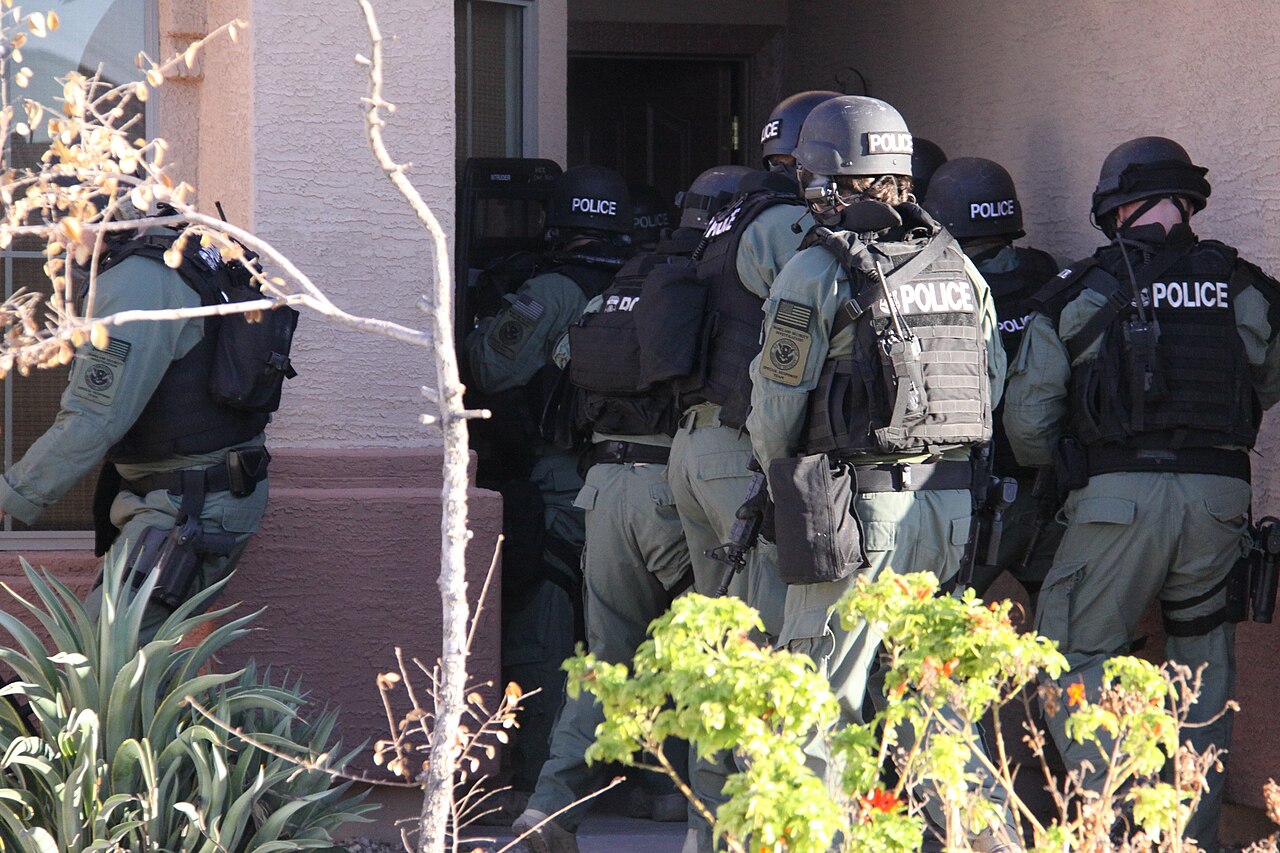
The federal immigration dragnet that has defined life in parts of Minneapolis for weeks is finally easing, but it is not disappearing. Instead, the operation is being reshaped so that a smaller contingent of agents focuses on violent offenders rather than conducting broad neighborhood sweeps.
The shift follows intense political pressure, eye‑popping economic damage and a public safety debate that has played out on streets, in courtrooms and at the Bishop Henry Whipple Federal Building. The scaled‑back approach now taking shape is meant to keep targeting people accused of serious crimes while giving a shaken city room to breathe.
From all‑out surge to targeted presence
The turning point came when Trump border czar Tom Homan told reporters that the Minnesota immigration surge was ending, a declaration that arrived after weeks of protests, lawsuits and national scrutiny. In that briefing, which drew attention partly because it landed at 12.02 and at 41 minutes past the hour, he framed the change as a response to both operational goals and public backlash, signaling that the huge influx of federal agents would give way to a more focused presence in Minneapolis and across Minnesota, rather than a full retreat.
Homan, described as the border czar appointed by President Donald Trump to crack down on illegal immigration, has been the public face of this pivot and has repeatedly argued that the administration met its objectives under Operation Metro Surge and could now pull back without sacrificing control. In earlier comments, he linked the shift to a broader strategy that leans on targeted enforcement instead of massive raids, a model that mirrors how ICE enforcement and operations are typically justified as focusing on people with criminal records.
Economic and civic fallout forced a rethink
Minneapolis officials did not wait quietly on the sidelines while the surge unfolded. City of Minneapolis leaders commissioned an analysis of Operation Metro Surge and then went public with what they called a 203 million impact, describing ripple effects that hit everything from downtown restaurants and rideshare drivers to school attendance. In their breakdown of Operation Metro Surge, they stressed that fear of encountering federal agents kept residents at home, which in turn slowed local commerce and city tax collections.
Another study put a sharper number on the damage, concluding that the ICE surge cost the Minneapolis economy $200 m and spelling out that the city absorbed roughly $200 million in lost output and related hits. That analysis tied the figure directly to the presence of ICE in Minneapolis, arguing that the dragnet chilled hiring, scared off customers and left businesses scrambling to adapt to a sudden drop in foot traffic. For local leaders, those numbers became Exhibit A in their case that the federal strategy was unsustainable in its original form, no matter how it was marketed in Washington.
Public safety arguments and the “worst of the worst”
While city officials tallied economic harm, federal authorities leaned on a different set of numbers to defend the surge. Homeland Security releases trumpeted that Some of the worst of the worst removed from Minnesota included people like Mohamud Farah Mohamed, described as a criminal illegal alien whose case was held up as proof that the operation was getting violent offenders off the streets. Another release, bluntly titled Meet Some of the Child Rapists, Sex Offenders, Gang Members, and Violent Offenders Agitators Tried to Shield from Arrest, listed child rapists, sex offenders and gang members that agents had arrested, arguing that activists who tried to Shield those individuals from Arrest were putting communities at risk.
Those examples fed directly into the White House narrative that the surge was necessary to protect residents, even as critics pointed out that sweeps also scooped up people with little or no criminal history. Homan, in his role as border czar for President Donald Trump, has long insisted that the administration measures success partly by the number of people with convictions removed from the country, and that message was repeated as he outlined the new, narrower mission in Minnesota. His comments fit with the official Minnesota removals narrative, which highlights heinous criminals while saying far less about low‑level cases caught up in the same net.
Courts, corrections and the law‑and‑order pivot
Legal and corrections officials in Minnesota have been pulled into the center of this fight, often trying to walk a line between federal demands and local realities. A federal judge, in a case that drew national attention on 31.01, refused to block the surge after a request for a stay, a ruling that came as Ottilie Mitchell reported on Nationwide anti‑ICE protests that had filled streets on a Saturday and featured tense standoffs between demonstrators and agents. The court decision effectively gave federal authorities a green light to keep operating at full speed, at least for a time, despite objections from lawmakers in both parties who argued the approach was too sweeping.
Inside the state system, the debate has been just as intense. Today, Paul Schnell, Commissioner of the Minnesota Department of Corrections, used testimony before the United States Senate Comm to argue that any cooperation with federal immigration authorities should be tightly focused on people who pose a clear threat, not on everyone who passes through DOC custody. His comments, shared in DOC news releases, suggested that state corrections leaders want more say in how detainers and transfers are handled so that prison resources are not consumed by low‑risk cases that have little to do with violent crime.
Protests, politics and what the drawdown really changes
Behind the policy language sits a very human story of resistance and fear that has played out on Minneapolis streets. As Immigration Enforcement Escalates, Popular Resistance Is Growing, as By Selen Ozturk reported, with organizers documenting how families tracked agents in real time, neighbors used group chats to warn each other about raids and volunteers filmed confrontations with ICE during protests in Minneapolis. Those scenes, described in detail in the piece While deportation campaigns intensify nationwide, helped build a national narrative that the surge in Minnesota was a test case for how far the Trump administration would go, and how quickly communities would push back.
That context helps explain why the announcement that the surge would wind down landed with such force. Trump border czar Tom Homan used a press conference at the Bishop Henry Whipple Federal Building in Minneapolis to say that the large deployment would end at 12.02 in Feb, even as he promised that a smaller security force would stay in place to monitor conditions and respond if violence flared again. He credited increased cooperation with local law enforcement and pointed to White House coordination as reasons the Trump team felt confident enough to scale back, while also making clear that they would not hesitate to surge again if they believed local policies tied their hands.
More from Vinyl and Velvet:

Leave a Reply