

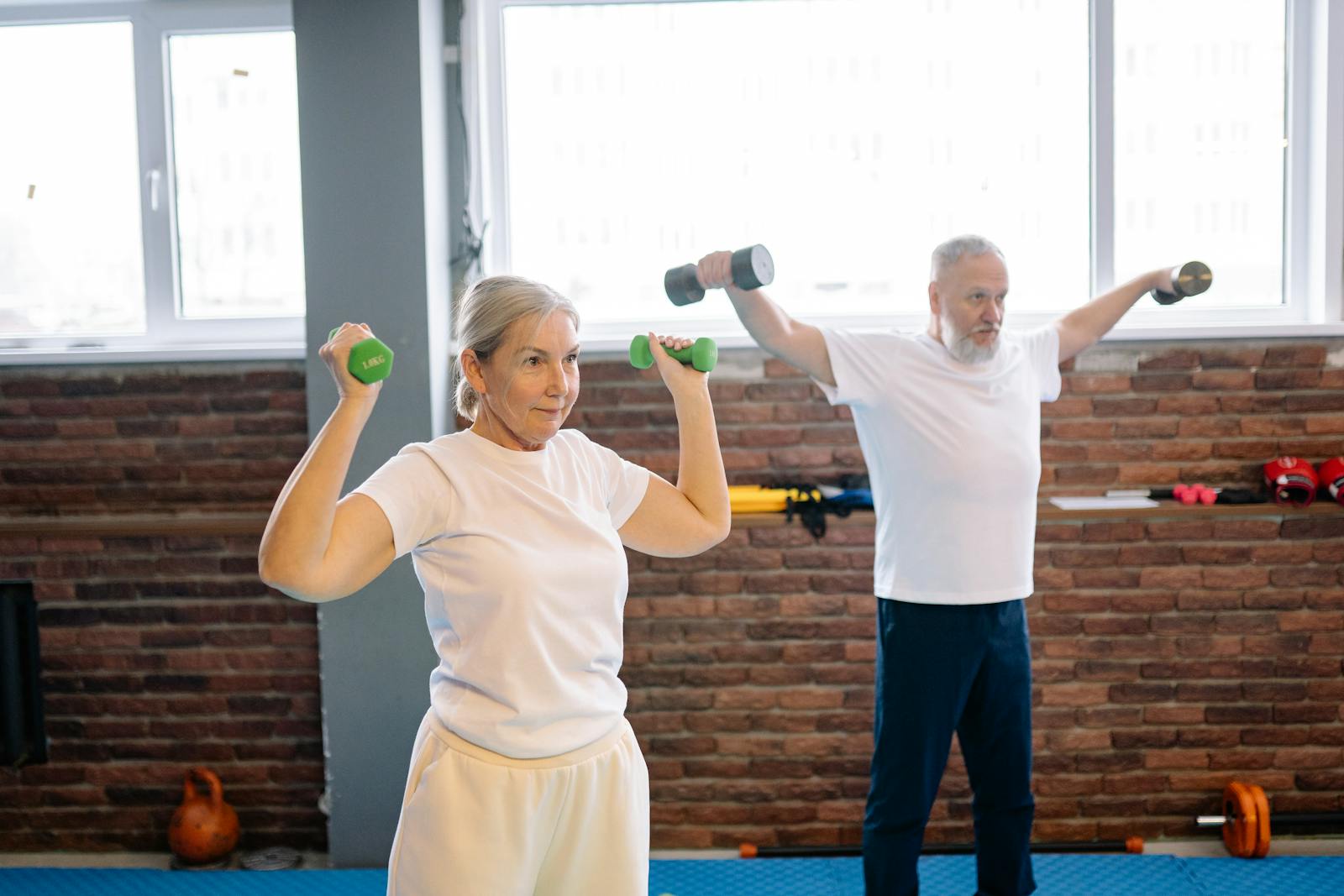
They notice changes in energy, balance, or how stairs feel—and that’s a sign to act. Strength training after 50 protects mobility, bone health, and independence far more effectively than walking alone, and small, consistent workouts can deliver big returns for daily life.
Start lifting with safe, sensible progressions and you slow muscle loss, reduce injury risk, and keep doing the activities you love. The rest of the article explains why strength work becomes more important with age and gives eight practical rules to train smart, stay mobile, and preserve independence.
Why Strength Training After 50 Isn’t Optional
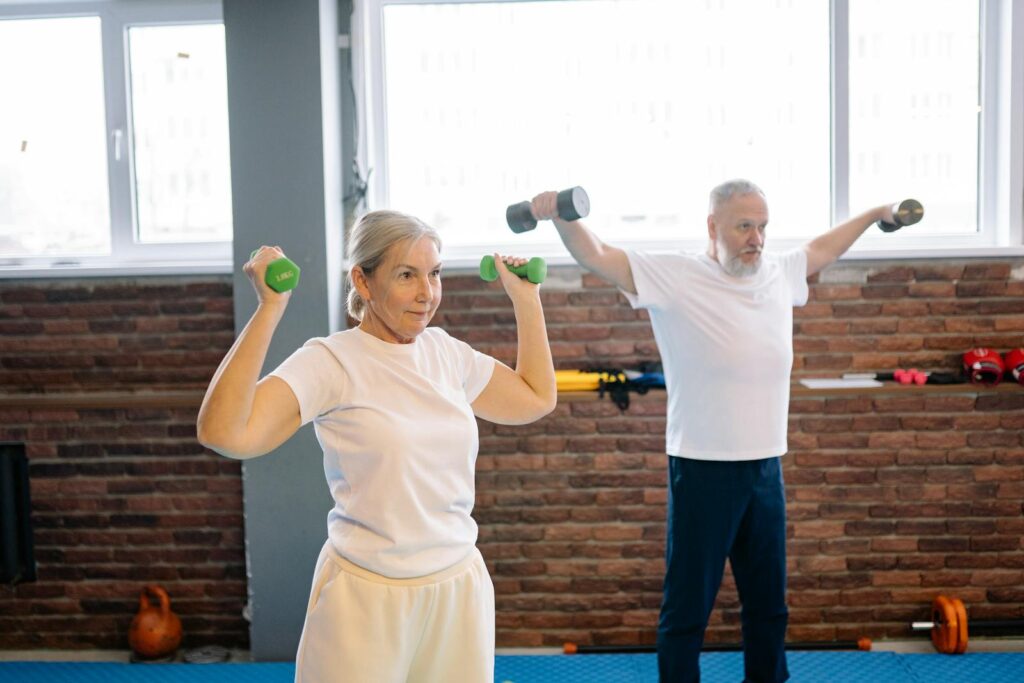
Strength training after 50 preserves muscle, bone, balance, and metabolic health in measurable ways. Small, consistent resistance sessions change daily function, reduce fall risk, and lower the chance of age-related chronic conditions.
How Strength Training Preserves Mobility and Prevents Sarcopenia
As people age they lose muscle mass at roughly 3–8% per decade starting around 30, with the decline accelerating after 60. Targeted resistance work — progressive overload using bodyweight, bands, or weights — stimulates muscle protein synthesis and can increase muscle size and strength even in the 60s and 70s.
Key practical actions:
- Perform compound moves (squats, deadlifts, rows) 2–3 times weekly.
- Use 8–15 reps at a challenging but controlled load; increase weight 5–10% when sets get easier.
- Prioritize eccentric (lowering) control to protect tendons and improve function.
These strategies directly counter sarcopenia by improving muscle cross-sectional area and neuromuscular coordination. They also help maintain joint range of motion and functional movement patterns needed for walking, stair climbing, and rising from a chair.
Impact on Independence and Daily Life
Strength gains translate into clear everyday improvements: carrying groceries, getting up from the floor, navigating stairs, and doing yard work become easier and safer. Even modest increases in leg and grip strength reduce dependence on others for basic tasks.
Practical markers to track progress:
- Timed Up-and-Go improvement
- Increased grocery-carry distance or weight
- Faster sit-to-stand repetitions
Balance and strength training together reduce fall likelihood. Single-leg stands, loaded carries, and functional lifts build the specific strength and stability required to stay independent at home and while traveling.
Longevity and Chronic Disease Reduction
Resistance training lowers risk factors tied to earlier morbidity. Regular strength work improves insulin sensitivity, contributes to healthier body composition, and supports bone mineral density — all linked to fewer fractures, lower diabetes risk, and improved cardiovascular profiles.
Evidence-backed actions:
- Two sessions weekly deliver measurable metabolic and bone benefits.
- Combine with aerobic activity for maximal cardiovascular and mortality benefits.
By improving metabolic health, reducing visceral fat, and strengthening the skeleton, strength training after 50 becomes a preventive medical strategy as much as a fitness plan. For anyone aiming to preserve long-term health, it functions as a high-impact, low-cost intervention.
Eight Essential Rules for Safe and Effective Strength Training
These rules focus on movements that preserve everyday function, gradual progression that avoids injury, and simple programming that fits into busy lives. They emphasize full-body work, technical safety, realistic frequency, and recovery strategies that protect mobility and independence.
Focus on Functional, Full-Body Movements
He should choose exercises that mimic everyday tasks: standing from a chair, lifting a grocery bag, or reaching overhead. Movements like chair squats, step-ups, glute bridges, and resistance band rows train legs, hips, and back together, improving balance and reducing fall risk.
Aim for compound actions rather than isolated machine-based moves. A routine built around squatting to a chair, wall push-ups, and band rows transfers directly to daily life and wastes less time. Prioritize unilateral patterns (single-leg step-ups, single-arm band row) to expose strength imbalances and improve stability.
Keep rep ranges in a practical window—8–20 reps depending on load—and use 2–4 sets for major movements. If balance is limited, regress the movement (box or chair for squats, elevated surface for push-ups) and progress when form is stable.
Progress Gradually With Weight, Reps, or Resistance
They should increase challenge by small, measurable steps: add 1–2 kg, two extra reps, or a denser resistance band every 1–3 weeks. Progressive overload can be achieved with heavier dumbbells, thicker bands, or by changing leverage—moving from wall push-ups to inclined and then floor push-ups.
Track one variable at a time to see what works. If someone ups reps from 10 to 15 for goblet squats without form breakdown, they can next increase load. For step-ups, raise the step height slowly rather than forcing heavier weights immediately.
Use objective markers: more reps at the same load, cleaner technique on the same set/rep scheme, or easier perceived exertion at previous weights. If pain or persistent fatigue appears, reverse the progression for a week and re-test.
Prioritize Form and Safety Over Heavier Loads
They must treat technique as non-negotiable. Proper alignment—neutral spine for Romanian deadlifts and glute bridges, knees tracking over toes for chair squats, and scapular control for band row and chest press—reduces injury risk and makes gains sustainable.
Use regressions: perform wall push-ups before knee or full push-ups; use a chair for squats until hip and ankle mobility allow deeper depth. Slow controlled tempo (2–3 seconds on the eccentric) improves muscle control and reveals compensations.
When in doubt, drop weight and practice the pattern. Pain that’s sharp, joint-based, or persists beyond 48 hours signals to stop and consult a clinician. Safety tools—mirror, video, or a coach—help maintain form as load increases.
Start With Bodyweight and Simple Tools
Beginners and those returning after a break should begin with bodyweight patterns and low-cost equipment: resistance bands, kettlebells, and a stable chair. Wall push-ups, bodyweight chair squats, glute bridges, and band row give strength and confidence without high impact.
Bands allow progressive resistance and easy scaling for rows and chest press alternatives. A single band row simulates pulling actions needed for carrying and opening doors. Kettlebells or dumbbells let one-handed loading for farmer carries or single-arm chest press, which build real-world robustness.
Build a foundation over 4–8 weeks focusing on movement quality, then introduce weights. Keep workouts simple: 4–6 exercises per session that combine push, pull, hinge, squat, and single-leg patterns.
Train 2–3 Times Weekly and Build Consistency
Twice-weekly full-body sessions deliver strong returns with lower injury risk and easier recovery for people over 50. Three sessions work for those recovering quickly; two sessions suit beginners or those with heavy schedules.
Design each session to hit major patterns: squats (chair squats), hinges (Romanian deadlifts or glute bridges), pushes (wall push-ups or chest press), and pulls (resistance band rows). Keep sessions to 30–45 minutes and alternate days with walking or light cardio.
Consistency beats intensity. They should aim for steady adherence—8–12 weeks of twice-weekly training produces noticeable strength and functional improvements. Use a simple log of exercises, sets, reps, and band color or weight to monitor progress.
Use Core Exercises That Support Everyday Activities
Select exercises that directly improve independence: chair squats for sit-to-stand, step-ups for stairs, glute bridges for hip extension during walking, and band row for pulling and reaching. These moves target the muscles used in transfers, shopping, and household chores.
Integrate multi-joint lifts like Romanian deadlifts to strengthen posterior chain and protect the low back. Pair a push (wall pushups or chest press) with a pull (band row) each session to maintain shoulder balance and reduce injury risk.
Include unilateral work each week—single-leg step-ups, single-arm row—to boost balance and correct asymmetries. Two or three core compound exercises per session give the best return on time invested.
Listen to Your Body and Adjust As Needed
They should treat soreness, fatigue, and joint irritation as feedback. Mild delayed-onset muscle soreness after a new session is normal; sharp joint pain is not. Adjust intensity, reduce range of motion, or swap exercises when pain persists.
Track recovery with simple questions: sleep quality, energy levels, and performance compared with the previous week. If energy drops and performance stalls, cut volume by 20–30% for a week and reassess. For chronic issues, replace high-impact or high-range moves with regressions—wall push-ups instead of floor push-ups, rows with a lighter band instead of heavy dumbbells.
Progress should feel sustainable. When a movement becomes pain-free and technically clean, they can safely advance it.
Incorporate Recovery and Nutrition for Best Results
Recovery matters more with age: prioritize sleep, protein intake, and light activity between sessions. Aim for 1.0–1.6 g/kg daily protein distributed across meals to support muscle repair and growth. Post-workout protein within a couple hours helps but isn’t mandatory.
Use active recovery—walking, mobility drills, and gentle banded shoulder work—to maintain blood flow and reduce stiffness. Schedule at least one full rest day after a hard session for most older adults. Hydration, calcium and vitamin D adequacy, and a regular check of medications that affect balance or muscle function also help training outcomes.
Massage, foam rolling, and targeted stretching support mobility but should not replace strength work that builds the structures that keep someone independent.
More from Vinyl and Velvet:

Leave a Reply