

You watched the moment unfold: two veteran country stars disagreed loudly on what makes a contestant worthy of Idol’s next round. The clash boils down to a basic choice — risk a quirky, niche act for originality or favor proven, mainstream appeal — and there’s no single right answer.
Still, the exchange felt personal, sparking heated reactions across social platforms and forcing the show to confront how judges’ chemistry shapes voting and viewership. That tension frames a closer look at what happened on stage, how fans responded, and what it could mean for the season ahead.
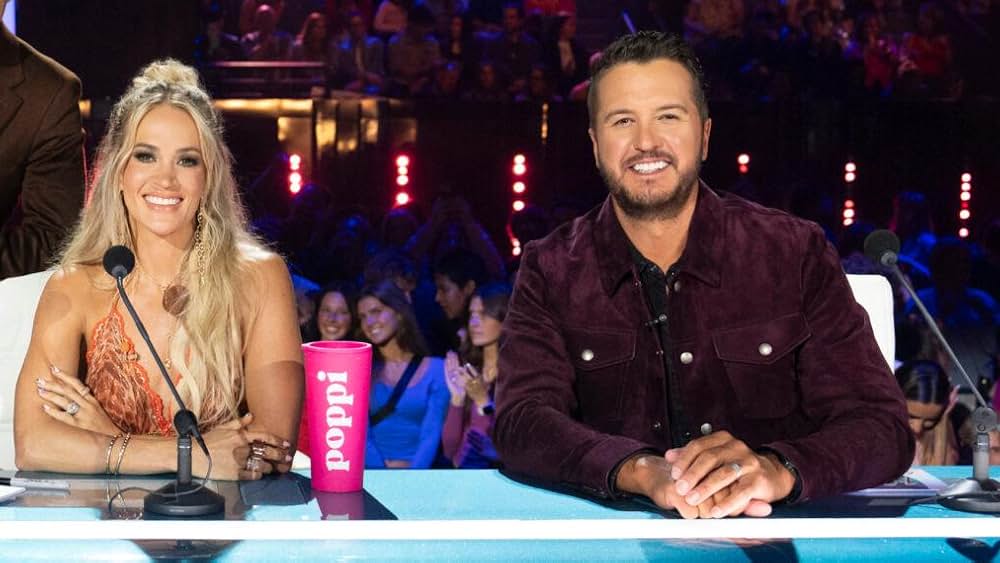
Inside the On-Air Clash: How the Judges’ Disagreement Unfolded
Judges traded sharply different reactions to the same performances, with one prioritizing crowd-pleasing charisma and the other focused on fit and technical consistency. The disagreement centered on how auditions would translate to later rounds like Hollywood Week.
Key Incidents: The Miyoko and Vincent Fondale Auditions
Miyoko’s audition prompted the first visible split. Luke Bryan called her “a star” for her anime-influenced performance and unique stage persona, arguing that raw charisma can carry a contestant far on American Idol. Carrie Underwood countered that the show’s format and song choices might not suit Miyoko’s niche style, saying it may not be the right “avenue” for that act.
A second flashpoint involved Vincent Fondale. Underwood praised his vocal moments and emotional connection. Bryan raised concerns about inconsistent connection on quieter passages, questioning whether Vincent’s tender moments would hold up under pressure in Hollywood Week. Lionel Richie ultimately sided with Underwood on Vincent, tipping the vote and sending him forward.
Differences in Judging Styles and Criteria
Luke Bryan favored marketable excitement and stage personality, often weighing how a moment will play to live audiences and TV viewers. He emphasized “big moments” and whether a contestant can create a memorable TV clip or viral moment that advances their career beyond auditions.
Carrie Underwood emphasized technical skill, vocal control, and long-term fit within the competition’s structure. She evaluated song selection, arrangement, and whether a performer’s technique would survive rehearsal focus and the heightened demands of Hollywood Week. Lionel Richie tended to act as a tiebreaker, balancing commercial instincts with technical appreciation.
Contestants at the Center of the Controversy
Miyoko, a 24-year-old described as an anime singer, became the lightning rod for debates about musical taste versus competition fit. Her song arrangement and stage energy divided the panel: Bryan saw mainstream potential in the spectacle, Underwood worried about sustainment.
Vincent Fondale’s audition highlighted the tension between raw charisma and technical consistency. He showcased big notes and emotional delivery, but softer moments raised questions about control. Voters and viewers split over whether his strategy and song choices would translate in subsequent rounds like Hollywood Week.
Viewer Reactions, Social Buzz, and What the Clash Means for ‘American Idol’
The disagreement produced sharp fan reactions online, prompted quick PR attention, and raised questions about how the show balances judge dynamics with contestant opportunities.
Fan Reactions and the Split on Social Media
Fans erupted across platforms after the on-air clash. Clips of Luke Bryan defending the contestant and Carrie Underwood saying the act didn’t fit the arena circulated widely on TikTok and X, generating thousands of reposts and comments within hours.
Comments polarized: many praised Bryan for advocating for variety and risk-taking, while others backed Underwood’s emphasis on consistency and market fit. Engagement metrics showed spikes in short-form video views and hashtag use tied to both judges’ names, indicating sustained conversation rather than a momentary trend.
The split mapped to preexisting fan camps. Country-music viewers and longtime Luke Bryan supporters trended hashtags in his favor, while segments of the Idol community and some industry observers highlighted Underwood’s curatorial role. Influential creators and clip curators framed the narrative, amplifying both support and criticism.
Network Response and PR Implications
ABC and the show’s publicity team monitored social platforms and issued no immediate public reprimand. Internal memos, according to typical network practice, likely reminded talent to maintain on-air decorum while allowing authentic disagreement to play out. That balance preserves live-television tension without escalating controversies that could alienate advertisers.
From a PR perspective, the episode created promotional opportunity: editors used the debate to headline recaps and drive tune-in for subsequent episodes. Advertisers and distribution partners will watch audience retention numbers for signs the clash increased or reduced viewership. Network communications will emphasize judge chemistry, using interviews and controlled clips to reframe the controversy as constructive debate rather than dysfunction.
Impact on Future Seasons and the Idol Community
The incident may influence casting and judge coaching in future seasons. Producers commonly weigh judge personalities against audience reaction; evidence of high engagement can encourage keeping dynamic but contentious panels. Conversely, repeated public rifts risk fragmenting the Idol community and complicating talent recruitment.
Within the Idol community — contestants, alumni, and talent managers — reactions will matter. Some hopefuls may view the show as more open to genre diversity after Bryan’s stance. Others may prepare to tailor auditions to perceived judge preferences. Overall, producers will likely fine-tune audition selection and editing to capture authentic moments that boost conversation while minimizing persistent division.
More from Vinyl and Velvet:

Leave a Reply