

You’re likely wondering whether Donald Trump’s claim that China could “terminate all ice hockey” in Canada holds any weight — and the short answer is no. Officials and experts say the idea doesn’t make sense strategically, legally, or culturally, so you can expect a closer look at why this warning falls flat.
This piece breaks down the claim, examines Canada–China trade ties and the Gordie Howe bridge dispute, and evaluates how realistic any foreign effort to eradicate a national sport would be. Expect clear explanations of diplomatic mechanics, cultural stakes, and how political rhetoric can distort real risks.
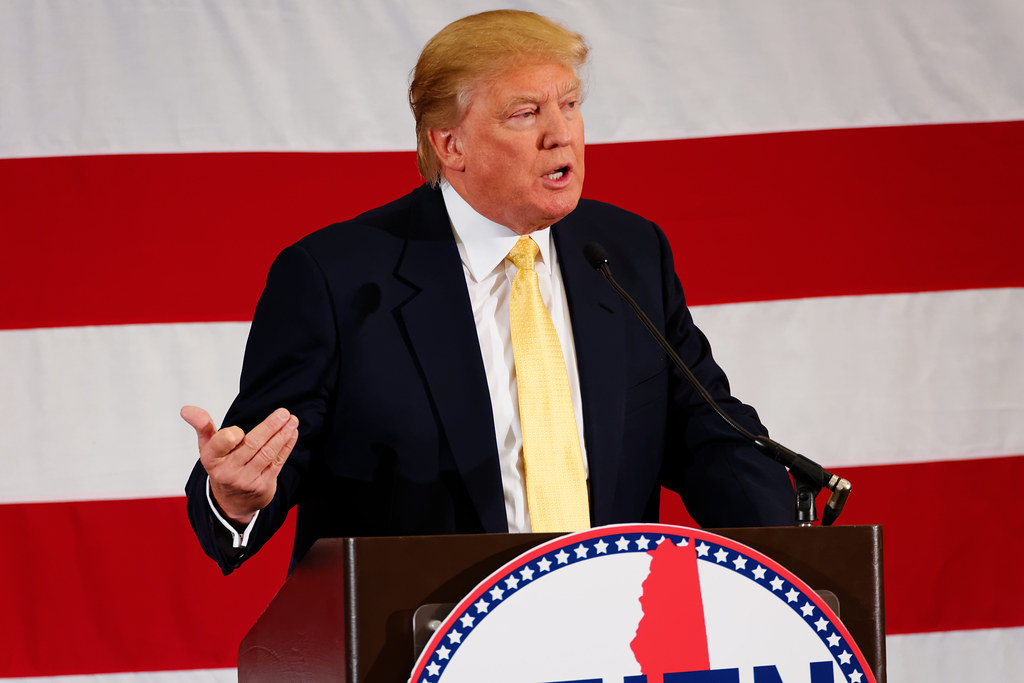
Breaking Down Trump’s Claims
Trump tied trade and geopolitical concerns to an unlikely cultural outcome, claimed social media amplified the message, and critics called the scenario implausible on legal and practical grounds.
Overview of Trump’s Statement
Donald Trump said China could “terminate ALL Ice Hockey being played in Canada” and eliminate the Stanley Cup if Canada deepened ties with Beijing. He made the remarks while criticizing Canada’s new strategic engagement with China and framed the potential shift as a loss of Canadian sovereignty over cultural institutions.
Experts and Canadian officials immediately noted the claim lacks a legal or enforcement mechanism: China cannot unilaterally ban a sport in a sovereign country, nor control private competitions like the NHL or the Stanley Cup trusteeship. Logistical and institutional realities—provincial sport bodies, national federations, and international governing entities—make such a unilateral outcome effectively impossible.
Role of Truth Social in Spreading the Claim
Trump posted material and commentary on Truth Social, where his statements quickly reached a large audience of supporters and amplifiers. The platform’s echo chamber dynamics and reposting by conservative outlets and influencers accelerated the spread of the ice-hockey warning.
Misinformation researchers point out that platform-native amplification can turn offhand or rhetorical assertions into trending narratives. The claim then moved from Truth Social into mainstream clips, interviews, and partisan commentary, giving it outsized visibility despite lacking factual grounding.
Focus on Ice Hockey and National Identity
Ice hockey and the Stanley Cup occupy outsized symbolic weight in Canada’s national identity, which helps explain why the remark resonated and provoked strong reactions. Linking a trade decision to the fate of a national sport taps into cultural anxieties about sovereignty and foreign influence.
But institutional control matters: Hockey Canada, provincial associations, the NHL, and the Stanley Cup trustees all operate under Canadian and international legal frameworks. That structure makes the idea that a foreign government could simply “terminate” hockey in Canada practically and legally unworkable, even if the notion plays well rhetorically.
Canada-China Trade Relations and the Controversy
Trade negotiations between Canada and China have focused on reducing tariffs and reopening markets for key Canadian exports while allowing limited Chinese goods into Canada at lower duties. Economic stakes include canola oil access, Chinese electric vehicle (EV) imports, and political fallout with the United States.
Recent Trade Deals Between Canada and China
Canada and China agreed to roll back some punitive measures that limited Canadian canola exports, cutting retaliatory tariffs that had reached roughly 85% down to around 15% in the 2026 understanding. That change reopened a major market for Prairie farmers and eased pressure on Canadian canola stocks.
The governments also negotiated a tariff arrangement for Chinese electric vehicles, allowing an initial quota of about 49,000 EVs to enter at a most-favored-nation rate near 6.1% rather than the previous 100% levy. This move aimed to lower prices for Canadian consumers and diversify auto supply chains, while drawing criticism from some U.S. officials.
Prime Minister Mark Carney framed the agreements as pragmatic steps to restore commercial ties without committing to a broader free-trade pact. China’s leadership, including Xi Jinping, signaled interest in stabilizing trade ties, but both sides stopped short of deep security or defense alignment.
Impact of Tariffs and Economic Pressures
Tariffs drove the recent talks. Canada suffered export blockages and steep retaliatory tariffs that particularly hit canola producers and other agricultural sectors. Those tariffs forced Canadian exporters to find alternative markets and depressed prices for affected commodities.
Economic pressure from proposed U.S. retaliation amplified Ottawa’s calculus. President Trump threatened steep tariffs on Canadian goods if Ottawa struck a deeper trade deal with China, raising the risk for industries relying on U.S. supply chains and cross-border logistics. The EV quota was partly designed to balance consumer access and political risk.
Financial implications extended beyond immediate tariffs: exporters faced inventory backlogs, and some firms delayed investments pending trade clarity. The tariff shifts provided short-term relief but left structural uncertainties for sectors that depend on stable market access.
Canadian Government’s Response
Prime Minister Mark Carney publicly emphasized that Canada would not pursue a comprehensive free-trade agreement with China, portraying recent deals as targeted, transactional fixes rather than strategic realignment. He stressed protecting Canada’s security partnerships and economic sovereignty while restoring market access for farmers and manufacturers.
Ottawa negotiated the canola and EV arrangements to mitigate immediate economic harm and preserve diplomatic flexibility. Officials repeatedly noted that measures focus on trade normalization, not on ceding policy control to Beijing. At the same time, they had to manage U.S. concerns and threats of tariffs, coordinating with stakeholders in agriculture, auto retail, and provincial governments.
US-Canada Tensions and the Gordie Howe Bridge
The Gordie Howe International Bridge sits at the center of recent Franco-American trade spat and local economic worries. Officials argue the dispute mixes tariff threats, infrastructure control, and regional jobs in ways that directly affect Windsor and Detroit.
Background on the Gordie Howe International Bridge
The Gordie Howe International Bridge links Windsor, Ontario, to Detroit, Michigan, spanning the Detroit River. Canada funded most of the $4.6 billion project; construction began in 2018 and the bridge neared completion in early 2026.
Named for the hockey legend Gordie Howe, the crossing was intended to relieve congestion at the Ambassador Bridge and provide a modern commercial route for truck freight between the two countries. It also includes new customs plazas and a dedicated corridor for commercial traffic to speed cross-border trade.
Ownership and Financing Controversy
Canada financed the bulk of the bridge through federal and provincial commitments and a Canadian-built binational partnership. Michigan participates in ownership and operational agreements, but Canada’s payment structure and project leadership have fueled political debate.
Critics argue that Canadian funding with joint U.S. operation creates leverage points in a geopolitical dispute. Supporters counter that the arrangement reduced immediate U.S. public spending and accelerated a critical logistics link for Great Lakes trade and auto supply chains.
Trade Relationships and Infrastructure Disputes
Recent U.S. tariff threats and presidential statements tied to broader disputes over dairy, tariffs, and Canada’s trade outreach to China escalated tensions around the bridge. Officials warned that threats to “block” or delay the bridge’s opening would raise transportation costs and disrupt cross-border supply chains.
Many analysts note that administrative tools to delay a port of entry or withhold operational permissions exist, but invoking them for leverage would be highly unusual and could trigger legal and diplomatic pushback. The bridge functions primarily as a commercial artery; disrupting its opening would have immediate economic consequences.
Reaction from Windsor and Detroit
Local leaders in Windsor and Detroit emphasized economic risks and job impacts if the bridge’s opening stalled. Michigan officials warned of higher costs for manufacturers and slower freight movement, while Windsor stakeholders highlighted lost regional jobs and reduced cross-border commerce.
Community groups also pointed to the bridge’s symbolic importance—named after Gordie Howe, it ties to regional identity and the Detroit Red Wings’ cultural footprint. Businesses and port authorities urged that operational disruptions would harm industries reliant on timely cross-border logistics.
Assessing the Credibility of the Ice Hockey Threat
The claim that China could force Canada to stop playing ice hockey is inconsistent with how trade, culture, and sovereignty interact. Officials, analysts, and historical practice point to political, legal, and logistical barriers that make such a scenario implausible.
Official Responses from Canadian and US Officials
Canadian leaders pushed back quickly against the notion that any foreign power could dictate cultural activities like ice hockey. Officials in Ottawa emphasized that sport governance—ranging from amateur leagues to the NHL and the Stanley Cup playoffs—is regulated domestically and by independent sports bodies, not foreign trade partners. Prime Minister Mark Carney’s office did not indicate any willingness to cede authority over national pastimes as part of trade talks.
U.S. officials likewise treated the comment as rhetorical rather than a policy warning. They noted tariffs, border controls, and infrastructure disputes can be tools in bilateral pressure campaigns, but none legally enable a foreign government to ban a sport inside Canada. Public statements from both capitals framed the remark as political rhetoric tied to broader trade tensions rather than a credible diplomatic demand.
Expert Opinions on Trade and Culture
Trade experts stress that economic leverage rarely, if ever, extends to direct control over cultural practices. Academics and trade lawyers point out treaties and domestic law protect cultural institutions; a trade agreement that explicitly required banning a national sport would be unprecedented and provoke immediate legal challenges. Sports economists also note that the NHL’s commercial structure and the symbolic value of the Stanley Cup create strong economic incentives for Canada and the U.S. to keep hockey functioning normally.
Cultural policy scholars add that soft-power interactions, like cultural exchange or broadcasting rights, can be negotiated, but they translate into influence, not absolute control. Experts say a realistic risk is indirect—commercial concessions affecting broadcasting revenues or equipment imports—not a wholesale ban on ice hockey.
Why the Claim Doesn’t Make Sense Politically
Politically, demanding the end of ice hockey in Canada would damage any partner’s international reputation and generate massive domestic backlash. For China, pressing such a demand would offer little strategic gain while risking severe diplomatic fallout with an allied nation and global sports organizations. For Canada, relinquishing control over a sport tied to national identity—embodied by the Stanley Cup and widespread grassroots participation—would be politically untenable.
Pragmatically, enforcement would be impossible. Sport is organized across municipal, provincial, and private levels; implementing a ban would require dismantling legal and institutional frameworks within Canada. That complexity makes the scenario not just unlikely, but effectively unworkable as a realistic diplomatic objective.
The Role of Ice Hockey in Canadian Culture
Ice hockey shapes everyday life in many Canadian towns and cities, from community rinks to national broadcasts. It ties local identities to a national tradition and connects professional milestones with youth programs and international competition.
Historical Significance of Ice Hockey
Ice hockey’s organized roots in Canada date to the late 19th century, when indoor rinks and standardized rules transformed a seasonal pastime into a national sport. The first recognized indoor game in Montreal (1875) helped set rules that spread through amateur clubs and schools across provinces.
Community rinks became social hubs, especially in small towns where frozen ponds once hosted pick-up games. These local traditions fed the sport’s growth: junior leagues, senior amateur teams, and eventually the professional structures that produce NHL talent. Ice hockey also influenced Canadian winter culture — skating, equipment manufacturing, and rink building became economic as well as social activities.
Connection to the Stanley Cup
The Stanley Cup began in 1893 as a challenge trophy donated by Lord Stanley of Preston and quickly became the pinnacle of team achievement in North American hockey. Its journey from a challenge cup for Canadian amateur champions to the championship trophy of the National Hockey League links Canada’s early hockey institutions to today’s professional game.
Winning the Stanley Cup carries ritual significance: parades, community celebrations, and players’ personal traditions (skates on the bus, city-wide gatherings). Canadian NHL franchises and Canadian-born players often frame Cup wins as national moments, reinforcing hockey’s status in public life and media narratives.
Key Figures Like Gordie Howe
Gordie Howe symbolizes hockey’s cultural resonance in Canada and beyond. Known as “Mr. Hockey,” Howe’s long NHL career (beginning in the 1940s) showcased toughness, scoring ability, and longevity that inspired multiple generations of players and fans.
Figures like Howe serve as touchstones in community coaching and youth development programs; many minor-league teams and rinks honor past stars with commemorations, statues, or named tournaments. Such legacies shape how players view career paths and how communities celebrate achievement, connecting personal role models to broader national pride.
Ice Hockey at the Winter Olympics
Olympic hockey has amplified Canada’s international identity, especially after the country’s gold medals in men’s hockey at Vancouver 2010 and PyeongChang 2018 (women’s and men’s results vary by year). Olympic success fuels national attention on player development and funding for high-performance programs.
The Olympics also highlight differences between NHL participation policies and international eligibility rules, affecting which Canadian stars represent the country in a given year. Olympic tournaments create short, intense narratives that bring Canadians together around Team Canada, generating viewership spikes and renewed interest in grassroots participation.
International Reactions and Political Ramifications
Officials in Beijing pushed back hard, Western leaders called the claim absurd, and diplomats flagged risks to alliances and political messaging. The dispute sharpened attention on rhetoric, credibility, and how leaders manage cross-border tensions.
China’s Official Response
Chinese state media and the foreign ministry dismissed the claim as baseless and misleading. Spokespeople framed it as a politically motivated attack and urged the U.S. to stop spreading misinformation that harms bilateral trust.
Beijing used the episode to portray China as a responsible global actor and to underline that it would not be drawn into trivial or inflammatory disputes. Senior Chinese officials, including spokespeople aligned with Xi Jinping’s administration, emphasized respect for national sovereignty and professional sports institutions.
Chinese diplomats in Ottawa and Washington pursued quiet damage control, seeking to limit the story’s traction in international press while noting that such comments complicate channels for cooperation on trade, climate, and public health.
US and UK Reactions
American political figures reacted mostly along partisan lines. Congressional critics of the president labeled the assertion irresponsible; some Republican allies either defended or downplayed it.
The White House press office published clarifying statements stressing there was no policy change toward China’s cultural or sporting activities. Meanwhile, British Prime Minister Keir Starmer’s office called the statement “unhelpful” and urged cooler heads, reflecting concern about how such claims affect allied coordination.
UK foreign affairs officials signaled that exaggerated rhetoric reduces trust during crises and can undermine shared efforts on security and economic issues. Diplomatic staff in London and Washington increased briefings to reassure partners in Canada and other Commonwealth countries.
Broader Impact on NATO and Global Alliances
NATO diplomats noted the episode as an example of how domestic rhetoric can spill into alliance politics. Allies flagged the risk that sensational claims erode credibility when coordinated responses to real security threats are needed.
Within alliance committees, representatives discussed messaging protocols to prevent unilateral statements from complicating collective decision-making. Some members urged clearer channels for verifying facts before public claims, especially those that could trigger public alarm in member states like Canada.
The incident also prompted renewed attention to strategic competition narratives tied to Xi Jinping’s China; NATO officials emphasized that managing misinformation and maintaining disciplined public diplomacy are now integral to alliance resilience.
More from Vinyl and Velvet:

Leave a Reply