

You expect spectacle on Super Bowl night, so Turning Point USA tried to give you an alternative: a rival “All‑American Halftime Show” meant to counter Bad Bunny’s headline set. Despite drawing millions of live viewers to its YouTube stream, TPUSA’s stunt failed to match the cultural impact or critical buzz of Bad Bunny’s official performance.
They staged a star‑studded, patriotic set capped by Kid Rock and country acts, leaning into faith and family messaging to grab attention away from the NFL’s choice. The rest of the article will examine what TPUSA intended, how the show played out, and why Bad Bunny’s halftime proved harder to sideline than the conservative counterprogramming coverage explains.
Turning Point USA’s All-American Halftime Show: Intentions and Execution
Turning Point USA framed the event as a family‑friendly, faith‑forward alternative and booked country and rock acts to match that message. The production aimed for a tight 20‑minute set, multi-platform streaming, and visible branding tied to TPUSA and Charlie Kirk.
Origins of the TPUSA Alternative Show
Turning Point USA announced the All‑American Halftime Show as a response to criticism of the NFL’s halftime choice and as a cultural initiative tied to Charlie Kirk’s organization. TPUSA presented the event as celebrating “faith, family, and freedom,” a line that organizers used in promotional materials and in interviews with allied outlets such as TPUSA’s press release.
The initiative carried political overtones despite TPUSA’s claims of nonpolitical intent. Internal organizers and public spokespeople framed the show as a counterprogramming effort aimed at viewers who preferred American country and rock artists over the official lineup. The move also aligned with TPUSA’s broader campus and media outreach strategy.
Key Performers and Staging
TPUSA booked Kid Rock as headliner, supported by country acts Brantley Gilbert, Lee Brice, and Gabby Barrett, signaling a deliberate genre and audience choice. Kid Rock’s presence drew the most attention because of his political associations and past controversies, which complicated the “family values” branding.
Staging targeted a high‑energy, patriotic aesthetic with prominent logos and singer introductions that emphasized American themes. The setlist leaned on crowd‑friendly hits rather than deep cuts, designed for a 15–25 minute window to mirror a halftime-length performance. Pyrotechnics and lighting cues were planned to create spectacle comparable to a televised halftime show.
Production Challenges and Streaming Platforms
Rather than seeking a broadcast network, TPUSA streamed the show across conservative and niche platforms to reach sympathetic audiences. The performance aired on channels including DailyWire+, Real America’s Voice, TBN, and other allied outlets while also appearing on TPUSA’s social channels and partner feeds.
Streaming posed technical challenges: synchronization across multiple outlets, variable viewer capacity, and moderation of live chat. Production teams balanced high production values with the limits of non‑network distribution. Andrew Kolvet and other TPUSA media operatives coordinated platform distribution, while promotion relied heavily on conservative media amplification and social posting rather than mainstream TV carriage.
Bad Bunny’s Super Bowl Halftime Show Overshadows TPUSA
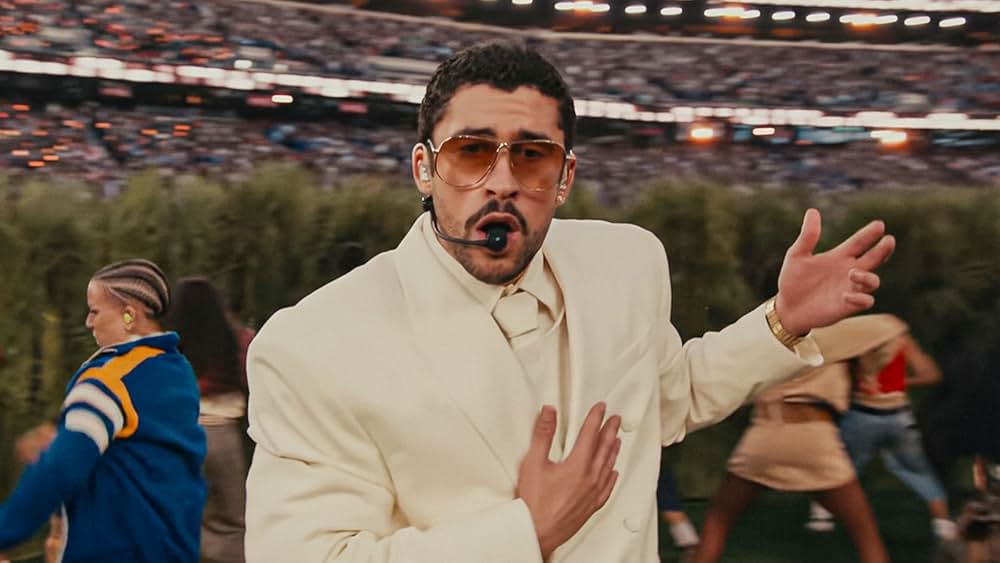
Bad Bunny delivered a high-profile, widely watched halftime performance that drew strong crowd reaction, high viewership estimates, and extensive media coverage — pushing the alternative TPUSA event to the margins of public attention.
Bad Bunny’s Performance and Cultural Impact
Bad Bunny headlined the Super Bowl 60 halftime show at Levi’s Stadium, arriving fresh off an Album of the Year Grammy win. His set mixed reggaeton, Latin trap, and stadium-scale staging, and featured surprise appearances from Lady Gaga and Ricky Martin, which amplified mainstream interest and reinforced his cross-genre appeal.
The performance included Spanish-language hits and choreography that connected with diverse audiences, highlighting representation on one of the country’s largest entertainment stages. That visibility resonated beyond pop music fans: it prompted commentary from cultural critics, social media users, and mainstream outlets about shifting norms in NFL halftime headliners and the growing commercial weight of Latin music.
Bad Bunny’s prominence also complicated political narratives around the show. His Puerto Rican identity and Spanish-language focus became part of broader conversations about inclusion and cultural power tied to major national moments like the NFL’s halftime platform.
Crowd Response and Viewership Comparison
Television and streaming metrics indicated that Bad Bunny’s halftime show attracted substantially larger real-time audiences than the Turning Point USA stream. Early reporting placed Bad Bunny’s TV audience in the triple digits of millions, while TPUSA’s YouTube stream peaked in the low millions, with outlets reporting roughly 5–6 million concurrent viewers for the alternative broadcast. (See reporting on concurrent YouTube numbers for the TPUSA stream.)
Stadium reaction favored Bad Bunny’s set: visually dynamic production elements and singalong moments generated loud crowd responses captured on live feeds. Social platforms trended with clips of Bad Bunny’s stunts and cameo moments, yielding viral engagement that outpaced posts about the TPUSA lineup, which included Kid Rock and country artists.
Nielsen’s official halftime ratings for Super Bowl 60 will provide final, audited numbers, but immediate audience behavior and social metrics signaled clear dominance for the NFL-backed show over counterprogramming efforts.
Political Fallout and Media Reactions
Media response framed TPUSA’s “All-American Halftime Show” as a politically motivated counterprogramming move that failed to match the cultural momentum of Bad Bunny’s set. Commentators linked the TPUSA event to figures like Charlie Kirk’s organization and noted guest performers with partisan associations, prompting coverage that emphasized politics over entertainment quality.
High-profile political voices weighed in from multiple sides. Some conservative commentators praised TPUSA’s effort, while critics and mainstream outlets highlighted the disconnect between the alternative show’s messaging and the broader Super Bowl audience. Coverage also touched on debates involving public figures such as Kristi Noem and Donald Trump, juxtaposing political aims with entertainment outcomes.
Law enforcement and security angles briefly surfaced in reporting about large events and national gatherings, but the predominant narrative remained cultural: Bad Bunny’s halftime performance commanded attention, leaving TPUSA’s politically charged alternative with limited mainstream traction.
More from Vinyl and Velvet:

Leave a Reply