

You saw the headlines: some people chose a conservative-streamed “All-American Halftime Show” over the NFL’s Bad Bunny performance. That choice didn’t happen in a vacuum — it reflected political signaling, identity-based viewing habits, and a pushback against mainstream cultural moments. Yes — the split suggests entertainment increasingly maps onto political lines, but the picture is more mixed than total segregation.
You’ll explore why some fans opted for an alternate program, what the Turning Point USA event looked like, and how this moment fits into a longer history of counterprogramming and culture wars. Expect quick dives into who organized the alternative, what motivated viewers, and whether this pattern points to growing polarization or just another episode in media fragmentation.
Why Did Some Fans Choose a Conservative Halftime Show?
Some fans prioritized cultural representation and political alignment over the NFL’s official programming, while others reacted to media coverage and activist organizing. You’ll see choices driven by objections to language and style, deliberate counterprogramming by Turning Point USA, and identity-based audience responses.
Controversy Over Bad Bunny’s Super Bowl Halftime Show
Bad Bunny, a Grammy-winning artist, drew praise for representing Latin music but also sparked criticism from viewers who objected to a Spanish-language, genre-blending set. You might have seen complaints that the performance didn’t reflect traditional American pop-rock expectations or that Spanish lyrics excluded non–Spanish-speaking viewers.
Critics framed their concern as cultural preference and, for some, political opposition to perceived shifts in mainstream entertainment. The NFL’s choice became a lightning rod because the Halftime Show reaches over 100 million viewers, so artist selection felt consequential to many viewers beyond music taste.
Turning Point USA’s Motivation for an Alternative
Turning Point USA organized the All-American Halftime Show as explicit counterprogramming to the NFL event, positioning its concert as a provider of “traditional” American music and values. You can link the group’s motivation to conservative criticism of Bad Bunny’s selection and to a broader strategy of creating political alternatives to mainstream cultural moments.
The alternative show featured performers like Kid Rock and aimed to draw viewers who felt alienated by the NFL’s choice. Turning Point USA framed the event as a patriotic option and used media attention to amplify turnout and controversy surrounding the official Halftime Show. https://www.forbes.com/sites/tonifitzgerald/2026/02/06/what-to-know-about-turning-point-usa-halftime-show-including-controversies/
Audience Reactions and the Role of Political Identity
Your reaction to the halftime options often reflected political identity as much as musical taste. Some viewers chose the conservative show because it aligned with their ideological beliefs and signaled rejection of what they saw as mainstream cultural change.
Others attended out of curiosity or to make a social statement, not strictly for the music. Social media amplified both support and backlash, turning a programming preference into a visible political act during a high-profile sporting event.
Inside the All-American Halftime Show
You’ll read who organized the event, which artists performed, and exactly where you could watch the broadcast and streams that night.
About Turning Point USA and Their Goals
Turning Point USA, a conservative nonprofit founded by Charlie Kirk, positioned the All-American Halftime Show as an explicitly political counterprogram to the NFL’s choice of headliner. The group framed the event as a celebration of “faith, family, and freedom,” with spokesman Andrew Kolvet quoted in press materials describing the concert as a family-friendly alternative.
You should note the organization’s media play: they leveraged conservative hosts and channels tied to their audience. Promotion ran on The Charlie Kirk Show and personalities like Jack Posobiec, and they coordinated distribution with aligned outlets to maximize viewership among right-leaning viewers.
The stated goals mixed cultural signaling with audience-building. Turning Point aimed both to give dissatisfied fans a viewing option and to reinforce its brand through high-visibility programming timed to the Super Bowl.
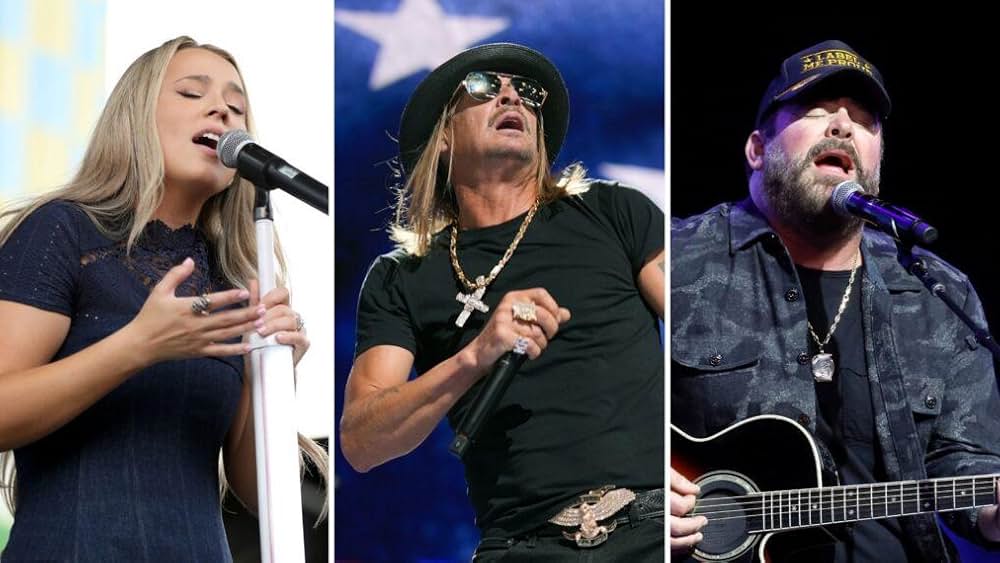
Performance Lineup: Kid Rock, Brantley Gilbert, Lee Brice, and Gabby Barrett
The lineup leaned heavily into country and rock acts known to appeal to conservative audiences. Kid Rock served as the marquee performer; he’s a high-profile Trump ally who used the announcement to contrast his show with Bad Bunny’s. Brantley Gilbert and Lee Brice brought mid‑level country radio credibility with songs familiar to country playlists. Gabby Barrett, an ACM new female artist winner, was the sole female act and added a mainstream country crossover.
You can expect setlists focused on patriotic and crowd-pleasing material rather than experimental staging. Public statements around the lineup emphasized playing “great songs for folks who love America.” That messaging matched the choice of performers and the promotional tone used by Turning Point and allied commentators.
How and Where to Watch the Alternative Show
Turning Point streamed the All-American Halftime Show live across its own social channels and partnered conservative platforms. The event aired on YouTube and X streams run by Turning Point, and it also simulcast on conservative outlets including Real America’s Voice, One America News Network, and subscription platforms like Daily Wire+ and Rumble.
If you followed promotion, you likely found links on The Charlie Kirk Show and related accounts to tune in. Broadcast partners such as Charge! and The National Desk also carried or promoted the feed in some markets, creating multiple ways for viewers to watch outside mainstream networks.
Timings matched the NFL halftime window to offer a direct alternative; Turning Point encouraged viewers to switch streams at kickoff, and hosts repeatedly posted live links during the game to guide audiences to their feeds.
What This Entertainment Divide Says About Culture
This split shows how entertainment choices now signal political identity, media strategies, and commercial risks. It also highlights who networks and artists choose to serve and how fans respond when they feel excluded.
Entertainment as a Mirror of Political Polarization
You can see politics bleeding into programming decisions: viewers pick a broadcast not just for music but for alignment. When some fans chose a conservative alternative over the official halftime, they treated a performance like a political statement rather than a neutral entertainment moment.
Major broadcasters like NBC and Spanish-language outlets face different pressure points. NBC must weigh national ratings and advertiser reactions. Spanish-language artists and projects—especially those promoting a Spanish-language album—face amplified scrutiny and praise depending on audience demographics.
Artists who publicly take stands attract both fervent support and organized backlash. You, as a viewer, now interpret a set list or language choice—like songs from a Spanish-language album—as a cultural stance as much as an artistic one.
Past Examples of Alternative Halftime Shows
You’ve seen alternatives before: fan-run streams, local viewing parties, and ideologically oriented counterprogramming have cropped up around major broadcasts. Those events often use obvious tactics—celebrity endorsements, targeted platforms, and concurrent streaming—to siphon viewers.
Turning Point USA-style alternatives demonstrate how quickly a political group can assemble a lineup and distribution plan. These efforts replicate past commercial stunts but with a political frame, turning music acts into campaign signals rather than neutral performers.
Networks learned from earlier incidents. After previous controversies, broadcasters improved moderation, rights clearances, and sponsor communications to limit disruption. You now expect both official and unofficial halves of the cultural conversation.
Impact on Artists and Networks
You should track three practical effects: contract caution, audience segmentation, and sponsorship shifts. Artists worry that taking a public stance—linguistic choices, protest lines, or promotion of a Spanish-language album—will alter gig offers and streaming algorithms.
Networks like NBC face tougher booking calculations. They must anticipate advertiser sensitivity and the risk of losing viewers to alternative feeds. That calculus can make them more conservative in artist selection or more transparent in messaging.
Sponsors respond quickly. They may pull or pressure around perceived controversy, which affects revenue and creative freedom. For you as a fan, that means future halftime shows might feel safer but also less reflective of a diverse musical landscape.
Looking Ahead: Could Entertainment Become Even More Polarized?
You’ll see clearer splits in audience choices and more targeted programming as entertainers, promoters, and platforms respond to political tastes. Expect intensified debate around major live events and more niche alternatives aiming directly at segmented fan bases.
Reactions From Fans, Commentators, and Media
Fans will keep voting with their attention and wallets. Some viewers will skip the official Super Bowl halftime show and watch an alternative halftime show that aligns with their politics or values, which signals to advertisers and networks that sizable audiences exist outside mainstream programming.
Commentators will amplify those decisions. Conservative and liberal pundits alike will frame alternative-viewing as evidence of cultural success or cultural retreat, and that framing will drive further audience sorting. Media outlets will run audience-data stories, highlighting streaming spikes and social engagement to make the case for or against polarization.
You’ll notice advertisers test different buys—some sticking with the official broadcast, others following audiences to streaming alternatives. That will push executives to measure political affinity in programming choices more directly.
Potential Trends in Sports and Pop Culture
Sports leagues may increasingly offer parallel viewing options. The NFL and broadcasters could face pressure to license or produce official and “alternative” halftime productions to keep fragmented audiences under their umbrellas, or risk losing viewers to independent simulcasts.
Streaming platforms and niche networks will create curated entertainment for specific demographics. Expect more faith-based, family-oriented, or politically framed specials timed to big events, and more creators monetizing direct-to-fan distribution for alternative halftime shows.
You’ll see format changes too: shorter, targeted segments; interactive elements that let fans choose commentary; and sponsorship models tied to audience ideology. Those shifts will make event programming more modular and easier to repurpose for multiple audiences.
More from Vinyl and Velvet:

Leave a Reply