

For a generation of TV fans, Gene Rayburn was the quick-witted ringmaster of a party that never seemed to end. His grin, his lanky frame, and that absurdly long microphone turned Match Game into a kind of televised cocktail hour where the jokes were just naughty enough and the host always seemed in on the fun. What viewers did not see was that the man orchestrating all that laughter had grown up with almost none of the security he later projected on screen, carrying a childhood of loss and a private grief that never really left him.
Rayburn’s life story runs on a sharp contrast: the buoyant game show host who made awkward silences disappear, and the boy who learned early that people could vanish without warning. The charm that made him a daytime staple was not just a natural gift, it was also a survival skill, honed in the shadow of an absent father, a fractured home, and a devastating family tragedy that would haunt his success.
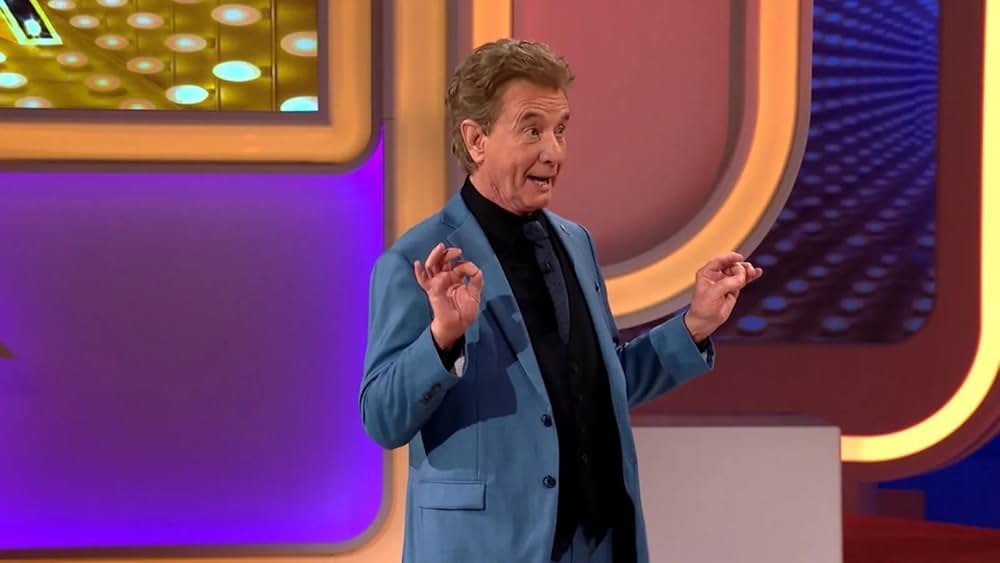
The sunny chaos of Match Game’s master of ceremonies
To understand why Gene Rayburn’s backstory hits so hard, it helps to remember just how light his on-screen world felt. On Match Game, he spent 16 years volleying double entendres with a panel of celebrities, coaxing nervous contestants into playing along, and turning even the clunkiest prompt into a punchline. The set looked like a pop-art living room, the questions were built for innuendo, and Rayburn floated through it all like the host of the world’s loosest dinner party.
That easygoing presence was not an accident. Rayburn had already logged years in radio and television, learning how to keep a show moving and a crowd relaxed, long before he settled into the orange-and-brown universe of Match Game. By the time the format hit its stride, he knew exactly how to lean into a contestant’s awkward pause or a panelist’s wild answer, then pull everyone back into the game with a shrug and a smile. The man viewers saw was a professional entertainer at the top of his craft, so polished that the effort disappeared.
Born Eugene Peter Jeljenic, and born into instability
Off camera, the story started far from the bright lights. Gene Rayburn entered the world as Born Eugene Peter in Christopher, Illinois, the younger of two children of Croatian immigrants. His parents arrived in the United States chasing the standard promise of a better life, but stability never quite materialized. His father left early, and the family structure that might have cushioned a child against hardship simply was not there.
Growing up as the younger son in a household marked by absence meant Rayburn learned quickly how to adapt to adults’ moods and fill uncomfortable gaps in conversation. The same instincts that later made him a deft host started as a way to navigate a home where the ground kept shifting. The Croatian roots, the small-town Illinois setting, and the early fracture of his parents’ relationship all combined to give him a sense that he would have to build his own future from scratch.
A childhood without parents and a loss that never healed
That fragile foundation only grew more precarious as he got older. Accounts of his early years describe a boy who effectively grew up without parents, shuffled by circumstance rather than guided by a steady hand. The phrase “childhood without parents” is not just a dramatic flourish, it reflects how little day-to-day parenting he actually received, and how often he had to figure things out alone. That kind of emotional vacancy leaves a mark, even if the person who carries it later becomes the life of the party.
Later in life, Rayburn suffered a heartbreaking family loss that those close to him say he never truly recovered from. The tragedy, detailed in reporting on his personal history, did not play out in public, but it sat behind the eyes of the man who kept millions laughing. For viewers, he was the guy who could turn any awkward moment into a joke. For friends and family, he was also someone who had already learned, long before the fame, that the people he loved could be taken away without warning, a reality underscored in coverage that notes the heartbreaking loss he carried.
From hungry kid to polished broadcaster
Rayburn’s path out of that rough start ran through microphones long before the skinny one he wielded on Match Game. As a young man, he chased work in broadcasting, eventually carving out a place for himself as an announcer and host. Biographical accounts describe how he hustled for opportunities, using his quick tongue and warm voice to move from small gigs to bigger stages. The transformation from Eugene Peter Jeljenic of Christopher, Illinois, to Gene Rayburn, national television personality, was not overnight, it was the product of years of grinding through auditions and low-paying jobs.
One detailed portrait of his career notes that the reason he seemed so effortlessly in control on camera was that he had already done the hard work of learning the craft in less glamorous corners of the industry. He studied how to keep a live audience engaged, how to hit his marks, and how to make scripted moments feel spontaneous. That training, described in a profile that traces how Rayburn came up through network announcing, turned the kid who had grown up feeling disposable into a man whose job was to make everyone else feel welcome.
The private man behind the public grin
By the time he became a fixture on national television, the name Gene Rayburn was far better known than Eugene Peter Jeljenic. Biographical entries on Gene Rayburn emphasize his long run as a host, but they also hint at a quieter, more guarded personal life. Colleagues remembered him as friendly and professional, but not someone who spilled his guts in the green room. The man who could coax strangers into sharing their most embarrassing answers on daytime TV kept his own pain mostly offstage.
That divide showed up in smaller, less glamorous moments too. In one incident in Marion, Massachusetts, he was involved in a car crash that left him in “satisfactory condition” at Tobey Hospital in Wareham, while another driver, identified as Barboza, was described as shaken but not seriously hurt. Even then, coverage focused on his professional obligations, noting that he was expected to fly to Los Angeles to film Match Game, as if the real story was whether the show would go on. It usually did, and so did he, folding one more scare into a life that had already taught him to keep moving.
More from Vinyl and Velvet:

Leave a Reply