

The legend goes like this: to make a horse talk on television, the crew smeared peanut butter on his gums and waited for the magic. It is a story so sticky that it has clung to Mister Ed for generations, even as people forget where they first heard it. The real tale behind that moving mouth is stranger, cleverer, and a lot more human than a jar of Skippy.
Strip away the myth and what remains is a mix of low‑tech ingenuity, a very smart palomino, and one actor who happily admitted he started “a big lie” for the fun of it. The strange truth behind Mister Ed is that the peanut butter never mattered, but the hoax did, and it helped turn a simple production trick into one of classic TV’s most enduring bits of lore.
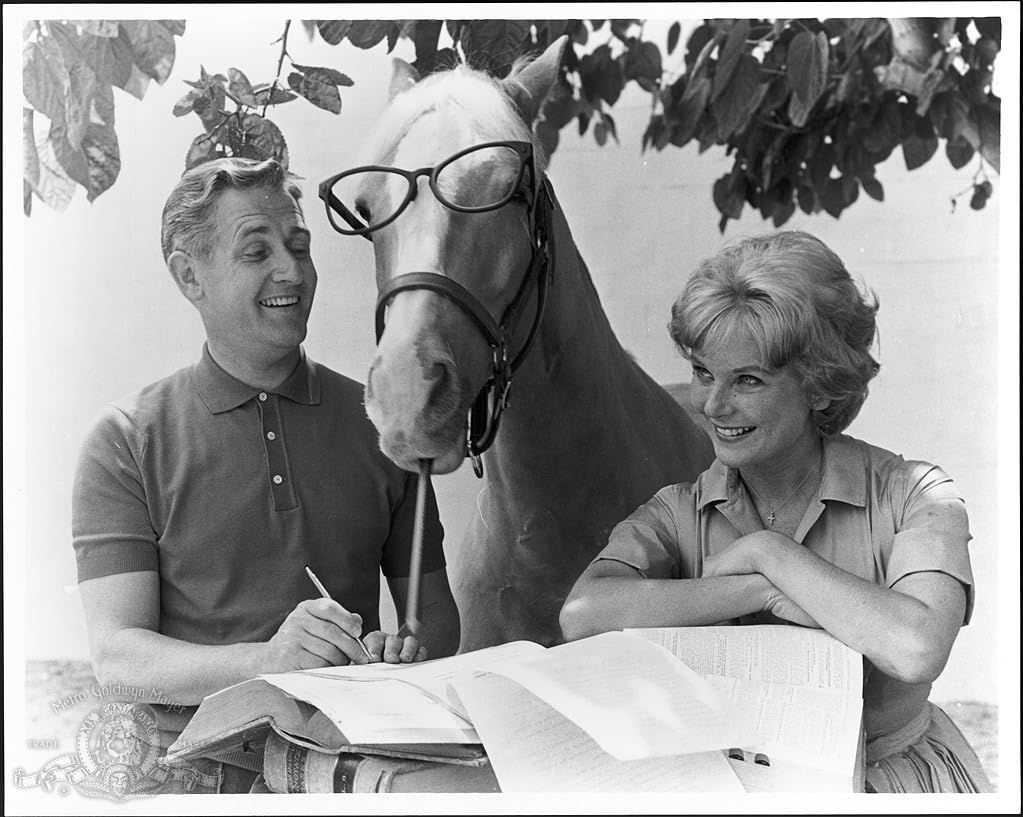
The talking horse that felt almost believable
Before getting to the hoax, it helps to remember just how straight Mister Ed played its own absurdity. The series centered on a suburban architect, Wilbur Post, and a horse who would only talk to him, a setup that leaned on the everyday rhythms of marriage, work, and nosy neighbors to make a chatty stall feel almost normal. In episode after episode, Mister Ed needled Wilbur, bailed him out, or got him into trouble, and the show treated that relationship as a genuine friendship rather than a one‑note gag, which is why viewers still search out Mister Ed clips today.
That emotional core depended on the illusion that the horse was really forming words, not just flapping his lips. In the story, Mister Ed has the ability to talk to Wilbur but no one else, which constantly leaves Wilbur looking unhinged to the humans around him and jealous of the bond his wife cannot quite understand. Descriptions of the show still emphasize how Mister Ed confided only in Wilbur and how that secret, and the horse’s dry commentary, powered the comedy and made the animal feel like a full character rather than a prop in the barn next to Wilbur.
Bamboo Harvester, Hilton’s technique, and a very patient trainer
The horse behind the character was a palomino named Bamboo Harvester, and he was not just naturally expressive, he was carefully trained to move his lips on cue. Accounts of the production describe how Bamboo Harvester’s trainer, working with director Arthur Lubin’s associate, used a simple physical signal to get that mouth going. Early on, the crew relied on a thread technique that Hilton had already used for Lubin’s earlier animal projects, a method that gently encouraged the horse’s lips to move in sync with the dialogue track and gave the illusion of a real conversation between man and animal, a detail preserved in the show’s production history.
Over time, Bamboo Harvester did not need as much mechanical help. Trainers have recalled that, soon after the series settled into its run, the palomino learned to respond to a light touch on his hoof and would start moving his lips the moment Alan Young, who played Wilbur, stopped speaking. That progression from thread to touch cue is part of the lore shared in fan retrospectives that trace Mister Ed’s story from 1949 to 1979 and highlight how quickly Bamboo Harvester adapted to the routine, with some posts even emphasizing how Soon he could work almost entirely on cue.
How the peanut butter rumor took over
The wild part is that the production team did not need anything as messy as peanut butter to get those lips moving, yet that is the detail people remember. During and after the show’s run, reports circulated that the crew smeared peanut butter on Mister Ed’s gums so he would lick and chew, creating the illusion of speech. Later accounts of the series note that this explanation was so charmingly simple that audiences accepted it without question, even as behind‑the‑scenes sources pointed back to Hilton’s earlier thread technique and the horse’s training, a contrast that is spelled out in the show’s documented lore.
Alan Young eventually admitted he had a lot to do with that. In later interviews, he cheerfully recalled that he “started a big lie” when fans kept pressing him on how Mister Ed talked. On camera, he would ask if they had ever gotten peanut butter stuck under their lip as a kid, then suggest that the same thing worked for the horse, a story he repeated so often that it hardened into fact for viewers who never saw the set. A video clip of Young telling that anecdote, complete with his “Well, I started a big lie” setup, still circulates online and shows how casually he launched the hoax that would define Sep memories of the show.
The real low‑tech tricks behind the moving mouth
Strip away the rumor and the actual mechanics are almost disappointingly practical, which may be why the peanut butter version stuck. Accounts from people close to the production describe how, in the earliest episodes, the crew used a thin black thread attached to the horse’s halter or mouth area, just enough to prompt a subtle lip movement when gently tugged. Fans who pore over the DVD commentary have even pointed out moments where a faint line is visible on screen, a detail that gets mentioned in breakdowns of Mister Ed goofs and fun facts that call out the DVD evidence.
As Bamboo Harvester grew more comfortable, the team shifted from thread to touch. Trainers have said that a light tap on the hoof became the cue for the horse to start “talking,” and that he would keep going until the cue stopped, which made it easier to match his mouth to Allan Lane’s voice in post‑production. Fan discussions about the show’s secrets often walk through this evolution, explaining that the question everyone always asked about Mister Ed, how they made his lips move, had a simple answer involving a string in early seasons and a trained response later, a point that surfaces in classic television groups that revisit THE production tricks.
Alan Young, Allan Lane, and the voices behind the illusion
The human side of the illusion was just as layered. Alan Young, who played Wilbur, had to act opposite a horse whose lines he could not hear, timing his reactions to pauses and cues rather than actual dialogue. The voice of Mister Ed himself came from Allan Lane, a Western star who initially did not want his name in the credits, which is why early episodes list the horse as playing himself and leave Lane unmentioned. Trivia notes about the first meeting episode explain that Lane preferred to stay in the background while the horse and Young took the spotlight, a choice that helped sustain the idea that Mister Ed was somehow really talking.
Young’s own relationship with the horse deepened the effect. Obituaries and retrospectives describe how he seemed like exactly the kind of gentle, slightly befuddled man a horse would choose to talk to, and how Bamboo Harvester responded to him with unusual calm on set. One remembrance notes that his four‑legged co‑star, Bamboo Harvester, communicated with Wilbur in a way that felt almost natural, even though the production team did not rely on peanut butter to move his lips in the early episodes, a point that surfaces in coverage of His career.
More from Vinyl and Velvet:

Leave a Reply