

Billie Eilish walked onstage at the Grammys to collect one of the night’s biggest trophies and walked off into a political firestorm. Her “stolen land” line, meant as a sharp rebuke of U.S. immigration enforcement, has instead turned into a referendum on celebrity privilege, with critics insisting that if she really believes what she said, she should start by surrendering her own multimillion‑dollar properties. The clash has pulled in Native leaders, online culture warriors, and fans who suddenly find themselves debating land acknowledgments and luxury real estate in the same breath.
At the center is a familiar tension: a star using an award‑show mic to talk about injustice, then being asked what that conviction looks like when the cameras are off. For Eilish, the question is not just whether her “stolen land” rhetoric went too far, but whether she is prepared to live by it in the very city where she owns a mansion built on tribal homelands.
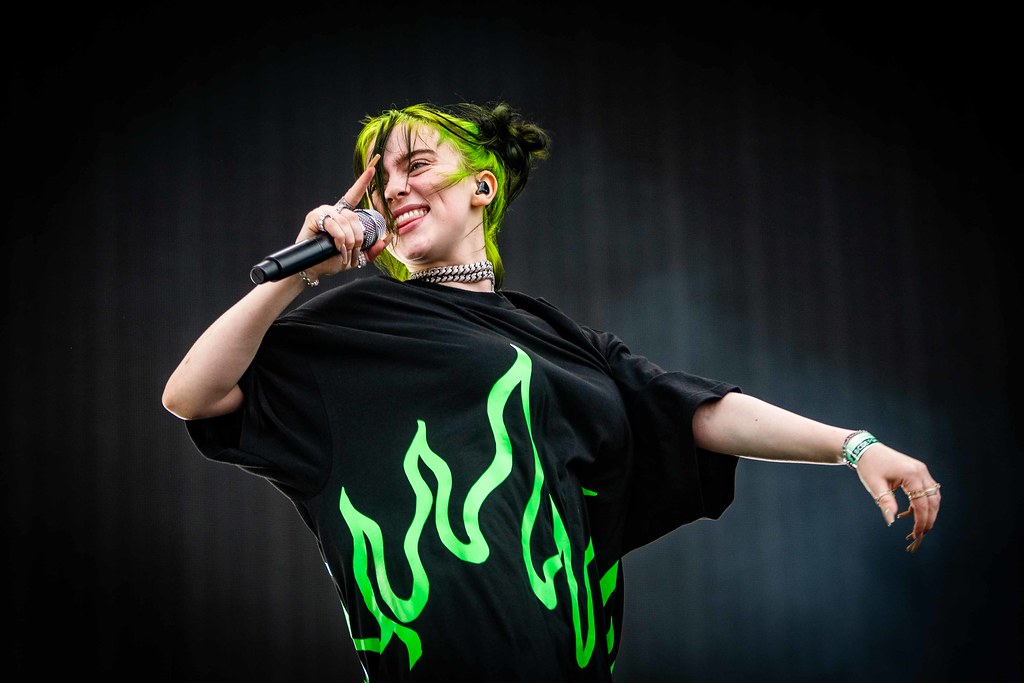
The Grammys speech that lit the fuse
On music’s biggest night, Billie Eilish and her brother collaborator Finneas O’Connell were not just there to smile for photos. The pair, credited as Finneas, Connell and Billie Eilish, picked up Song Of The Year for their track “Wildflower” at the 68th Annual Grammy Awards, held in Los Angeles earlier this year, and used the moment to pivot from celebration to protest. In front of the industry crowd, Eilish slammed ICE and declared that “no one is illegal on stolen land,” a line that instantly reframed her win as a political statement rather than a standard thank‑you speech, as detailed in coverage of the Song Of The moment.
The remark did not come out of nowhere. Eilish has long folded social issues into her public persona, and the Grammys stage, where Finneas O’Connell and Billie Eilish accepted their award for “Wildflower,” has increasingly become a platform for artists to weigh in on politics. According to reporting on the Grammy winners, her line about “stolen land” was powerful enough that parts of the speech appeared censored on the broadcast, seemingly because of profanity, underscoring how charged the moment felt even in the room.
From applause in the room to roasting online
Inside the arena, the reaction was mostly supportive, with applause greeting Eilish’s denunciation of ICE and her insistence that “no one is illegal on stolen land.” Outside that bubble, though, the mood shifted fast. Social media users began slicing up the clip and pushing it across platforms, and what had sounded like a rallying cry in the theater quickly became a lightning rod. Commenters accused the singer of grandstanding and questioned whether a global pop star with a sprawling property portfolio was really the best messenger for a message about dispossession, a backlash captured in early online reactions.
As the clip spread, critics sharpened their attacks, arguing that the “stolen land” line was less a brave stance than a fashionable slogan delivered from a place of extreme comfort. One analysis of the fallout described how the rant “exploded” across feeds, with detractors zeroing in on what they saw as a disconnect between Eilish’s rhetoric and her lifestyle, and framed the controversy as a case study in how quickly an award‑show soundbite can backfire in the age of viral outrage, as seen in coverage of the speech backlash.
“Hand over your mansions”: the hypocrisy charge
Once the initial wave of mockery passed, the criticism settled into a more pointed theme: if Eilish truly believes the land is stolen, what is she prepared to give up? Commentators and influencers began calling on her to donate or relinquish her luxury homes, arguing that anything less would prove her words were just performance. One widely shared take framed her Grammys comments as a “stolen land” rant that had blown up in her face, with critics demanding she hand over her luxury homes and accusing the Pop star Billie Eili of preaching from a safe distance, a sentiment reflected in coverage of the luxury homes controversy.
The phrase “Billie Eilish Under Fire As She Faces Calls To, Hand Over, Her Mansions Due To, Stolen Land, Remark” summed up the mood among detractors who saw a clear gap between her Grammys rhetoric and her real estate holdings. Posts and opinion pieces argued that if she was serious about the idea that no one is illegal on stolen land, she should start by transferring ownership or paying substantial reparations tied to her properties, with some explicitly framing the uproar as a test of whether her activism is more than branding, as described in coverage of how Billie Eilish Under give up her mansions.
The mansion, the Tongva, and an awkward truth
The debate took on a new dimension when attention turned to the specific land under one of Eilish’s homes. Reports highlighted that her gated, roughly 3 million dollar mansion in Los Angeles sits on territory historically tied to the Tongva people, a fact that made her “stolen land” line feel less abstract and more personal. One account noted the “ironic truth” that the superstar’s mansion is located on land connected to the Tongva and the Southern Channel Islands, and that the speech, which had received applause in the room, was now being reexamined in light of that geography, as detailed in coverage of how Eilish lives on that land.
Members of the Tongva community did not stay silent. The Tongva, based in Southern California and recognized as having ties to the greater Los Angeles Basin, responded to Eilish’s comments by pointing out that while they appreciate public figures acknowledging Indigenous history, she had never reached out to them directly. A report attributed to By Latest, Breaking News, Fox News Feb described how the tribe used the moment to invite a deeper conversation about what solidarity should look like when a celebrity owns property on their ancestral land, highlighting the gap between symbolic language and concrete engagement, as seen in coverage of The Tongva response.
What the Tongva actually want from Eilish
As the online chorus demanded that Eilish sign over her deeds, the tribe whose land she invoked took a more nuanced line. In a message amplified on social media, representatives noted that While the tribe said they appreciate public figures acknowledging Indigenous history, they also stressed that Eilish has never contacted them despite owning a mansion on their traditional territory. Rather than simply echoing calls for her to “hand over” the house, they suggested that meaningful steps could include direct dialogue, financial support for community projects, or using her platform to spotlight ongoing struggles facing Indigenous communities, as reflected in the Indigenous group’s statement.
Other reporting underscored that the Tongva have explicitly called out what they see as virtue signaling. One account noted that Billie Eilish has been criticized by the Tongva tribe that owns the land under her mansion, with sources describing how the group, identified alongside AFP imagery, framed her speech as a starting point rather than an endpoint. Their message was less “give us your keys tomorrow” and more “if you are going to invoke stolen land, you should be prepared to back that up with concrete action on the very ground where you live,” as detailed in coverage of Billie Eilish and the Tongva.
More from Vinyl and Velvet:

Leave a Reply