

Anne Hathaway is stepping back into Andy Sachs’s boots, but this time the fashion story is less “Runway closet” and more “upper‑east‑side thrift legend.” For The Devil Wears Prada 2, the actor and her costume team are openly channeling Diane Keaton’s most famous role, lifting the relaxed, androgynous ease of Annie Hall and dropping it straight into a 2020s fashion landscape. The result is a sequel wardrobe that treats Keaton’s style not as a costume to copy, but as a blueprint for how Andy would actually dress after two decades in and around the industry.
Instead of chasing viral outfits, the new film leans into the idea that Andy has been quietly building a life, a career, and a closet that feels lived in. That is where Diane Keaton comes in: her Annie Hall look has always been about personality first and polish second, which is exactly the balance Hathaway and her collaborators are trying to strike as they reintroduce a character fans have not seen since the original The Devil Wears Prada.
From Runway intern to Annie Hall grown‑up
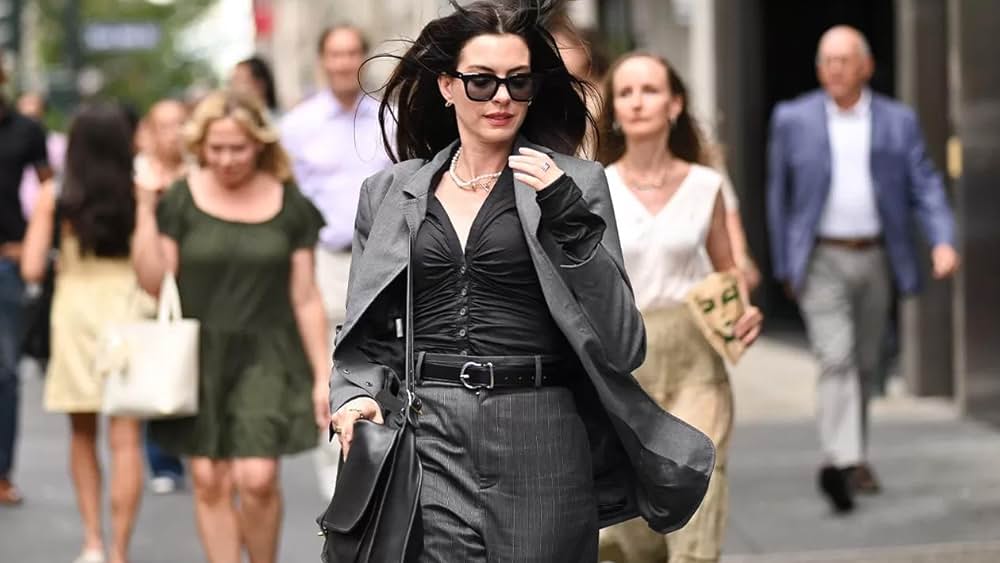
The first film ended with Andy Sachs walking away from Miranda Priestly’s world, but The Devil Wears Prada 2 picks up with a woman who has spent years figuring out how to stay in fashion without losing herself. Early glimpses of the production confirm that the sequel is very much real, with searches for Devil Wears Prada now pulling up set photos of Anne Hathaway striding through city streets in looks that feel more like a fashion editor on the move than a nervous assistant. The character’s evolution is written into the clothes: there is confidence in the tailoring, ease in the layering, and a sense that Andy has finally figured out how to dress for herself.
That shift is where Diane Keaton’s Annie Hall becomes such a useful reference point. Keaton’s character in that film turned menswear staples into a kind of personal armor, mixing waistcoats, wide‑leg trousers, and floppy hats in a way that looked accidental but was actually incredibly deliberate. On the Prada sequel set, Hathaway’s outfits echo that same energy, with the costume department leaning into slouchy suiting, long coats, and a slightly offbeat mix of proportions that nod directly to Annie Hall while still feeling rooted in Andy’s original journey through The Devil Wears Prada.
Diane Keaton as the north star for Andy’s new closet
Behind the scenes, Hathaway has been clear that Diane Keaton is not just a moodboard reference but a full‑on guiding star for how Andy dresses now. In interviews about the sequel’s wardrobe, she has described Keaton’s Annie Hall style as a kind of north star for the character’s evolution, explaining that Andy has been thrifting and collecting pieces for roughly twenty years and now wears them with the same unstudied confidence Keaton brought to that role. That long‑term relationship with clothes, rather than a revolving door of trends, is what gives the new looks their weight, and it is directly tied to how Keaton’s character treated clothes as extensions of her personality rather than disposable costumes, a connection Hathaway has underlined while discussing how Diane Keaton shaped Andy’s style.
That influence shows up in the details. The Annie Hall formula of a crisp shirt, loose tie, and tailored vest is reinterpreted as layered shirting under longline blazers, with trousers that pool just enough over the shoe to look intentional but not precious. The color palette leans into neutrals and soft tones that feel pulled from a real person’s wardrobe, not a showroom rack. Even the way Hathaway wears accessories, from belts to bags, feels like a quiet homage to Keaton’s habit of throwing things on as if she is already late for something. It is a subtle but pointed way of saying that Andy has absorbed the lessons of her Runway years, then filtered them through a Keaton‑style lens of comfort and individuality.
Armani, Annie Hall and the power of vintage
The sequel’s costume design is not just about copying Annie Hall silhouettes, it is about building a world where Andy’s closet makes sense for a woman who has lived in fashion for decades. On set, Hathaway has been photographed in sleek tailoring that leans heavily on Italian precision, with Armani pieces anchoring some of the sharpest looks. Those suits and coats give Andy the authority of someone who can walk into any meeting and hold her own, while the styling keeps everything slightly relaxed, a clear echo of Diane Keaton’s refusal to let structure overpower ease.
Layered into that high‑end foundation is a serious commitment to vintage. The costume team has spoken about building Andy’s wardrobe as if she has been combing secondhand shops and archives for years, which lines up with Hathaway’s own comments about the character’s long‑term thrifting habit. That approach is reinforced in reporting that describes how the visuals on set were designed to actively inform Andy’s choices, with the team trying to preserve the magic of the original film while still pushing her style forward. The result is a mix of archival pieces, lived‑in staples, and precise tailoring that feels like Annie Hall grew up, got a promotion, and never stopped shopping vintage.
Street‑style sightings: Toteme tanks and Gaultier drama
Fans have already been dissecting every on‑set look, and the street‑style moments tell their own story about how Diane Keaton’s influence is being filtered through a modern lens. In one widely shared outfit, Hathaway was spotted walking down the street in a casual combination built around a Toteme tank and a denim maxi skirt, the kind of unfussy pairing that still looks editorial when worn with the right attitude. The look is pure Annie Hall in spirit, relaxed and a little tomboyish, but updated with clean lines and a silhouette that feels very now.
On the other end of the spectrum, the production has served up full drama with a cutout dress from Jean Paul Gaultier Femme that puts Andy squarely back in the high fashion conversation. Set photos show Andy Sachs in a body‑skimming black look with strategic cutouts and a sculptural coat, a far cry from the cerulean sweater days. Even here, though, the Keaton influence lingers in the way the outfit is grounded with strong outerwear and a certain nonchalance in how Hathaway carries it, as if Andy has finally made peace with the spectacle of fashion without letting it swallow her whole.
Rom‑com energy and the Annie Hall love story echo
The original Annie Hall is, at its core, a love story told through clothes, and The Devil Wears Prada 2 seems ready to borrow that emotional template as well. Set photos have captured Hathaway filming a romantic scene in Downtown Manhattan with Patrick Brammall, sparking speculation about whether Andy is getting her own Mr. Big style arc. The outfits in those moments are softer, with long coats, easy knits, and accessories that feel more personal than performative, echoing the way Diane Keaton’s Annie Hall used clothes to chart the highs and lows of a relationship.
That romantic throughline is part of why the Keaton reference lands so well. Annie Hall’s wardrobe worked because it felt like a diary written in fabric, and the Prada sequel appears to be chasing a similar intimacy. Even the smaller styling choices, like the bags and jewelry that fans are already trying to track down through shopping searches, feel like they belong to a woman whose life has unfolded in and around the city. The clothes are not just about impressing Miranda Priestly anymore, they are about telling the story of who Andy has become and who she might be willing to fall for.
More from Vinyl and Velvet:

Leave a Reply