

Billie Eilish turned a routine Grammys thank‑you into a blistering political moment, using her Song of the Year win to curse out federal immigration agents and declare that “no one is illegal on stolen land.” The 24‑year‑old did it in front of a packed arena, a live television audience and a music industry that has often preferred safer talking points. In a few unscripted seconds, she shifted the night’s mood from self‑congratulation to confrontation.
Her speech did not land in a vacuum. It came as immigration enforcement under President Donald Trump faces mounting criticism and as artists increasingly treat award shows as protest stages. Eilish’s choice to go straight at Immigration and Customs Enforcement, and to tie immigrant rights to the history of stolen Indigenous land, instantly turned a trophy presentation into a flashpoint.
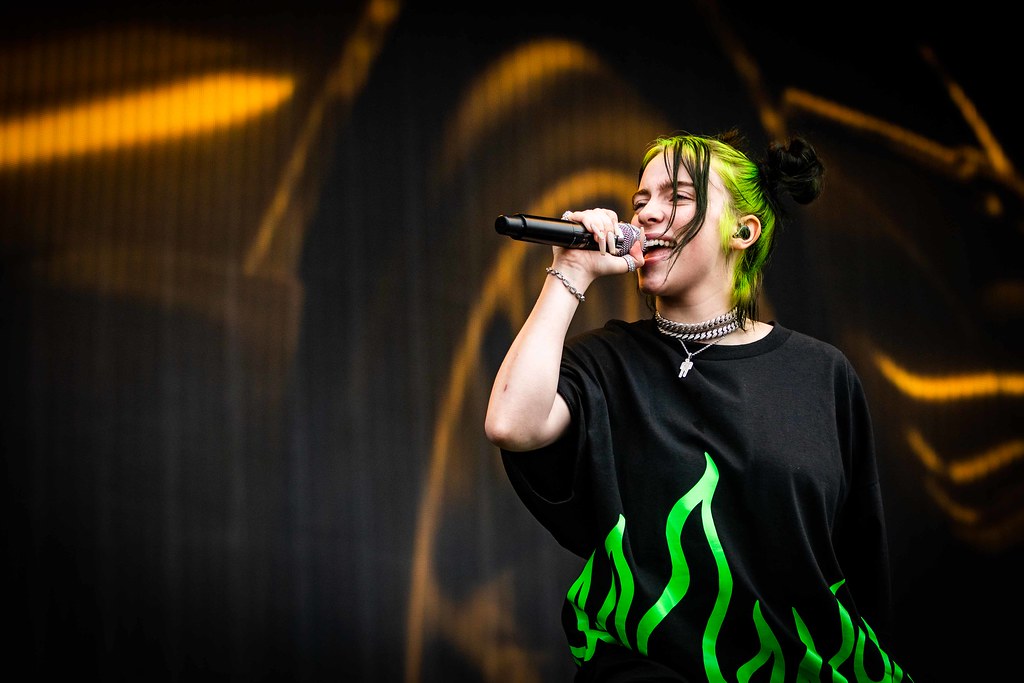
The moment Billie Eilish grabbed the mic and changed the room
The scene was classic Grammys spectacle until Eilish opened her mouth. She had just picked up the Grammy Award for Song of the Year at the Grammy Awards inside the Crypto.com Arena in Los Angeles, walking onstage with her brother and co‑writer Finneas O’Connell to accept one of the night’s biggest honors. Cameras caught the siblings wearing matching “ICE OUT” pins, a quiet hint that the speech was not going to be business as usual, before she launched into a few lines of gratitude and then pivoted hard into politics.
According to detailed accounts of the ceremony, Eilish told the crowd that as grateful as she felt, she could not ignore what was happening to immigrants and families targeted by federal agents. She then delivered the line that would ricochet across social media, saying that no one is illegal on stolen land and closing with a profane “f*** ICE” that censors scrambled to bleep on the broadcast, a moment later confirmed in clips shared from the Grammy telecast.
“No one is illegal on stolen land”: why that line hit so hard
Eilish’s choice of words was not accidental. The phrase “no one is illegal on stolen land” has long circulated in immigrant rights and Indigenous justice circles, and she pulled it straight into the center of music’s biggest night. In her speech, she linked the humanity of migrants to the reality that the United States itself sits on land taken from Native peoples, arguing that criminalizing people for crossing borders on that land is a moral contradiction, a framing later echoed in a viral clip shared by Billie Eilish supporters.
That framing also sharpened her attack on Immigration and Customs Enforcement, the agency at the center of the Trump administration’s most hard‑line immigration tactics. By cursing out ICE directly, she was not just critiquing a policy but the entire logic of militarized borders and detention. One detailed recap of the night noted that Eilish’s final statement on stage was bleeped by television censors as she blasted the agency, underscoring how her words pushed past the usual limits of awards‑show activism and directly challenged the administration’s immigration agenda under Trump.
From “ICE OUT” pins to a wider protest wave at the Grammys
Eilish was not the only artist who treated the Grammys stage as a protest platform, but she was the one who lit the fuse. Reports from inside the Crypto.com Arena describe a night where “ICE OUT” pins and pointed speeches about US immigration enforcement kept popping up as winners cycled through the microphone. One overview of the show noted that Billie Eilish and Bad Bunny both used their time onstage to criticize ICE, with Eilish’s explicit “f*** ICE” line and Bad Bunny’s comments about families at the border turning the ceremony into a rolling rebuke of federal agents, a pattern captured in coverage of Grammys 2026.
Another detailed rundown of the night described how “ICE out” protests dominated winner speeches, highlighting Billie Eilish on stage with Finneas as one of the clearest examples of artists turning fashion statements into political messaging. The pins, the chants and the repeated references to immigration policy created a through‑line that made the show feel less like a detached industry party and more like a live‑streamed rally, a shift captured in coverage of the ICE out theme.
How the speech fit into Eilish’s growing political voice
For anyone who has watched Eilish’s evolution, the speech felt like a natural, if escalated, next step. She has used interviews and past performances to hint at her politics, but winning her seventh “Big Four” Grammy, this time for Song of the Year, gave her a new level of leverage. One detailed profile of the night noted that Billie Eilish Says “No One Is Illegal on Stolen Land” at the Grammys while accepting the award, framing it as a moment where a young superstar decided to spend her cultural capital on a cause rather than another round of thank‑yous, a choice captured in coverage of Billie Eilish.
Another account of the ceremony emphasized how the singer took the stage at the Grammy Awards in Los Angeles and used her Song of the Year win to advocate for immigrants, describing how Finneas O’Connell and Billie Eilish accepted the Song Of the Year award together and drew standing ovations from the crowd as she spoke. That same report noted that the 24‑year‑old framed her comments as a refusal to stay silent while families were being torn apart, a stance detailed in coverage that highlighted how she used the Song of the spotlight.
Backlash, “hypocrisy” claims and the fight over celebrity activism
The blowback was immediate. Within hours, critics were circulating photos of Billie Eilish’s house and accusing her of hypocrisy for denouncing ICE and talking about stolen land while living in a multimillion‑dollar property. One detailed piece on the reaction described how Billie Eilish’s house sparked backlash after her speech, with detractors arguing that her wealth undercut her message even as supporters countered that having money does not disqualify someone from calling out abuses by federal agents, a clash captured in coverage of her house.
At the same time, more granular reports of the speech itself kept surfacing, reinforcing what she actually said onstage. One breakdown quoted her line that no one is illegal on stolen land and noted that she accepted the award with Finneas O’Connell while both wore pins reading ICE OUT, details that undercut attempts to dismiss the moment as a throwaway rant and instead framed it as a deliberate, coordinated protest, as described in coverage of how she presented herself.
More from Vinyl and Velvet:

Leave a Reply