

The fight over Bad Bunny’s Super Bowl halftime show has officially jumped from the internet into the owners’ suite. Behind the scenes, one NFL owner allegedly told Commissioner Roger Goodell he “should’ve thought twice” about putting the Puerto Rican star on the sport’s biggest stage, warning that President Donald Trump might not take it lightly. The league, though, has treated that warning as background noise and is pressing ahead with Bad Bunny at the center of Super Bowl 60.
What started as a culture-war flare up over a Spanish-language artist is now a full blown power test between the NFL, the White House and a fan base that cannot even agree on who should be singing at halftime. The push and pull around this show says as much about where the league wants to go as it does about who gets to call the shots when politics and pop collide.
The owner’s warning and Goodell’s private pressure
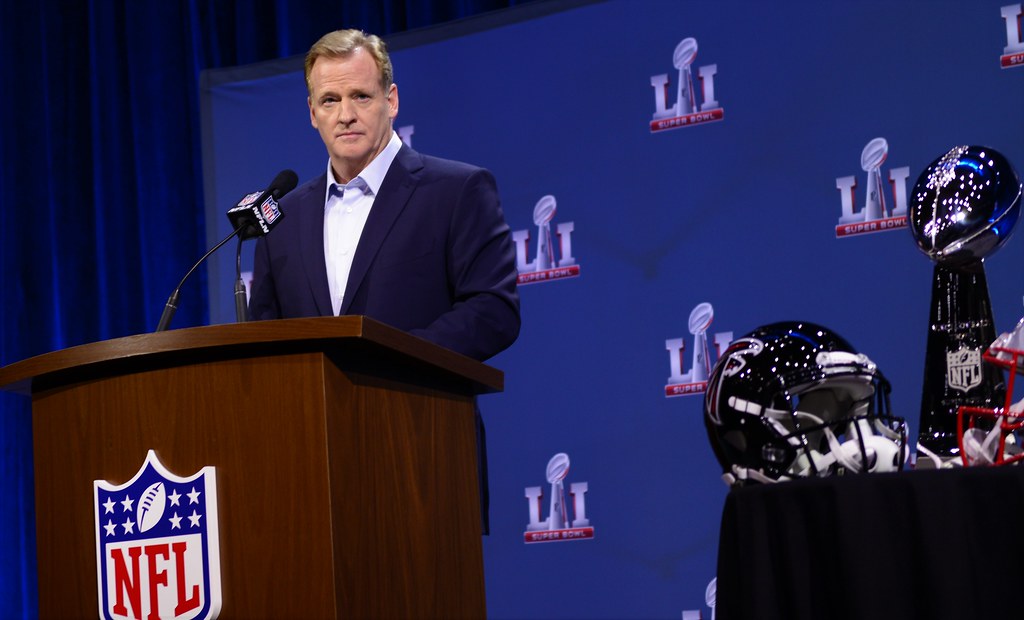
Inside league circles, the most dramatic moment came when a franchise owner pulled Roger Goodell aside and effectively told him he was walking into a political buzzsaw. According to a bombshell report, that owner warned the NFL commissioner that choosing Bad Bunny for the Super Bowl halftime show could trigger retaliation from President Donald Trump and his administration. The same reporting describes the owner telling Goodell he “should’ve thought twice” about the selection, a rare glimpse of just how blunt some of the feedback has been behind closed doors.
That private pushback did not come out of nowhere. Separate coverage of the league’s internal debates says the NFL was warned shortly after the announcement that the choice of Bad Bunny could become a political flashpoint. Another account notes that Within the NF ownership ranks, at least one figure feared direct retaliation from Trump for the Bad Bunny Super Bowl halftime decision. That kind of anxiety is unusual even in a league that has spent the last decade navigating everything from anthem protests to player discipline fights with the Oval Office watching.
Trump, Washington and a halftime culture war
The political blowback has been loud and very public. President Donald Trump has already made it clear he is not a fan of the choice, and one Instagram post bluntly notes that The NFL is sticking with Bad Bunny despite backlash from President Donald Trump and his administration. Another version of that same message spells it out even more directly, saying the league still approves the Super Bowl halftime performer Bad Bunny even as the White House fumes.
The pushback is not limited to the president. One report notes that one U.S. Senator has announced he will boycott the Super Bowl Halftime Show, featuring Bad Bunny, as a protest. That same account underscores that The NFL is standing by its Super Bowl 60 Halftime Show pick of Bad Bunny, even while some, including President Trump, are not happy with the decision. The political class has essentially turned a 12 minute performance into another proxy fight over immigration, language and what kind of culture gets prime time on American television.
Fan petitions, country alternatives and the Bad Bunny backlash
Outside Washington, the backlash has taken on a more grassroots flavor. A petition to replace Bad Bunny with George Strait at the 2026 Super Bowl has topped 100,000 signatures, a number that shows just how organized some of the opposition has become. The Brief that summarized the effort notes that Supporters want the league to swap Bad Bunny for George Strait, arguing that a country legend would better reflect their vision of the Super Bowl and its audience.
Even as that petition has grown, reporting has been consistent that the league is not considering dropping Bad Bunny as its Super Bowl halftime headliner. One Facebook post recounts how NFL still approves the Super Bowl halftime performer Bad Bunny despite the noise. Another version of that same message stresses that the NFL still approves Super Bowl halftime performer Bad Bunny, despite backlash from President Donald Trump, his administration and some of his supporters. The Brief on the petition makes the same point, noting that NFL is not replacing Bad Bunny with George Strait, no matter how many signatures pile up.
Why the league is riding with Bad Bunny anyway
For all the noise, the league’s internal logic has been remarkably consistent. According to interviews with and public statements by several high level club and league office executives, the NFL has remained steadfast in its support of Bad Bunny because of what he represents to the league’s international and Latino audience. Another section of that same reporting notes that Multiple representatives for Bad Bunny did not respond to messages from ESPN seeking interviews with the artist, which has left league executives to do most of the public explaining for why they chose him.
One of the clearest defenses came from a senior league executive who said they “absolutely 100 percent believe and know that Bad Bunny is the right artist for this moment, for this show.” That quote, captured in a detailed breakdown of the decision, underscores how firmly the league believes Bad Bunny is to connect with younger and more diverse fans. Another report on the league’s thinking adds that, Although criticism continues, there is nothing that can change the outcome, since Although criticism continues, Bad Bunny will headline the Super Bowl LX halftime show and that international and Latino audiences are top priorities.
Goodell’s public stance and the final call on Super Bowl 60
Publicly, Roger Goodell has tried to make the whole thing sound simple. One widely shared post recounts how NFL Commissioner Roger publicly stated that the NFL is NOT considering dropping Bad Bunny as its Super Bowl halftime headliner. Another version of that same message repeats that the NFL Commissioner has drawn a clear line, even as questions about Trump’s reaction keep coming. That stance lines up with broader coverage that says the NFL Announces Final 60 Halftime Show and that the Halftime Show The NFL is standing by will take place at Levi’s Stadium for Super Bowl 60 in February.
Other reports have filled in the texture around that decision. One breakdown of the controversy notes that Bad Bunny has not personally engaged with the uproar, leaving league officials to answer questions about everything from his Spanish language lyrics to his past comments about U.S. Immigration and Customs Enforcement. Another piece of the puzzle is the simple fact that the NFL still approves halftime performer Bad Bunny, and that the league has framed the show as part of a broader push to reach fans far beyond its traditional base. Even coverage of his touring life, like the note that Bad Bunny performs on stage for his “Most Wanted Tour” at Bridgestone Arena in Nashville, Tenn, has been pulled into the story as proof of how big a bet the league is making on a global superstar.
More from Vinyl and Velvet:

Leave a Reply