

Melania Trump has stepped into the center of a national crisis, urging Americans to come together after federal agents fatally shot peaceful protesters in Minneapolis. In a rare series of interviews and public comments, the first lady has framed herself as “against violence” and called for unity and calm even as anger over the killings and the role of immigration enforcement continues to build. Her words now sit at the intersection of grief, politics, and a city already on edge from a sweeping general strike and a deepening confrontation with federal power.
Her appeal for Americans to “protest in peace” is landing in a Minneapolis that is both mourning and mobilizing, with demonstrators demanding accountability and local leaders struggling to keep the streets from spiraling further. As the president touts his outreach to Minnesota officials and his administration defends the actions of federal agents, Melania Trump’s language of healing and restraint is being tested against the realities on the ground and the broader debate over how the United States polices dissent.
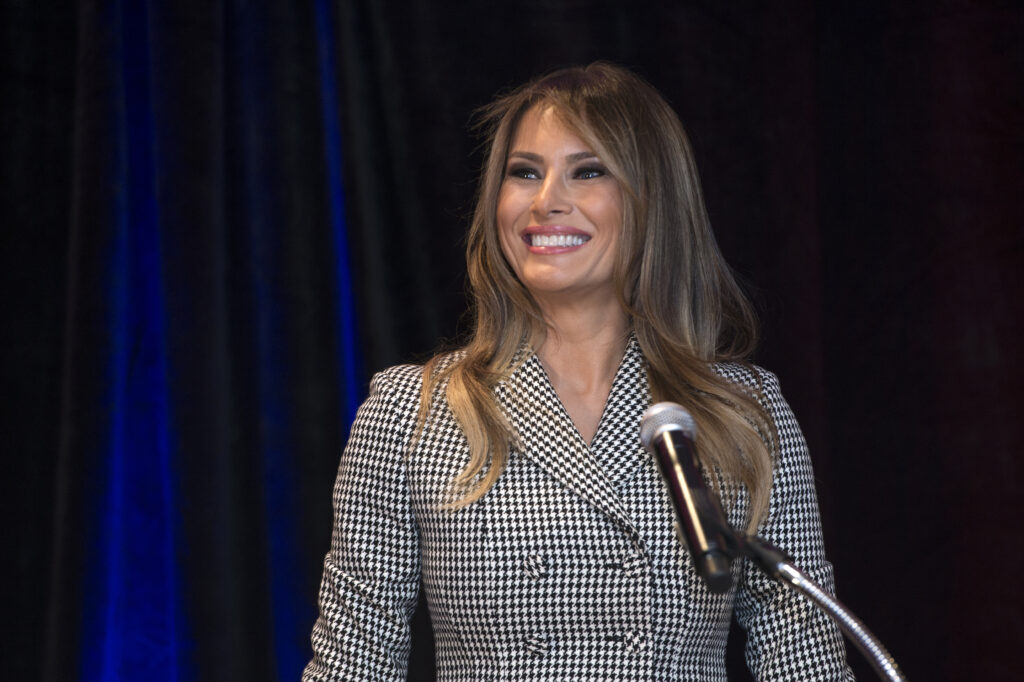
The Minneapolis shootings that sparked a national reckoning
The immediate backdrop to Melania Trump’s comments is a set of fatal shootings by federal agents during protests in Minneapolis, where demonstrators had gathered to oppose immigration enforcement operations and the presence of Immigration and Customs Enforcement, or ICE. Witnesses and organizers described the victims as peaceful protesters, and the deaths quickly became a rallying point for critics who say federal officers escalated a tense but nonviolent crowd into a deadly confrontation. The killings, which unfolded in a city already scarred by earlier clashes over policing, turned a local protest into a national flashpoint over the government’s use of force.
Reporting has identified one of those killed as Renee Nicole Good, a mother of three whose name has been invoked repeatedly by activists demanding justice and by those highlighting the human cost of the crackdown. Coverage of the shootings has emphasized that the demonstrators were protesting ICE operations when federal agents opened fire, a detail that has fueled accusations that the government is criminalizing dissent rather than responding to any imminent threat. It is against this backdrop of grief for Renee Nicole Good and other victims, and anger over the role of ICE violence, that the first lady’s call for unity is being heard.
A city already roiled by the 2026 Minnesota general strike
The shootings did not occur in a vacuum. Minneapolis has been at the heart of the 2026 Minnesota general, a sweeping labor and protest movement that has disrupted daily life across the state. Workers in sectors from transit to education have walked off the job, and community groups have joined them in coordinated demonstrations that blend economic demands with calls for racial justice and immigration reform. The strike has turned Minnesota, and especially its largest city, into a stage for broader national grievances about inequality and state power.
That context helps explain why tensions were already high when federal agents confronted protesters in Minneapolis. The general strike has meant packed streets, shuttered businesses, and a sense that normal political channels have broken down, leaving mass protest as the primary language of dissent. When federal officers used lethal force against people described as peaceful demonstrators, it was perceived not just as a tragic incident but as an attack on a broader movement that had been building for months. Melania Trump’s appeal for calm is therefore colliding with a city where many residents feel they are already sacrificing and risking their livelihoods to be heard.
Melania Trump’s rare media push and the “I’m against violence” message
Into this volatile scene stepped First Lady Melania Trump, who has historically kept a low political profile but has now given a rare set of interviews focused squarely on the Minneapolis crisis. In one widely shared conversation, she declared, “I’m against violence,” aligning herself with the families of those killed and with Americans who are horrified by images from the protests. She coupled that stance with a broader plea for national healing, saying that “as Americans, we need to unify” and insisting that the country cannot allow political disagreements to spill into bloodshed.
Her comments were amplified in coverage that highlighted the unusual nature of her intervention and the emotional tone of her remarks. One detailed account of her response to the shootings described how she framed the deaths of peaceful protesters in Minneapolis as a tragedy that should prompt reflection rather than further escalation, and how she emphasized that she is “against violence” in all forms, whether from demonstrators or from law enforcement. In that reporting, Melania Trump’s message was presented as a direct response to the fatal shootings of peaceful protesters and to the grief of families like that of Renee Nicole Good, underscoring the human stakes behind her call for unity.
“We need to unify”: the core appeal for national unity
At the heart of Melania Trump’s response is a simple refrain: “We need to unify.” She has repeated that phrase in multiple appearances, turning it into a kind of mantra for how she believes Americans should respond to the Minneapolis shootings and the broader unrest. In one interview, she urged Americans to “protest in peace” and stressed that people have a right to make their voices heard but must do so without resorting to destruction or attacks on others. Her language has been carefully inclusive, addressing “Americans” as a whole rather than singling out any one group as responsible for the current tensions.
That message was captured vividly in a clip shared on social media in which First Lady Melania Trump, speaking about the protests in Minneapolis, said, “We need to unify in these times,” and repeated that call for unity as she discussed the images of clashes between demonstrators and federal agents. In another video, she was introduced with the description that “Melania Trump urges national unity as tensions rise in Minneapolis,” underscoring how central that theme has become to her public posture. These appearances, including the need to unify” clip and a separate segment where Melania Trump urges as tensions rise in Minneapolis, have helped cement her image as a voice for calm even as the administration she represents faces intense criticism.
“Protest in peace”: drawing a line between dissent and violence
Alongside her calls for unity, Melania Trump has been explicit in urging demonstrators to “protest in peace.” In one interview focused on the Minnesota unrest, she addressed protesters directly, saying that if people choose to protest, they should “protest in peace,” a phrase that has since been quoted repeatedly in coverage of her remarks. By framing peaceful protest as both legitimate and necessary, she has tried to acknowledge the grievances driving people into the streets while also condemning scenes of looting, arson, or attacks on officers that have accompanied some demonstrations.
Her emphasis on peaceful protest has been echoed in reporting that described how she told protesters to “protest in peace” following the Minnesota shooting, presenting her comments as a rare foray into overtly political territory. In that account, Melania Trump was quoted as addressing “Americans” and “protesters” in Minnesota, urging them to channel their anger into nonviolent action rather than confrontations with law enforcement. The same coverage noted that she spoke as Melania Trump tells to protest in peace following the Minnesota shootings, underscoring how her words were aimed at deescalating a specific, volatile situation rather than offering only abstract platitudes.
A rare political spotlight: Melania’s media reemergence
Melania Trump’s decision to speak so directly about the Minneapolis shootings marks a notable shift from her usual distance from day to day political battles. In a detailed political report, she was described as giving a rare interview focused on the protests and the federal response, her first extended media appearance on a domestic crisis since the 2024 presidential transition. In that conversation, she reiterated her opposition to violence and her belief that Americans must find ways to come together even when they disagree deeply about policy and policing.
The same reporting, by Betsy Klein, highlighted how unusual it was for the first lady to weigh in so directly on a law enforcement controversy, noting that she has typically focused on less divisive issues. Her reemergence in the media spotlight has prompted debate over whether she is trying to soften the administration’s image at a moment of intense scrutiny or whether she is genuinely stepping forward out of personal conviction in response to the deaths of peaceful protesters in Minneapolis. Either way, her words are now part of the political landscape that is shaping how the country understands the crisis.
Coordinating with the president: calls with Minnesota leaders
Melania Trump has also linked her appeal for unity to the actions of her husband, President Donald Trump, suggesting that the White House is engaged with Minnesota leaders as they navigate the fallout from the shootings. In one interview, she said that the president had a “great call” with Gov Tim Walz and Mayor Jacob Frey, describing those conversations as constructive and focused on calming tensions in Minneapolis. By highlighting those calls, she positioned the administration as working collaboratively with state and local officials rather than simply imposing federal authority from afar.
That detail about the “great call” with Gov Tim Walz appeared in coverage that also quoted Melania Trump urging Americans to protest peacefully and to seek unity despite their anger. Another report on the same set of remarks noted that she framed the president’s outreach as evidence that the administration is listening to Minnesota and wants to help restore order without silencing legitimate protest. In that account, the first lady’s comments about the “great call” were presented alongside her broader plea for Americans to “protest in peace,” suggesting that she sees dialogue between leaders and citizens as part of the same effort to avoid further violence.
“As Americans, we need to unify”: the rhetoric and its limits
Melania Trump’s language has been consistent across platforms, from television interviews to online clips. She has repeatedly said, “As Americans, we need to unify,” a phrase that captures both her attempt to rise above partisan divides and the challenge of doing so in a moment when trust in institutions is frayed. In one account of her remarks, she was quoted as saying that Americans should be “against violence” and that they should reject “certain scenes” from the protests that she found disturbing, even as she acknowledged the right to demonstrate. That framing casts unity not as agreement on policy but as a shared rejection of bloodshed and chaos.
Her words were captured in detail in a report that quoted her saying, “As Americans, we need to unify,” and “I’m against violence,” while also noting her discomfort with some of the images coming out of Minneapolis. That same report, which described how Melania Trump calls following the fatal shootings of peaceful protesters in Minneapolis, underscored the tension between her call for calm and the anger of those who see the killings as part of a pattern of state violence. For critics, unity can sound like a demand for quiet in the face of injustice, while for supporters, it is a necessary antidote to a cycle of confrontation that has already cost lives.
How her message fits into a broader media narrative
The first lady’s comments have been filtered through a media environment that is itself sharply polarized, with different outlets emphasizing different aspects of her message. One detailed account of her television appearance focused on her urging Americans to “protest in peace” and highlighted her statement that tensions in Minnesota remain high following the federal shootings. That coverage framed her as a calming presence, stressing her appeal to “Americans” to come together and her insistence that protests should remain peaceful even when emotions are running hot.
More from Vinyl and Velvet:

Leave a Reply