

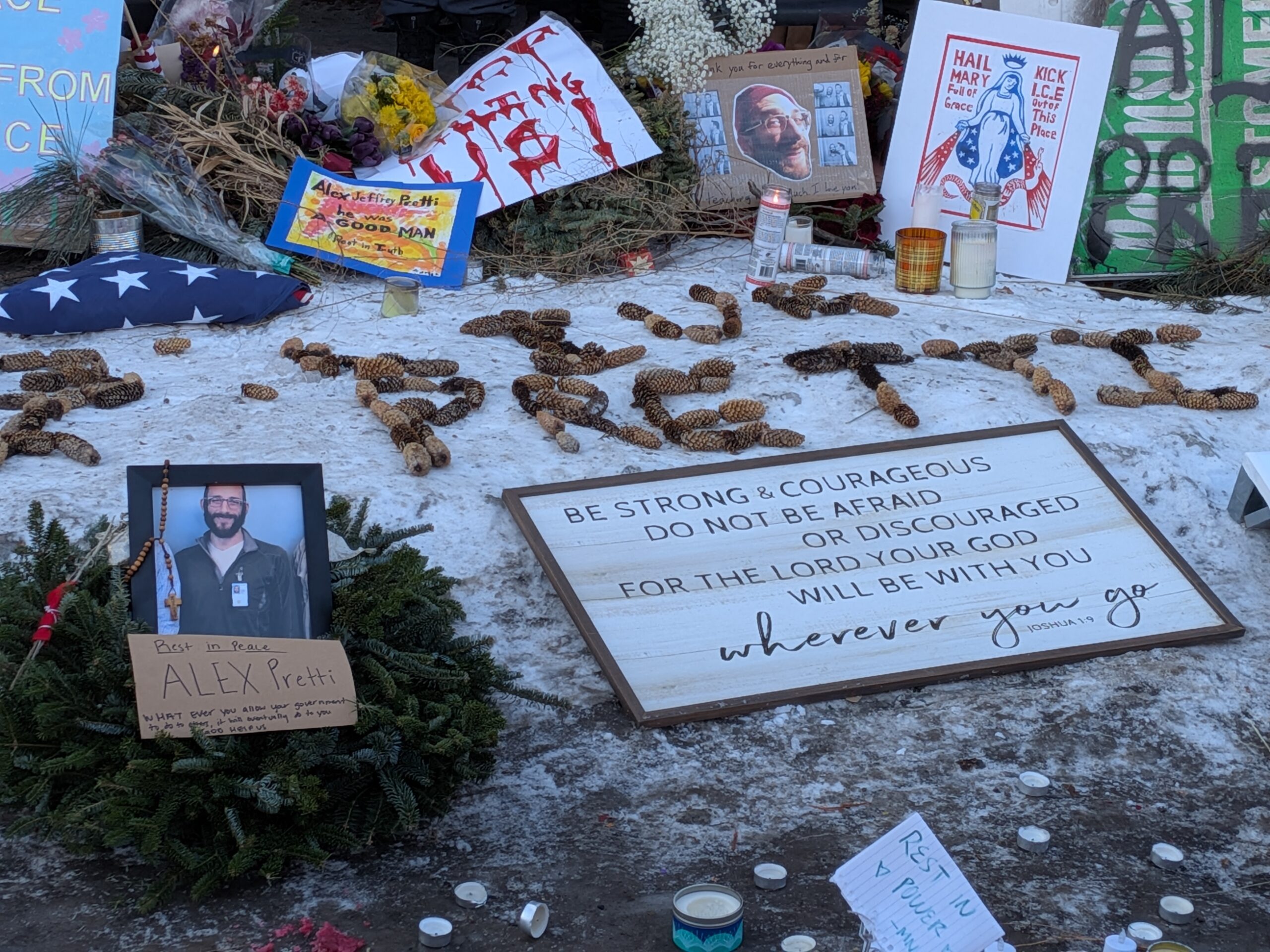
The killing of intensive care nurse Alex Jeffrey Pretti has become a national flashpoint, but for his family it is first a private catastrophe. In the days since his death, his younger sister has stepped forward to defend his memory, denouncing what she calls “disgusting lies” about who her brother was and how he lived. Her grief soaked statements, describing the fallout as “absolutely gut-wrenching,” have turned one family’s mourning into a wider reckoning over truth, narrative, and power.
Her pushback lands at a moment when video clips, official statements, and political talking points are competing to define the legacy of a 37-year-old nurse whose final moments were captured on a “horrific” recording. As protests grow and federal investigations unfold, her voice has become a central thread in the story, insisting that the public see Alex Pretti as she did: a kind, generous caregiver, not the caricature she believes some are trying to construct.
The shooting that shattered a family and a city
The death of Alex Jeffrey Pretti is not just another entry in a grim national ledger of fatal encounters with law enforcement, it is a specific, documented killing that has shaken Minneapolis and reverberated far beyond. According to accounts of the Killing of Alex, the 37-year-old intensive care nurse, described as an American working for the United Stat government, was shot by federal agents during an operation that quickly spiraled into tragedy. The incident unfolded in Minneapolis, where federal personnel had been deployed amid heightened tensions over immigration enforcement and public safety.
Officials have said that agents believed they were confronting a threat, but the sparse early details and the existence of a graphic video of the shooting have fueled anger and suspicion. The fact that a 37-year-old health care worker, who had spent his career treating critically ill patients, died at the hands of the state in a city already scarred by past police violence has intensified scrutiny of every decision made that day. For his family, those abstractions are secondary to the blunt reality that Alex Jeffrey Pretti left home and never came back.
Who Alex Pretti was before the cameras
Long before his name appeared in headlines, Alex Pretti was known to those around him as a caregiver who built his life around helping others. Colleagues and relatives have stressed that he was a 37-year-old nurse who worked in intensive care, someone who chose one of the most demanding corners of medicine and stayed there through grueling shifts and emotional strain. In tributes shared after his death, friends described a man who checked on co-workers after tough nights, volunteered for difficult cases, and treated patients’ families with the same patience he showed inside the unit.
Those who knew him best have emphasized that this instinct to help did not end when he left the hospital. In statements gathered as the community mourned, his sister and a close friend recalled that “all Alex ever wanted was to help,” a theme that runs through memories of his personal life as well as his career. They spoke of a brother who would show up to move furniture, watch children, or simply sit with someone going through a crisis, and they framed his killing as a cruel inversion of the values he lived by, a point underscored in local coverage of how Alex Pretti’s colleagues and family remember him.
“My brother is, and always will be, my hero”
In the days after the shooting, Alex Pretti’s younger sister emerged as the family’s public voice, issuing a detailed statement that mixed raw grief with a clear defense of her brother’s character. She described him as kind and generous, someone who “lit up every room,” and she insisted that the man she knew bore no resemblance to the figure implied in some early official narratives. Her words, shared widely across social media and local broadcasts, framed Alex as a protector and role model, culminating in the declaration that “my brother is, and always will be, my hero,” a line that has since been quoted repeatedly as shorthand for the family’s stance.
Her statement did more than eulogize, it challenged the framing of the case itself. By stressing that he was a devoted caregiver and a steady presence in her life, she implicitly questioned any suggestion that he had suddenly become a menace in the moments before he was shot. Coverage of the message highlighted how the Sister of Alex framed him as a hero not only to her but to patients and colleagues, and how she linked that image directly to her demand for accountability.
“Disgusting lies” and an “absolutely gut-wrenching” backlash
As official statements trickled out and commentators began to speculate about what happened, Alex Pretti’s sister said she watched a parallel narrative take shape that she barely recognized. In a separate public message, she condemned what she called “disgusting lies” about her brother, arguing that some accounts were distorting his actions and motives in the moments before he was killed. She did not limit her criticism to anonymous online voices, instead suggesting that certain descriptions from authorities and political figures were feeding a misleading picture of who Alex was and what he did.
She described the experience of seeing those claims circulate while planning a funeral as “absolutely gut-wrenching,” a phrase that captured both her personal anguish and her anger at what she viewed as an attempt to smear a dead man who could no longer speak for himself. Her denunciation of these “disgusting lies” has been widely quoted, with national outlets noting how the Sister Slams the rhetoric surrounding the case and how her words have become a rallying cry for those skeptical of the official story.
How his sister and friends describe the man behind the headlines
Beyond the sharp language aimed at critics, Alex Pretti’s sister has spent considerable time painting a fuller portrait of her brother’s life. She has spoken about his decision to become an intensive care nurse, his habit of staying late to comfort families, and his willingness to take on extra shifts during crises. Friends have echoed that picture, recalling a man who organized meal trains for colleagues, donated to mutual aid funds, and treated strangers with the same patience he showed in the hospital. These details are not incidental, they are central to her argument that the public should judge him by the life he led, not by a few contested seconds on video.
Her insistence on this broader context has resonated in local coverage, where mourners have described him as a “light” in their community and emphasized that “all Alex ever wanted was to help.” That phrase, repeated in interviews with co-workers and loved ones, has become a shorthand for the values they say he embodied. Reports on how As the community continues to mourn have underscored that his sister’s public statements are not just about rebutting critics, they are also about preserving a memory of Alex that feels true to those who loved him.
Unearthed videos and the fight over what they show
Complicating the public debate are a series of previously unseen recordings that surfaced after the shooting, showing Alex Pretti in earlier encounters with federal officers in Minneapolis. These unearthed clips, captured from multiple cell phones, depict him scuffling with agents during an incident days before his death, footage that quickly became fodder for arguments about his behavior and the government’s response. In the videos, he appears to be nonviolent even as officers try to restrain him, and at one point he seems to pull away when they let go and then scurry off, a sequence that has been parsed frame by frame by supporters and critics alike.
For those inclined to defend the agents, the recordings are cited as evidence that Alex had a pattern of confrontations with federal personnel. For his family and many protesters, the same images suggest that officers escalated a situation that did not warrant force, and that they failed to adjust their tactics even after seeing that he did not respond violently. Reporting on these Unearthed videos has highlighted how they appear to show Alex behaving nonviolently even as officers grab at him, a detail his sister’s supporters point to when they argue that the later fatal shooting was not an inevitable outcome.
Federal fallout: agents on leave and official scrutiny
As public pressure mounted, federal authorities moved to show that they were taking the case seriously, at least procedurally. Customs and Border Protection confirmed that two border agents involved in the fatal shooting of an American citizen in Minneapolis had been placed on administrative leave, a standard step in high profile use of force cases. The agency also acknowledged that Alex had been on their radar before the shooting, noting that he had been stopped by border agents 11 days before his death, a detail that raised questions about what information officers had about him when they confronted him later.
These disclosures have not satisfied protesters or the family, but they mark an important shift from the initial, tightly controlled statements that followed the shooting. By confirming that Customs and Border had prior contact with Alex and that the agents are now sidelined pending investigation, officials have opened the door to deeper scrutiny of their protocols and decision making. For his sister, these developments are a reminder that the people she holds responsible for her brother’s death are still on the government payroll, even if they are temporarily off the street.
Protests, live updates, and a city on edge
On the streets of Minneapolis, the killing of Alex Pretti has reignited a familiar cycle of grief, anger, and mobilization. Demonstrators have gathered outside federal buildings and city landmarks, holding signs with his name and chanting for accountability, while organizers coordinate marches and vigils through social media and group chats. The atmosphere is tense but determined, with community leaders urging nonviolence even as they accuse authorities of stonewalling and spin. For many residents, the sight of heavily armed federal agents in their neighborhoods, combined with the knowledge that an intensive care nurse was shot dead, has reopened wounds that never fully healed.
Live coverage of the unrest has captured not only the scale of the protests but also the emotional weight carried by those closest to Alex. In one widely shared segment, the Sister of Alex is quoted describing her brother as kind and generous, someone who “lit up every room,” words that protesters have repeated through bullhorns and on handmade posters. The juxtaposition of her personal memories with images of riot gear and flashing lights has underscored how one family’s loss has become a symbol of broader frustrations with federal power and law enforcement in the city.
National reaction, from talk shows to sports arenas
The debate over Alex Pretti’s death has not been confined to Minneapolis. National figures in entertainment and sports have weighed in, using their platforms to question the government’s account and to amplify the family’s concerns. On a widely watched daytime talk show, Whoopi Goldberg criticized political leaders including Kristi Noem and Greg Bovino in the context of the shooting, arguing that the rhetoric coming from some officials was shaping a narrative about Alex’s intentions that did not match what emerging evidence and family testimony suggested. Her comments reflected a broader skepticism among commentators who see the case as part of a pattern of official stories that shift under scrutiny.
Prominent voices in the basketball world have also spoken out, linking the tensions in Minnesota after Alex’s death to ongoing conversations about racial justice, policing, and federal authority. Some players and coaches have referenced the protests in pregame interviews, while others have shared statements from the family on their social media accounts. Coverage of how Whoopi Goldberg and others have responded has highlighted how the fight over Alex’s legacy is unfolding not only in court filings and press conferences but also in cultural spaces where public opinion is shaped.
More from Vinyl and Velvet:

Leave a Reply