

Melania Trump stepped into the spotlight in a sleek turtleneck and blazer, but it was her message about artificial intelligence and education that really did the talking. Speaking directly to students, she framed AI as a powerful tool that should never replace their own curiosity, creativity, or sense of meaning. Her mix of polished style and pointed guidance captured how the first lady is trying to shape the conversation about what learning looks like in an AI driven era.
Instead of treating technology as something distant or intimidating, she leaned into it, urging young people to experiment with new tools while still trusting their own judgment. The look was classic Melania Trump, the agenda was firmly about the future, and together they signaled that the East Wing is staking out its own lane on how America’s children grow up with AI.
The Look That Launched a Conversation
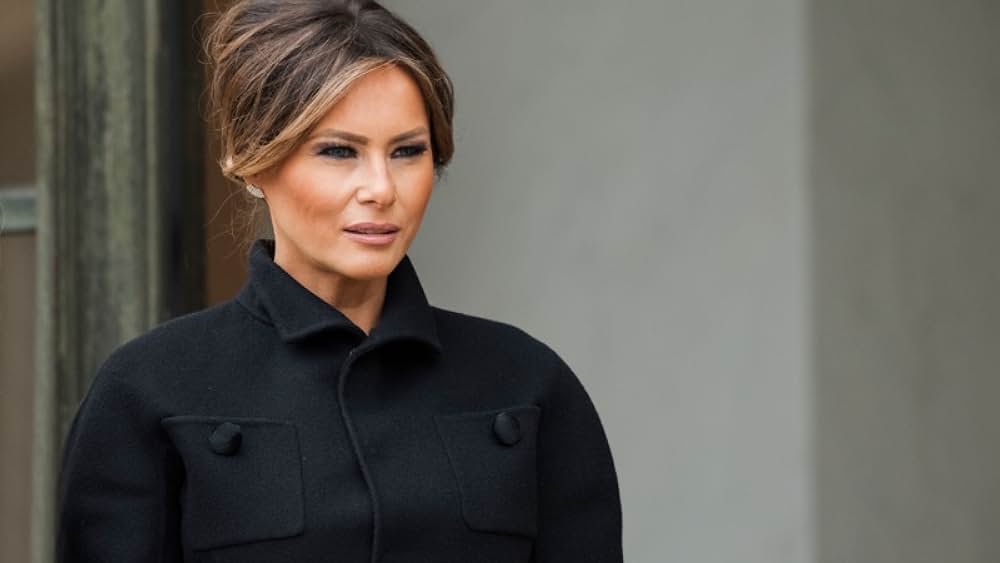
The outfit that grabbed attention was simple on paper and striking on camera. Melania Trump paired a fitted black turtleneck with a sharp blazer, a combination that read more “tech conference keynote” than traditional political spouse. Coverage of the event highlighted how she appeared in a chic all black ensemble that balanced minimalism with authority, a visual cue that she was there to talk about serious ideas, not just pose for photos, as she delivered a speech on artificial intelligence for students framed around the idea to “Never Surrender Your” own thinking, a phrase echoed in descriptions of her appearance at the event linked to turtleneck style.
That fashion choice was not a one off. Reporting on her recent public appearances notes that Melania Trump has leaned into streamlined tailoring and monochrome looks when she is talking about technology and education, a shift from some of the more ornate outfits of her earlier White House years. At the AI event, the turtleneck and blazer combination worked as a kind of visual shorthand for modern professionalism, aligning her with the tech forward theme of the program and reinforcing the sense that she was stepping into the role of guide for students navigating a digital future, a role that has been underscored in coverage of Melania Trump and her evolving public image.
Inside “Curiosity For Intellectual Freedom”
Behind the wardrobe moment was a carefully framed message. In her address titled Curiosity For Intellectual, First Lady Melania Trump laid out how she sees AI fitting into the lives of young people. She urged students to treat technology as a way to expand their questions, not to shut them down, and to see intellectual freedom as something they actively protect by thinking critically about what AI produces. The title itself signaled that she was not just talking about gadgets or apps, but about the mindset students bring to a world where algorithms are everywhere.
The speech, delivered by First Lady Melania, tied curiosity directly to education policy themes, including how schools can encourage exploration instead of rote memorization. She framed AI as a partner in that process, suggesting that students could use it to test ideas, visualize concepts, or explore new fields, while still being responsible for the final judgment about what is true or meaningful. By putting “intellectual freedom” in the spotlight, she was also hinting at a broader cultural debate about who controls information in an AI saturated environment and how young people can keep their own voices from getting drowned out.
Reaching Students Across the United States
The audience for Melania Trump’s AI message was not a small group in a single auditorium. According to official accounts, First Lady Melania addressed thousands of students across the United States through a virtual format, turning what could have been a niche policy speech into a national classroom moment. The event was designed so that children from different regions and school systems could tune in at the same time, hear the same guidance, and feel included in a shared conversation about how AI will shape their futures.
That nationwide reach matters because it signals that the East Wing is treating AI literacy as a broad civic issue, not just a tech sector concern. By speaking directly to students rather than only to educators or industry leaders, she positioned children themselves as the primary stakeholders in how AI is used in schools and careers. The framing of the event as a message to America’s children, highlighted in coverage that notes how Today, First Lady made an appeal to America’s Children during the AI for Tomorrow’s Leaders program, underscored that she wanted kids to feel personally responsible for how they use these tools, not just passively affected by them.
“Never Surrender Your Meaning”
At the heart of Melania Trump’s remarks was a line that captured her cautious optimism about AI. In prepared comments released by the White House, she drew a sharp line between what machines can generate and what humans alone can provide. “Mrs, Trump, Although artificial intelligence can generate images and information, only humans can generate meaning and purpose,” the statement noted, distilling her view that AI should never be allowed to replace the human drive to understand, to care, and to create. That contrast between data and meaning became a kind of thesis for the entire event.
She wrapped that idea in a broader warning not to let AI become a shortcut that erodes effort. In social media clips tied to the event, the phrase “Never Surrender Your” own thinking and imagination surfaced as a rallying cry, echoing her insistence that students should not hand over their curiosity to a chatbot or image generator. The message was not anti technology, but it was firmly pro agency, reminding kids that while AI can offer suggestions or draft answers, it cannot decide what kind of person they want to be or what they stand for, a nuance that has been highlighted in analysis that notes Why her framing of AI use could have a lasting impact on how young people approach these tools.
“CURIOSITY FOR INTELLECTUAL FREEDOM” Goes Viral
The message did not stay confined to a single livestream. On social media, the phrase “CURIOSITY FOR INTELLECTUAL FREEDOM” appeared in all caps on the official First Lady account, paired with video of Melania Trump speaking to students. The post, which noted that First Lady Melania Trump Inspires Ameri, quickly drew tens of thousands of likes and thousands of comments, a sign that her AI message was resonating far beyond the original event. The stylized typography and clipped phrasing gave the slogan a poster ready feel, something that could easily end up on classroom walls or school newsletters.
Another clip from the same campaign captured her telling students, “CURIOSITY FOR INTELLECTUAL FREEDOM. Choose to let your imagination drive your intellectual progress. But never use AI as a quick replacement for your own effort.” The capitalized “Choose” and “But” in the caption underscored the fork in the road she was laying out for kids: they can either use AI to deepen their learning or let it flatten their ambitions. By turning that choice into a shareable sound bite, she and her team were clearly aiming to make responsible AI use part of the everyday language students hear from adults, not just a one time lecture.
Fostering the Future Together
Melania Trump’s AI push is not happening in isolation. In early 2026 she announced the inaugural meeting of a global coalition called Fostering the Future, described as an effort to help children thrive in a world shaped by technology and rapid change. The initiative is framed around giving young people the skills and support they need to navigate new tools, including AI, while still developing resilience, empathy, and a sense of purpose. By using the language of “together,” the coalition signals that it is meant to bring in educators, parents, and international partners, not just American policymakers.
That global framing fits with the way she has talked about AI as a shared challenge rather than a purely domestic policy issue. The coalition’s focus on helping children thrive suggests programs that could range from digital literacy resources to mentorship networks that connect students with professionals in fields like science, art, media, and entrepreneurship. Those themes echo the way First Lady Melania has already been described encouraging students to see AI as a tool that can open doors in exactly those fields, not just in coding or engineering.
How Her Message Fits the Trump AI Agenda
Melania Trump’s focus on curiosity and meaning is unfolding against a backdrop of aggressive AI policy moves from the West Wing. A detailed timeline of the Trump White House’s actions on artificial intelligence notes that in January 2025 there was Immediate action to rescind Biden era AI regulations, with the administration framing AI development as essential to American competitiveness. That early decision set the tone for a strategy that prioritizes rapid innovation and reduced regulatory friction, with repeated references to keeping American companies ahead of rivals.
Within that context, the first lady’s message to students functions as a kind of cultural counterweight. While the policy side emphasizes speed and competition, her speeches stress responsibility, effort, and the uniquely human capacity to create meaning. By telling students that AI can generate information but not purpose, she is effectively filling in the ethical and educational gaps that a purely deregulatory approach might leave. The repeated references to American competitiveness in the policy timeline, including the way the administration has invoked American leadership in AI, make her decision to speak directly to children about how they use these tools feel even more strategic.
Fashion as a Political Throughline
The turtleneck and blazer moment also fits into a longer story about how Melania Trump uses fashion to frame political events. Earlier in President Donald Trump’s term, she attended his address to a joint session of Congress wearing a Dior blazer with a price tag that drew plenty of attention. Coverage at the time noted that President Donald Trump delivered the speech on a Tuesday while Melania Trump’s Dior look sparked its own wave of commentary about luxury, symbolism, and the expectations placed on a first lady’s wardrobe. That appearance cemented her reputation as someone whose outfits would be parsed alongside her husband’s words.
More recently, she has again “turned heads” in a Dior blazer at Donald Trump’s speech to Congress, with reports pointing out the Dior label and inviting readers to Check the price. That pattern of high fashion at high profile political moments makes her choice of a more understated turtleneck and blazer for the AI event even more telling. It suggests a deliberate shift toward a tech adjacent aesthetic when she is speaking about education and innovation, using clothes as a subtle cue that the conversation has moved from traditional politics to the future of learning.
More from Vinyl and Velvet:

Leave a Reply