

Natalie Portman used her time at the Sundance Film Festival to do a lot more than plug a new movie. Standing in Park City, Utah, she called out what she described as “ICE brutality,” tying the mood of the festival to a wider national reckoning over immigration enforcement and state violence. Her comments landed as a sharp, unvarnished rebuke of how the federal government is treating civilians, and they instantly turned a red-carpet stop into a political flashpoint.
Portman did not just drop a line or two and move on. She showed up in visible protest gear, linked her criticism of Immigration and Customs Enforcement to a broader defense of vulnerable communities, and then folded in a second argument about who gets power and recognition in Hollywood. The result was a compact but pointed statement that connected the Department of Homeland Security’s enforcement arm, the current awards season, and the kind of stories that actually make it to screens.
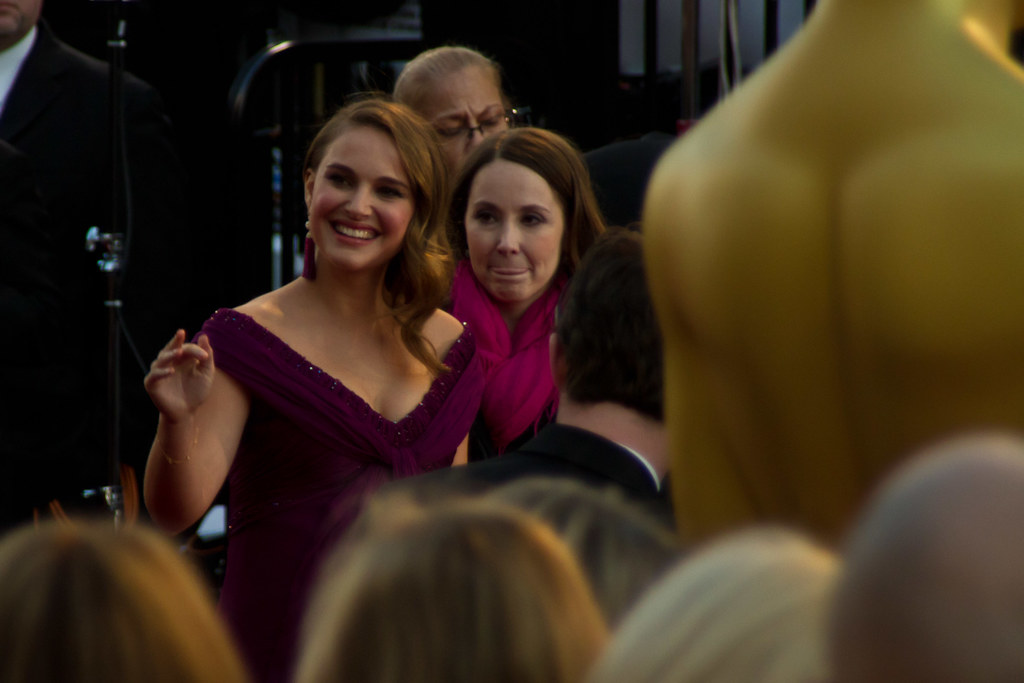
Portman’s pointed stand in Park City
At Sundance in Park City, Utah, Natalie Portman made it clear she was not treating the festival as a politics-free zone. She arrived on the press circuit wearing an “ICE out” badge that directly targeted Immigration and Customs Enforcement, the agency housed inside the Department of Homeland Security, and used her interviews to condemn what she framed as systemic abuse. Her choice to pin that message to her outfit, in a setting built around photo calls and step-and-repeat walls, turned a standard publicity moment into a rolling protest that followed her from venue to venue, as captured in reporting on the Sundance protest.
Her language matched the visual. Portman did not hedge, describing what ICE is “doing” as representing “the worst of humanity,” a phrase that cut through the usual festival chatter about box office prospects and distribution deals. By centering her remarks on the conduct of a specific federal agency, rather than on vague “divisiveness,” she signaled that her criticism was aimed squarely at the machinery of enforcement, not just the tone of politics. That clarity helped her comments resonate beyond the festival bubble and into a broader debate over how far immigration authorities should be allowed to go in the name of security.
“ICE out” and “Be Good”: protest on a lapel
Portman’s pins did a lot of work in a small amount of space. Alongside the “ICE out” badge, she wore a second pin that read “Be Good,” a pairing that framed her critique as both a demand for accountability and a reminder of basic moral expectations. The message was simple enough to be read in a passing photo, yet pointed enough to call out a specific agency by name, which is why coverage of the festival singled her out as a particularly visible presence among the stars backing the anti-ICE protest, noting how Natalie Portman used those “ICE out” and “Be Good” pins while conducting media interviews.
The choice of “Be Good” as a companion slogan mattered. It softened none of her criticism of ICE, but it did underline that her argument was not just about tearing down institutions, it was about insisting that government power be exercised with basic decency. In a festival environment where branding is everywhere, Portman essentially created her own micro-campaign, one that could be screenshotted, shared, and replicated by anyone willing to stick a small badge on a jacket. That kind of portable symbolism is part of why her stance traveled so quickly beyond the snowbanks of Park City.
Calling out “ICE brutality” in plain language
Portman’s rhetoric around ICE was blunt enough that it cut through the usual euphemisms that often surround immigration enforcement. In one widely shared exchange, she spoke about “ICE brutality” and described the current period as “outrageous and needs to end,” language that echoed her broader description of the agency’s actions as “the worst of humanity.” Her comments framed the situation as a “horrific moment in our country,” with the federal government “attacking civilians,” a formulation that put the focus squarely on state power rather than on abstract policy debates, as seen in video of her Sundance remarks.
She also made a point of praising “brave Americans” who have been standing up to ICE, arguing that their willingness to confront what she called brutality is a sign of democratic health rather than disorder. In one interview, Portman stressed that these people are “showing up” and refusing to normalize what she sees as abusive behavior, insisting that the situation is “outrageous and needs to end,” a line captured in coverage of how Portman critiques ICE. By pairing condemnation with praise for grassroots resistance, she framed the story not just as one of harm, but also of active pushback.
“Horrific moment” and a federal government under fire
Portman’s description of the United States as being at a “horrific moment” was not tossed off casually. She tied that phrase directly to the behavior of the federal government, accusing it of “attacking civilians” through its immigration enforcement tactics. In doing so, she moved the conversation away from the idea of a few bad actors and toward a critique of how power is being wielded from the top, a point that came through clearly in the video where she talks about the federal government’s role in this “horrific moment,” as documented in the recorded interview.
That framing matters in the current political climate, with Donald Trump in the White House and immigration enforcement sitting at the center of his administration’s agenda. By explicitly naming the federal government as the source of the problem, Portman aligned herself with activists who argue that the issue is not just individual abuses but a system designed to intimidate and punish. Her comments at Sundance, delivered while she was ostensibly there to talk about a film, effectively turned a festival Q&A into a critique of how the Trump administration is using the Department of Homeland Security’s tools against vulnerable communities.
Finding “beautiful community” in the backlash
Even as she described the current period as horrific, Portman made a point of highlighting what she sees as a countervailing force. She talked about “a beautiful community that Americans are showing right now,” emphasizing that people are not just watching ICE’s actions from a distance but are “showing up for each other.” That line, captured in reporting on how Portman and others have spoken out, framed solidarity itself as a kind of quiet resistance.
Her focus on community also helped her avoid the trap of centering only celebrity outrage. By praising Americans who are organizing, protesting, and supporting targeted families, she shifted some of the spotlight away from the Sundance stage and toward the people doing day-to-day work on the ground. In a festival setting where the default narrative often revolves around star power, Portman’s insistence on talking about ordinary Americans “showing up for each other” was a reminder that the stakes of ICE policy are playing out far from Park City’s theaters and press lounges.
“The Gallerist” and a protest-driven press tour
All of this unfolded while Portman was at Sundance to promote “The Gallerist,” a film that follows “a desperate gallerist” who “conspires to sell a dead body at Art Basel Miami,” according to a synopsis shared by writer Jack Smart. The movie, which brought Portman together with Jenna Ortega and Charli XCX, gave her a high-profile slot on the festival schedule, with cameras trained on her as she walked premieres and did interviews about a plot that spirals from the art world into crime, as described in coverage by Jack Smart.
Portman used that attention to double up, talking about the film’s story while also keeping her pins and her ICE comments front and center. The juxtaposition was striking: a darkly comic premise about a dead body at Art Basel Miami on one hand, and a very real conversation about state violence on the other. By refusing to silo those topics, she turned the usual promotional grind into a platform for protest, signaling that, for her, the politics of who gets targeted by ICE and the politics of which stories get financed and celebrated in Hollywood are part of the same ecosystem.
Linking ICE criticism to awards snubs for women directors
Portman did not stop at immigration enforcement. She also used her Sundance platform to call out how women-directed movies are treated during awards season, arguing that “so many of the best films” she saw this year were made by women but are “not getting the accolades they deserve.” She pointed specifically to titles like “Sorry Baby” and “Ann Lee,” saying they were being shut out of major awards conversations, a critique that was detailed in reporting on how Natalie Portman combined her ICE criticism with a push for women-directed films.
Her frustration lined up with a broader backlash to the 2026 Oscar nominations, which once again left several prominent women directors off the list. Commenting on those nominations, Portman talked about “barriers at every level,” arguing that the problem is not just a few missed nods but a pipeline that filters out women long before ballots are cast, a point echoed in coverage of how Natalie Portman reacted to the Oscar snubs. By tying that critique to her ICE comments, she suggested that the same systems that marginalize certain communities in law enforcement also marginalize certain storytellers in culture.
Portman, Olivia Wilde, and a growing Sundance chorus
Portman was not the only one speaking out against ICE in Park City, but she quickly became one of the most visible faces of that push. Coverage of the festival noted that numerous celebrities expressed frustration with the agency, with Portman and Olivia Wilde both using their time at Sundance to criticize immigration enforcement and to back protests targeting ICE. Reports on how Natalie Portman, Olivia described a loose but vocal coalition of actors who were willing to risk some political blowback in order to make their positions clear.
That chorus mattered because it turned what could have been a one-off quote into a recurring theme of the festival. When multiple stars, including Wilde, echoed Portman’s concerns, it signaled that criticism of ICE had moved from the margins of Hollywood conversation into the center of one of its most important gatherings. The presence of that many high-profile voices, all pointing in the same direction, made it harder to dismiss Portman’s “ICE brutality” comments as a personal outburst and easier to see them as part of a broader shift in how the industry talks about state violence and immigration.
Why her Sundance comments hit a nerve
Part of why Portman’s remarks landed so forcefully is that they came from someone who has been talking about structural barriers for years. When she said that “so many of the best films” she saw were made by women and that they are not “getting the accolades they deserve,” she was not just riffing on a single awards cycle, she was pointing to a pattern, as detailed in coverage of how Portman framed those barriers. That history gave her ICE comments a sense of continuity, as if she were mapping one set of exclusions onto another.
In Park City, that throughline came into focus. Portman used the visibility of “The Gallerist,” the symbolism of her “ICE out” and “Be Good” pins, and the timing of the Oscar nominations to argue that who gets targeted by government agencies and who gets celebrated by cultural institutions are both questions about power. By calling ICE’s actions “the worst of humanity” while also insisting that women-directed films like “Sorry Baby” and “Ann Lee” deserve recognition, she turned Sundance into a stage for a broader argument: that brutality and erasure, whether carried out by the state or by an awards body, are linked by the same refusal to see certain people as fully worthy of protection, attention, or praise.
More from Vinyl and Velvet:

Leave a Reply