

President Donald Trump’s decision to roll out the red carpet for a glossy film about Melania Trump just as Minneapolis reeled from a deadly immigration enforcement shooting has turned into a political Rorschach test. For Representative Alexandria Ocasio-Cortez, it was not a close call: she branded Trump “unfit,” arguing that no responsible leader would be hosting a movie night while an ICE-linked killing and mass protests gripped a major American city. The clash over that choice is now a window into how the White House sees power, image, and accountability in the middle of a national reckoning over immigration enforcement.
The uproar is not only about one screening or one tweet. It is about a president who has consistently prioritized spectacle and loyalty, and a congresswoman who has built her brand on calling out what she sees as cruelty in the immigration system. Their latest collision, set against the backdrop of Minneapolis streets filled with grief and anger, shows how far apart they are on the basic question of what leadership should look like in a crisis.
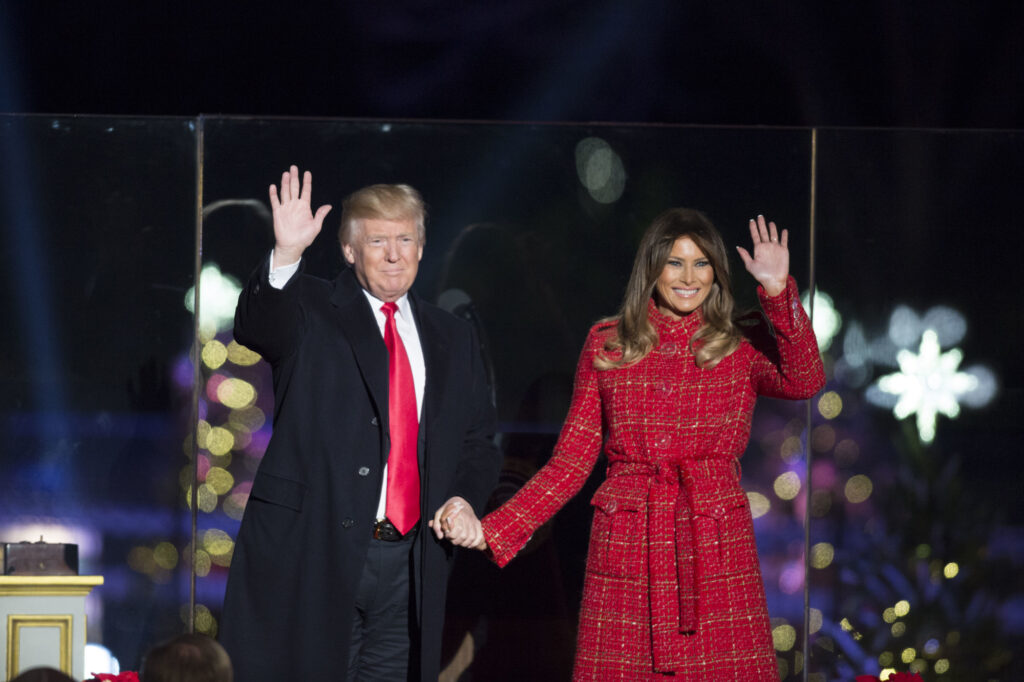
The White House movie night that lit the fuse
At the center of the storm is a private screening of a new documentary-style film about Melania Trump, staged inside the White House as a kind of VIP movie night. The event was framed as a celebration of the first lady’s story, with guests ushered into a screening room while the president played host and Melania worked the room as both subject and star. The project itself has been heavily promoted as a rare look inside the life of Melania, part of a broader effort to cement her public image as more than a supporting character in her husband’s political saga.
The screening was not a casual family movie on the couch. Reporting describes a carefully curated guest list and a White House operation that treated the film as a prestige moment, complete with a partnership involving Amazon and appearances by Hollywood names like Brett Ratner and Mike Tyson. The film, titled “MELANIA,” was touted as a “Historic Moment” for the first lady, with promotional language emphasizing the significance of the evening and the circle of “friends, family, and culture leaders” gathered around her, as highlighted in coverage of the Historic Moment.
Minneapolis on edge after a deadly ICE-linked shooting
While the projector flickered in Washington, Minneapolis was dealing with the fallout from a deadly confrontation involving federal immigration enforcement. Earlier this month, a U.S. Border Patrol agent shot and killed a man identified as Alex Pretti, who was 37, sparking immediate outrage and questions about why an immigration officer was using lethal force in a city neighborhood. Separate reporting has also focused on the shooting of 37-year-old Renee Nicole Good, who was killed inside her car in Minneapolis after confronting ICE agents, a case that has become a rallying point for critics of the administration’s tactics.
The anger did not stay online. In Minneapolis and across the country, Thousands of people poured into the streets for anti-ICE rallies, demanding an end to federal crackdowns and calling for the abolition of the US Immigration system as it currently operates. Images from Minnesota showed demonstrators gathered outside a hotel and marching through city streets, holding signs that directly blamed ICE and Border Patrol for the deaths and calling out the president by name. National briefings on the crisis have placed the Minneapolis shooting alongside a massive winter storm and a grinding government shutdown, with one update noting that Nearly 90 m people were under extreme weather alerts at the same time the city was processing the shooting.
AOC’s “unfit” charge and why this moment hit a nerve
Into that combustible mix stepped Alexandria Ocasio-Cortez, who has never been shy about taking on the president. As word spread that Trump was hosting a glamorous screening of “Melania” while Minneapolis residents were mourning and marching, AOC publicly accused him of being “Unfit” for office, arguing that the contrast between the White House party and the street-level grief was not just bad optics but a moral failure. Her comments, captured in coverage that highlighted her warning that “everyone is pretending” Trump is normal, framed the movie night as proof that he is incapable of prioritizing human life over personal branding, as reflected in the Unfit critique.
Her language was not a one-off outburst. Earlier in the month, Alexandria Ocasio-Cortez had already blasted what she called the “murder” of a civilian by an ICE agent in Minnesota and accused Trump of lying about the circumstances, a charge detailed in reporting on how Alexandria Ocasio Cortez confronted Trump of misrepresenting the shooting. She has also taken aim at allies of the president, telling audiences that Senator J. D. Vance’s rhetoric suggested he believed “American people should be assassinated in the street,” a line that came as she spoke about the 37-year-old Renee Nicole Good and the video of her killing by an ICE agent, as described in coverage of how Ocasio Cortez challenged him.
How the Melania film became a political lightning rod
On its own, a first lady documentary would not usually be front-page political drama. But “Melania” is not a quiet art-house project. The film is a high budget production backed by Amazon MGM Studios, marketed as offering “unprecedented access” to Melania’s life, her fashion, and her role in the Trump era. Promotional material has stressed that “Melania” will hit theaters at the end of January and is meant to give her fans, Americans, and people around the world a curated look at her story, as described in coverage of how Melania is being positioned by Amazon MGM Studios for Americans and global audiences.
Behind the scenes, the film has also been a commercial gamble. Reporting on the rollout notes that the project carries a roughly $40 million price tag and that early ticket sales have been soft, with one insider saying that “In New York, only a handful of seats have been booked” and that in Palm Beach theaters are “practically empty,” a grim sign for a movie the studio expected to be a major event, as detailed in coverage of the In New York box office worries. That mix of political symbolism and commercial pressure helps explain why the White House leaned so hard into the premiere, and why critics saw the screening as less about art and more about shoring up the Trump brand at a sensitive moment.
Optics of celebration while Minneapolis mourns
For AOC and many of the protesters in Minnesota, the timing of the screening was the whole story. They looked at a president who chose to spend his evening surrounded by celebrities and donors, watching a flattering portrayal of his wife, while families in Minneapolis were planning funerals and activists were braving winter streets to demand accountability from ICE and Border Patrol. Visuals from the anti-ICE marches, where Thousands called for the abolition of the US Immigration system, only sharpened that contrast.
The White House, for its part, has tried to present the president as juggling multiple crises at once, from the Minneapolis shooting to a winter storm that left Nearly 90 m people under extreme alerts, as well as a government funding standoff and tensions inside NATO. Supporters argue that presidents are always balancing ceremonial duties with grim briefings and that a film screening does not mean Trump is ignoring Minneapolis. But the administration has not offered a detailed public accounting of how it engaged with the families of Alex Pretti or Renee Nicole Good, or with local leaders, in the hours surrounding the movie night, leaving critics to fill that silence with their own conclusions.
AOC’s longer war with Trump’s immigration agenda
This clash did not come out of nowhere. Alexandria Ocasio-Cortez has spent years positioning herself as one of the loudest voices against Trump’s immigration policies, from family separation to expanded ICE raids. In Minnesota, she has repeatedly described the killing by an ICE agent as “murder” and accused Trump of lying about the training and rules that govern federal officers, as detailed in reporting on how Alexandria Ocasio Cortez challenged ICE in Minnesota and Trump of misrepresentation.
Her criticism extends beyond the president himself to his top lieutenants. Last year, Rep Alexandria Ocasio Cortez accused Homeland Security Secretary Kristi Noem of applying a double standard between left wing protesters and those on the political right, pointing out that Alex Pretti was a legal gun owner while the administration praised figures like Kyle Rittenhouse. That pattern of calling out what she sees as selective enforcement and political favoritism is part of why her “unfit” label for Trump over the Melania screening landed with such force among her supporters.
Inside the carefully staged Melania brand
For the Trump White House, the Melania project is about more than one film. It is part of a broader attempt to define the first lady on their own terms, after years of speculation and tabloid caricature. The movie promises unmatched access to her childhood, her modeling career, and her life inside the Trump orbit, with the first lady herself leaning into the spotlight as a way to shape how history will remember her. Promotional materials and interviews have stressed that the film is meant to give Americans and international viewers a sense of her taste, her fashion, and her influence.
That branding push has been years in the making. Profiles of the first couple have detailed how Donald and Melania Trump set strict rules around holidays and public appearances, with one account describing how their “holiday rules” reflect a tightly managed image that keeps the family on script, as noted in coverage of Donald and Melania Trump’s holiday rules. The film, and the decision to host a lavish screening at the White House, fits neatly into that pattern of using official spaces and events to reinforce a carefully curated story about who Melania is and what she represents.
Protesters, pictures, and the power of the street
While the administration worked the cameras inside the White House, activists in Minneapolis and beyond were making their own visual argument. Photos from the city show crowds bundled against the cold, holding signs that read “Abolish ICE” and “Justice for Renee” as they marched past government buildings and gathered outside a hotel in Minnesota. Those images, captured as Thousands joined anti-ICE rallies across the US, have become part of the story in their own right, a counterpoint to the red carpet shots from Washington.
For many of the people in those crowds, the fight is not just about one shooting but about a system they see as fundamentally broken. They point to the deaths of Alex Pretti and Renee Nicole Good, the expansion of ICE and Border Patrol operations into interior cities, and the administration’s rhetoric about “law and order” as proof that the federal government is treating immigrant communities and their allies as enemy territory. Their chants and homemade banners are a direct challenge to the polished narrative of the Melania film, and they are betting that the raw emotion of street protest can cut through the White House’s carefully staged imagery.
More from Vinyl and Velvet:

Leave a Reply