

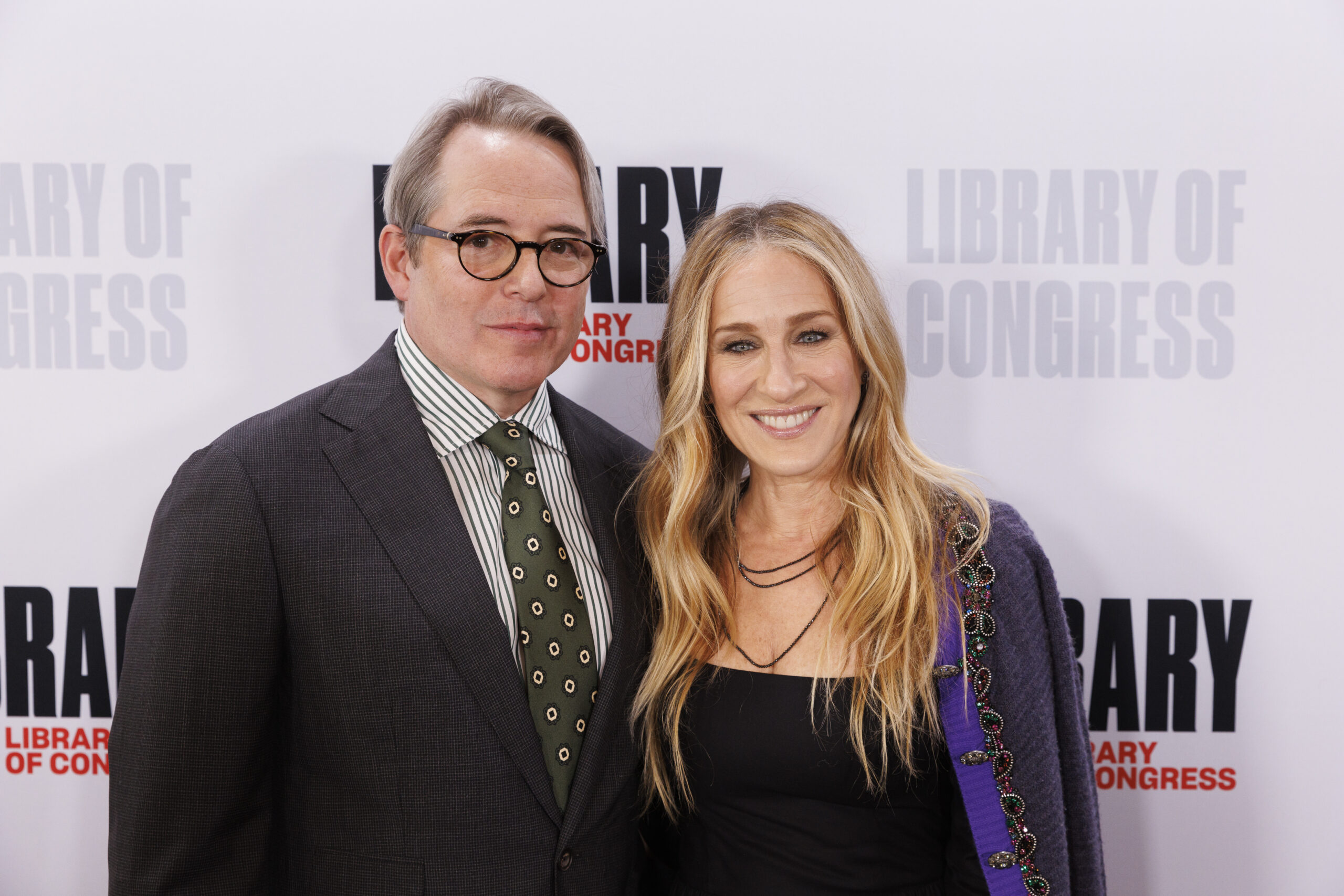
Matthew Broderick’s name usually brings to mind a charming teenager skipping school in a red sports car. Far less discussed is that he once crossed into the wrong lane on a rural road, hit another vehicle head on, and two women died on impact. For that crash, which wiped out a mother and daughter and shattered a family of five, he ultimately paid a fine that was lower than what many drivers now shell out for a routine parking ticket.
The gap between the devastation of that collision and the tiny legal penalty that followed still stuns people who stumble across the story today. It raises uncomfortable questions about how celebrity, memory, and legal technicalities can combine to turn a fatal wreck into a footnote, while the victims’ relatives live with the consequences forever.
The day a Hollywood star crossed the line
Long before Matthew Broderick settled into middle‑aged character roles, he was a young star on vacation in Northern Ireland with his then girlfriend, Jennifer Grey. They were driving a rented car on a country road when he veered into the wrong lane and slammed into an oncoming vehicle. In that other car were 28‑year‑old Anna Gallagher and her mother, Margaret Doherty, who was 63, and both women were killed instantly in the impact, leaving behind a grieving family and, in Gallagher’s case, three children who suddenly had no mother at all, according to contemporaneous accounts.
The crash did not happen on a busy motorway but on what should have been a quiet rural stretch, the kind of place where a holiday drive is supposed to be uneventful. Instead, the collision was so violent that emergency responders could do nothing for Anna Gallagher or Margaret Doherty, and Broderick himself was hospitalized with injuries and shock. The basic facts were not in dispute: his car had crossed over to the wrong side of the road, and the two women in the other vehicle never made it home.
From dangerous driving charge to a token penalty
In the immediate aftermath, local authorities treated the case as a serious criminal matter. Broderick was charged with causing death by dangerous driving, a count that carried a potential prison sentence of up to five years under the law at the time. That charge reflected the gravity of what had happened on that narrow road, and for a while it looked as if the young American actor might actually face a trial and real jail time for the deaths of Anna Gallagher and Margaret Doherty, according to the official case history.
What followed instead was a dramatic softening of the legal response. The dangerous driving charge was reduced to a lesser count of careless driving, and when Broderick finally appeared in court he was convicted only on that downgraded offense. The punishment was a fine of £100, which was reported as roughly $175 at the time, a sum that would barely register for a working actor, let alone a rising Hollywood name. For the family of the two women who died, the shift from a potential five‑year sentence to a modest fine felt like the system had quietly decided their lives were worth very little.
The $175 fine that still shocks people
When the case reached sentencing, the number that came out of the judge’s mouth was so small it sounded like a clerical error. Actor Matthew Broderick was fined the equivalent of $175 for careless driving in a crash that killed two people, a figure that was widely reported at the time and that still appears in summaries of the case. The court accepted that he had been on the wrong side of the road, yet the financial penalty was roughly in line with a minor traffic infraction, as noted in coverage that described $175 as the total consequence.
To put that in perspective, modern drivers in big cities routinely pay more than that for overstaying a meter or blocking a driveway. The idea that two lives, including that of a 63‑year‑old grandmother, could be extinguished and the driver walk away with a penalty smaller than a typical urban parking ticket is why the case keeps resurfacing in online debates. Social media posts still circulate the detail that he “killed 2 people with reckless driving and only had to pay $175,” echoing the outrage captured in one viral $175 meme that treats the fine as shorthand for a justice system out of balance.
Inside the crash that changed two careers
The wreck did not just alter the lives of the victims’ family, it also cast a long shadow over the careers of both Matthew Broderick and Jennifer Grey. The pair had been traveling together through Northern Ireland, and later accounts describe them driving through an area around Eniskill when the crash occurred, with one retelling placing the impact around 300 in the afternoon as their car crossed into the opposing lane. In that version, actor Matthew Brderick and Jennifer Gray are suddenly transformed from carefree tourists into central figures in a fatal collision near Eniskill, as recounted in a widely shared short video that revisits the moment.
In the days that followed, the couple’s public image shifted from glamorous to haunted. They were photographed arriving back at JFK Airport in New York, looking shaken as they returned from Ireland and tried to process what had happened. Those images of Matthew Broderick and Jennifer Grey walking through the terminal at JFK Airport after Broderick had been charged in Ireland and released on bail became part of the story, a visual reminder that their lives and careers had been abruptly rerouted by a crash on a country road, as captured in a later retrospective post.
Jennifer Grey’s life upended just as fame arrived
For Jennifer Grey, the timing of the crash was brutally ironic. The collision happened just days before Dirty Dancing was released, the film that would turn her into a household name and cement her as a pop‑culture icon. Instead of being able to enjoy the wave of success, Grey later described how the trauma of being in a car that killed two people made it almost impossible to celebrate, and how the memory of that country road and the sound of the impact stayed with her even as audiences fell in love with her on screen, as she recalled in a detailed reflection.
Grey has spoken about how being alone on a country road in the middle of nowhere, then suddenly surrounded by emergency crews and the fire brigade, left her with a kind of survivor’s guilt that never fully went away. While the public saw the glow of Dirty Dancing and assumed she was living a dream, she was privately replaying the crash and its aftermath, including the knowledge that Anna Gallagher’s three children and Margaret Doherty’s relatives were mourning while she was being asked about box office numbers. That split reality, between public success and private horror, is part of why the story still resonates whenever it resurfaces.
Broderick’s memory gap and the courtroom narrative
When Matthew Broderick eventually faced a court in Enniskillen, Northern Ireland, the narrative that emerged centered heavily on his claimed lack of memory. He told authorities that he did not remember the crash itself, a statement that became a key part of how the case was understood. Reports from the time noted that he said he could not recall why his car ended up on the wrong side of the road, and that he had no clear recollection of the moments leading up to the impact, a claim that was repeated in coverage of how Actor Matthew Broderick described the wreck.
That memory gap, whether the result of trauma, concussion, or something else, had real legal consequences. Without a clear account from the driver about what he had been doing in the seconds before the crash, it was easier for the defense to argue that the incident was a tragic mistake rather than a case of gross negligence. The judge ultimately imposed the $175 fine, and some observers at the time openly questioned how someone could be given such a light penalty when two people were dead and the only surviving driver said he did not remember what happened.
The family’s anger and a “travesty of justice”
For the relatives of Anna Gallagher and Margaret Doherty, the outcome was not just disappointing, it was enraging. They had lost a 28‑year‑old woman and a 63‑year‑old matriarch in a crash that was not their fault, and then watched as the man behind the wheel walked away with a minor conviction and a modest fine. One family member famously called the result a “travesty of justice,” a phrase that has followed the case ever since and is still cited in accounts that describe how the original dangerous driving charge was reduced and how the victims’ loved ones felt about the final verdict, as detailed in later retellings.
There were also attempts, at least in theory, to arrange a meeting between Broderick and the family so he could apologize directly, but those efforts never fully materialized. The relatives were left with the sense that the legal system had prioritized the comfort of a visiting celebrity over the lives of two local women, and that the small fine signaled to the world that their loss did not matter. That lingering anger is part of why the phrase “travesty of justice” still gets attached to the story whenever it is revived in documentaries, articles, or social media threads.
How the court in Enniskillen handled a Hollywood defendant
The legal proceedings unfolded in Enniskillen, a town in Northern Ireland whose courthouse suddenly found itself hosting a case that drew international attention. A court there heard evidence that Broderick had been driving on the wrong side of the road and that his car collided head on with the vehicle carrying Anna Gallagher and Margaret Doherty. Reports from the time describe how the actor was treated for shock after the crash and then later returned to face the downgraded careless driving charge, with the court in Enniskillen ultimately imposing the small fine that has become so infamous, as summarized in accounts of the hearing in Enniskillen.
The fact that the case played out in a relatively small town, far from Hollywood or London, did not stop it from becoming a global story. Yet inside that courtroom, the mechanics were familiar: a charge sheet, a defense argument, a judge weighing intent and negligence. The difference was that the defendant was a recognizable face, and the outcome, a $175 fine, fed a perception that fame and foreign status had tilted the scales. Whether or not that is fair to the individual judge, it is the impression that stuck, especially for those who saw two coffins and then read about a penalty that barely rose above a traffic ticket.
Why the story keeps resurfacing decades later
Decades after the crash, the details keep bubbling back into public view, often when people rediscover the case and react with disbelief. Posts circulate that spell it out bluntly, saying, in the words of one viral caption, “That Matthew Broderick killed 2 people with reckless driving and only had to pay $175 by saying he lost his memory,” a line that captures how the memory‑loss claim and the tiny fine have fused into a single narrative about privilege and accountability, as seen in a widely shared DIDYOUKNOW post.
The persistence of the story says something about how people process celebrity wrongdoing. Fans can hold Ferris Bueller in their heads as a lovable slacker, but the real Matthew Broderick once crossed into the wrong lane and two women died. The fact that the legal system responded with a $175 fine, and that the victims included a 63‑year‑old grandmother and a 28‑year‑old mother of three, keeps the case from fading into obscurity. It lives on as a kind of cautionary tale about how easily a life can be lost on the road, and how uneven the consequences can be when the driver behind the wheel is famous.
More from Vinyl and Velvet:

Leave a Reply