

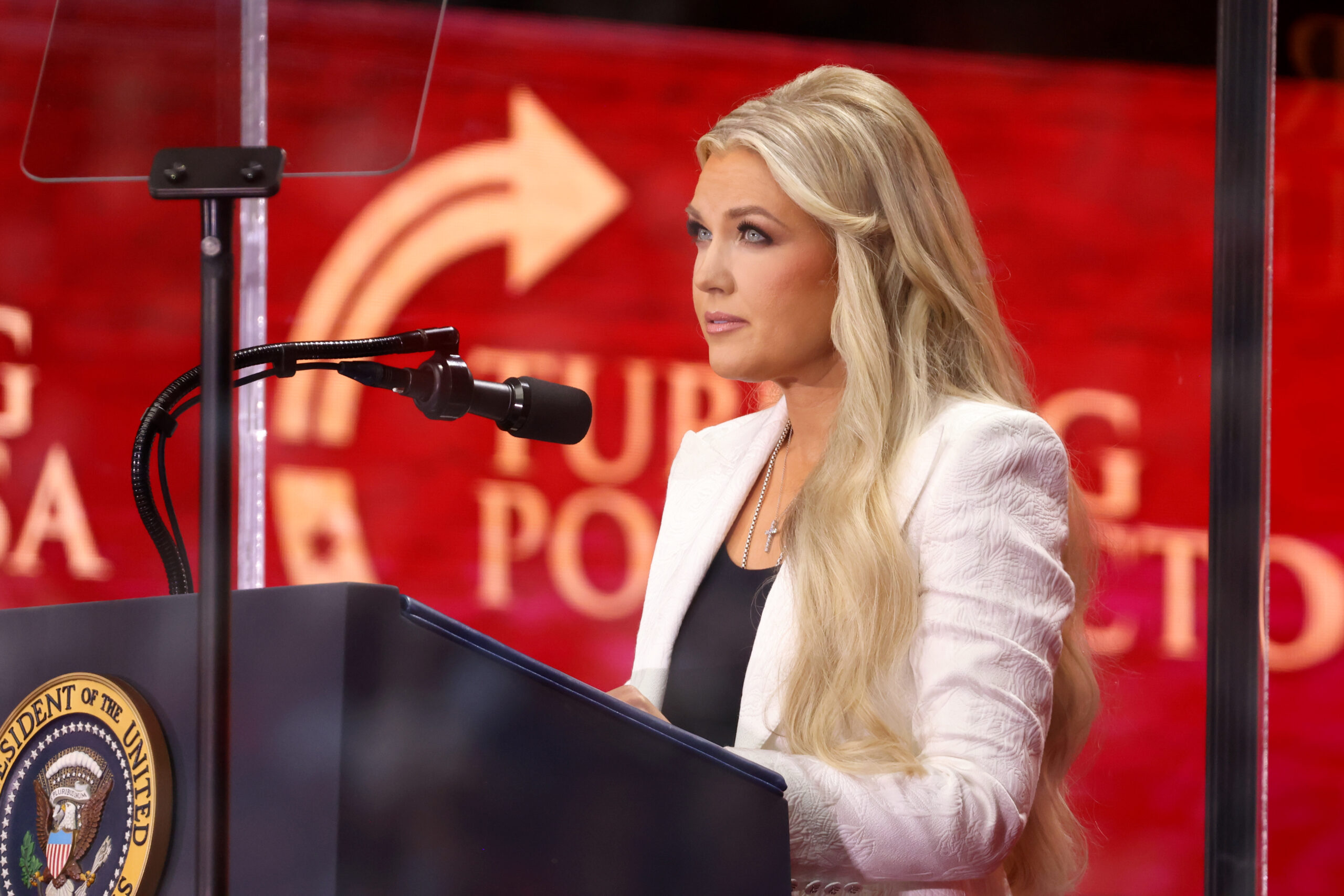
Erika Kirk is hitting the road at full speed, launching a national faith tour even as protests, online backlash, and a running fight over her wardrobe swirl around her. The widow of slain conservative activist Charlie Kirk is leaning into the spotlight rather than ducking it, turning grief, politics, and a very public fashion debate into fuel for a new kind of evangelical roadshow. Her “Make Heaven Crowded” push is part revival, part organizing effort, and part culture‑war flashpoint, and all of it is unfolding in real time.
At the center is a simple tension: Kirk wants to talk about salvation, spiritual warfare, and voter turnout, while critics want to talk about her pantsuits, her guest pastors, and her language for opponents. The result is a tour that feels less like a quiet church series and more like a rolling referendum on what modern conservative Christianity looks like in the Trump era.
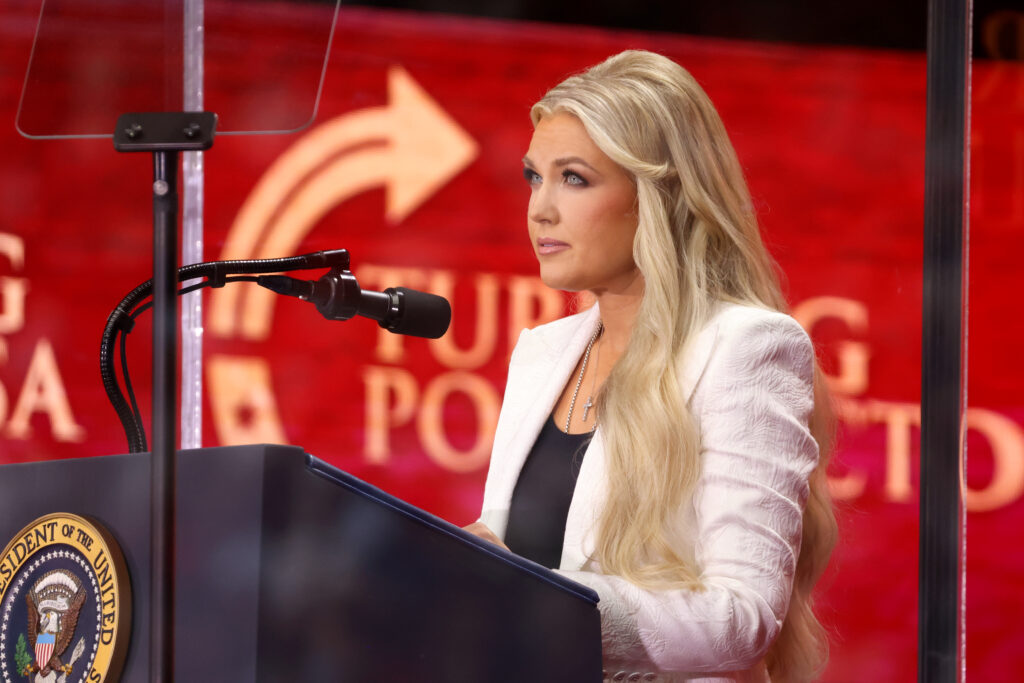
The tour rolls out in Riverside
When Erika Kirk opened the first night of the Make Heaven Crowded Tour in Riverside County, she framed it as a mission, not a show. The event, held at a local church, mixed worship music, preaching, and her own testimony about losing Charlie Kirk and deciding, as she has put it elsewhere, that “we don’t retreat” from public life. Local reporting described the launch as a blend of grief and determination, with Kirk calling for a Christian revival that would reach beyond the sanctuary and into civic life, a tone that set expectations for the more than 30 cities the tour is slated to hit this year as part of the broader Make Heaven Crowded.
On the ground, the launch looked like a classic Turning Point USA production, with Erika Kirk front and center and a program built around worship, preaching, and ministry. One local account noted that the night in Riverside was the first official stop of the Make Heaven Crowded Tour 2026, which is expected to crisscross the country through the end of the year, bringing Kirk and a slate of speakers into churches and arenas that already sit at the intersection of politics and faith. The framing from organizers was clear: this was not just another conference, it was a coordinated push by Turning Point USA to fuse revival language with hard‑edged activism.
A crowd inside, a crowd outside
Outside that Riverside church, the scene looked very different. Protesters gathered with signs and chants, objecting to the tour’s politics, its immigration stance, and its choice of speakers, while supporters lined up to get inside, some treating the night like a campaign rally and a worship service rolled into one. Local coverage described a split sidewalk, with one side praying and singing and the other side denouncing Kirk’s rhetoric and the group’s ties to federal immigration enforcement, a visual that captured how polarizing the Make Heaven Crowded brand has already become for people who see it as either a needed spiritual jolt or a partisan roadshow.
Inside, Kirk’s team leaned into the contrast, presenting the protests as proof that the tour had hit a nerve in what she and her allies often describe as “spiritual warfare.” Organizers highlighted that the Make Heaven Crowded Tour is a flagship project for Turning Point USA, with Erika Kirk and Pastor Greg Laurie billed as headliners who would carry the message into dozens of cities. That framing, that the pushback outside is part of a larger spiritual and cultural fight, is already shaping how attendees talk about the tour and how critics organize against it.
“Make Heaven Crowded” as a personal mission
For Kirk, the tour’s name is not just branding, it is a phrase rooted in her marriage. She has told audiences that “Make Heaven Crowded” was something she and Charlie Kirk used to say to each other, a kind of shared mission statement that now doubles as a tribute and a call to action. One local report noted that she shared this detail from the stage, explaining that the slogan came out of private conversations about evangelism and now sits on banners, merch, and social media graphics as the tour moves from city to city, a way of keeping Charlie’s voice in the room even as she steps fully into the role of headliner, as described when She recounted that story.
That personal framing is paired with a very public ambition. In Riverside County, Kirk told the crowd that the tour is about sparking a Christian revival that can reshape communities and, eventually, elections, arguing that the same people filling church pews could be mobilized to vote and organize. Local coverage credited Kat Schuster, Patch with capturing how she moved from personal grief to a call for civic engagement, noting that she spoke to a crowd of 51 and framed the night as the start of a long campaign to “change” the region and beyond.
From AmericaFest to a national circuit
The tour did not come out of nowhere. In Arizona late last year, Erika Kirk used a major conservative gathering to sketch out her 2026 plans, telling the AmericaFest crowd that for her, the weekend was “laced with nostalgia” and “laced with hope” after Charlie’s assassination. She also made it clear that she saw the coming year as a time to go on offense, not to pull back, saying that “we don’t retreat” and tying that posture directly to her faith and to the political fights that defined her husband’s work. That speech, delivered in Arizona and reported as part of her broader 2026 plan, signaled that she was ready to move from grieving widow to front‑line activist, as detailed in coverage of how Erika Kirk laid out that trajectory.
By the time the Make Heaven Crowded Tour kicked off, that shift was complete. National conservative media framed the launch as a joint effort by Erika Kirk and TPUSA to answer what they called “spiritual warfare,” with Charlie Kirk’s mentor Frank Turek joining the conversation and underscoring how much of the project is built on existing networks. In one segment, Frank Turek appeared alongside Erika Kirk to talk about the tour’s goals, while another clip highlighted how Erika Kirk, TPUSA and the Make Heaven Crowded push are being sold as a direct continuation of Charlie Kirk’s legacy.
The wardrobe story that will not die
Even as she tries to keep the focus on revival and organizing, Kirk has been pulled into a very different conversation: what she wears. A Washington Post feature on her wardrobe, particularly her pantsuits and bright colors, sparked a backlash from conservatives who saw it as trivializing a widow in the wake of an assassination. The piece zeroed in on her fashion choices at public events, including her appearances at Student Awards for Turning Point USA, and critics argued that the coverage said more about media priorities than about Kirk herself, a point that was amplified when Washington Post coverage of Erika Kirk’s wardrobe drew heavy fire.
Kirk did not let the story pass quietly. In a series of posts and interviews, she blasted the focus on her clothes as shallow and out of touch, telling The Washington Post to “go touch grass” and framing the whole episode as proof that elite media would rather nitpick her outfits than engage with her message about faith and loss. One radio write‑up noted that Erika Kirk used that exact phrase in response to the wardrobe critique, while another account highlighted how WASHINGTON and the broader media ecosystem were suddenly debating whether the POST had gone too far.
Sinema, pantsuits, and the politics of style
The wardrobe flap did not stay confined to conservative media. Arizona senator Kyrsten Sinema, who has her own long history of being scrutinized for outfits ranging from a fur stole at her swearing‑in to bright dresses on the Senate floor, publicly criticized the focus on Kirk’s clothes. Sinema argued that women in politics and public life are still too often reduced to what they wear, drawing a line between the commentary on her own fashion and the column dissecting Erika Kirk’s pantsuits. Coverage of her remarks noted that Stephanie Murray reported how Sinema explicitly tied the criticism of Kirk to the trauma of Charlie’s assassination on Sept. 10.
Sinema’s defense of Kirk also revived memories of her own fashion controversies in Arizona, where she once wore a fur stole to her swearing‑in and later grabbed headlines for other bold choices. One report pointed out that to her own swearing‑in, She chose that fur piece and later faced a sign‑wrecking case in Arizona, a reminder that the policing of women’s style is not new. By stepping in on Kirk’s side, Sinema effectively turned the wardrobe debate into a bipartisan critique of how media covers women who do not fit traditional molds.
“Go touch grass” and conservative media’s counterattack
Once Kirk told The Washington Post to “go touch grass,” conservative media personalities took the phrase and ran with it. One widely shared piece described how she “eviscerated” the outlet for critiquing her wardrobe, quoting her pushback and framing it as a broader indictment of what she and her allies see as a double standard in coverage of conservative women. That account emphasized that Erika Kirk is not just a political spouse but a central figure at Turning Point USA, and that the wardrobe story landed in the wake of Charlie Kirk’s assassination, a context her defenders say should have made commentators more cautious, as detailed in coverage of how Erika Kirk hit back.
Another write‑up focused on how critics of the wardrobe piece accused The Washington Post of fixating on aesthetics instead of acknowledging the trauma of a woman whose husband “was assassinated last year.” That same report noted that Turning Point USA, often shortened to TPUSA, has rallied around Kirk, treating the flap as a rallying point for supporters who already distrust mainstream outlets. In that telling, “go touch grass” is less a throwaway insult and more a shorthand for a movement that sees itself as grounded in “real America” and tired of being judged from afar.
“Demonic” protesters and the ICE flashpoint
The protests outside Kirk’s events are not just about her clothes or her rhetoric, they are also about immigration and law enforcement. At one stop, anti‑ICE demonstrators showed up to denounce the tour’s alignment with hardline immigration policies and to call out what they see as dehumanizing language about migrants. Kirk’s response was blunt: she labeled the protesters “Demonic,” a one‑word reaction that instantly became a headline and a talking point for both sides. A Yahoo write‑up described the moment under the phrase Demonic, noting that Erika Kirk’s One Word Response to Anti ICE protesters gave critics “something new to discuss.
That exchange crystallized how Kirk talks about opposition. For her, the fight is not just political, it is spiritual, and calling protesters “Demonic” fits with the way she and her allies describe “spiritual warfare” around the tour. The same report noted that the phrase “One Word Response” captured how quickly she dismissed the Anti ICE demonstrators, while another account of the incident highlighted how the label “Anti” and “ICE” have become shorthand for a broader clash over immigration enforcement. By leaning into that language, Kirk is signaling to her base that she sees the protests not as good‑faith disagreement but as evidence of a darker opposition to the values she is promoting, a framing that will likely keep tensions high as the tour moves into more diverse cities.
More from Vinyl and Velvet:

Leave a Reply