

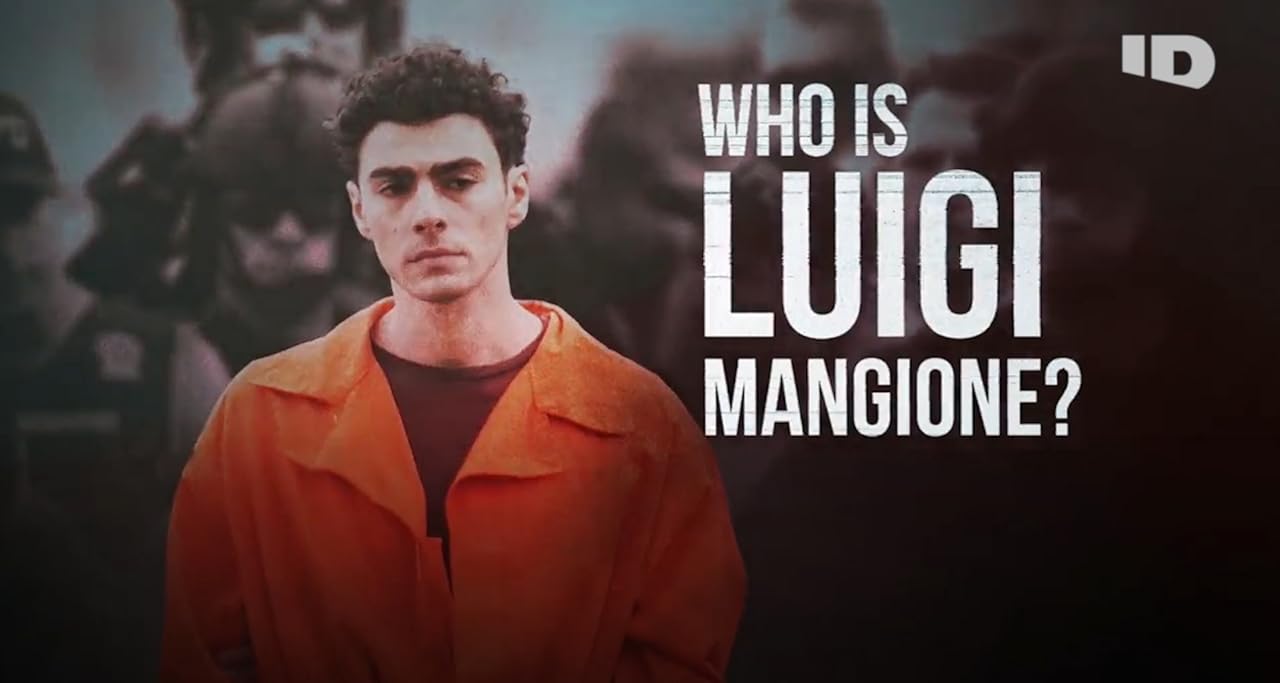
The short film “Luigi Mangione” has arrived at the Sundance Film Festival with a premise that is as messy and charged as the headlines that inspired it. Built around lustful fantasies, fevered conspiracy theories, and a murder charge that turned one man into a national fixation, the project leans straight into the chaos instead of backing away. Director Liza Mandelup uses that swirl of obsession to ask what happens when a real person becomes raw material for everyone else’s desires and fears.
The real Luigi Mangione and the case that gripped Americans
Before “Luigi Mangione” was a short on a festival slate, Luigi himself was a name threaded through crime coverage and social feeds. He is an accused killer whose story, and the question of what actually happened, has been picked apart by strangers who will never meet him. That scrutiny has turned Luigi into a kind of blank screen, a figure people project onto, which is exactly the dynamic the film seizes on as it tracks how a single case can balloon into a cultural fixation for Luigi and everyone around him.
The real-world stakes behind that fixation are not abstract. Luigi Mangione was allegedly carrying a weapon when he was charged with murder, and his situation has unfolded in a justice system that many Americans already view with deep skepticism. A separate documentary project has framed his story as a window into a broader national conversation about Americans’ frustration with the healthcare industry and health in general, underscoring how one man’s case has been drafted into arguments that stretch far beyond his own life and the fact that he has not yet been indicted, according to production notes.
Liza Mandelup’s vision and why Sundance wanted this story
Liza Mandelup is not treating Luigi’s notoriety as a true-crime puzzle to be solved, but as a mirror for the people watching him. Her short film, titled “Luigi,” centers on how strangers latch onto an accused killer and start spinning their own narratives, some erotic, some paranoid, all of them revealing more about the fantasizers than about Luigi himself. That approach fits Mandelup’s broader interest in the way ordinary people get pulled into the spotlight and turned into symbols, a pattern that has only intensified in the age of viral feeds and nonstop commentary, as the festival listing for “Luigi” makes clear.
Sundance clearly saw that angle as timely. The festival’s short film program has leaned into stories that dissect how culture processes fame, scandal, and online mythmaking, and “Luigi” slots neatly into that lane. By focusing on the fantasies and conspiracies that spring up around Luigi Mangione, Mandelup gives the festival a compact, unsettling piece that speaks to how quickly a criminal charge can morph into a shared obsession, a theme highlighted in coverage of the short’s premiere.
Inside the Sundance program: where “Luigi” sits in the lineup
Within the Sundance Film Festival schedule, “Luigi” appears in the shorts program as a United States production, running 8 minutes and presented in English. That compact runtime forces Mandelup to strip the story down to its most charged elements, dropping viewers straight into the swirl of obsession without the usual procedural buildup. The official program notes describe how, when Luigi Mangione is charged with murder, he becomes the subject of fevered obsession, and how the film tracks that shift from man to myth through layered, subjective perspectives, as laid out in the festival capsule.
That positioning matters because the shorts program often functions as a kind of mood board for where independent storytelling is headed. “Luigi” screens alongside other projects that probe cultural flashpoints, including work co-directed by an NBA superstar that also grapples with the way public figures are framed and consumed. The broader slate, which was teased as featuring the cultural obsession with accused killer Luigi Mangione and a new project co-directed by an NBA supersta, signals that Sundance is treating these shorts as more than calling cards, instead using them to map how audiences are processing crime, celebrity, and conspiracy in real time, according to the festival’s program overview.
Lustful fantasies as a storytelling engine
The most provocative choice Mandelup makes is to foreground the lustful fantasies that strangers project onto Luigi Mangione. Instead of treating desire as a side note, the film leans into the way some onlookers eroticize accused killers, turning court sketches and mugshots into fuel for daydreams. That decision forces viewers to sit with the discomfort of watching people sexualize a man whose alleged actions are horrific, and it asks why certain figures become objects of fascination while others fade into the background, a tension that coverage of the short’s debut has zeroed in on.
Those fantasies are not just there for shock value. By staging them so directly, the film exposes how desire can blur moral lines and how people justify their attraction to someone accused of violence. The fantasies become a narrative engine, pushing the story forward as different characters reveal what they want from Luigi, whether that is intimacy, notoriety, or a sense of danger that makes their own lives feel less ordinary. In that sense, the erotic charge is less about Luigi himself and more about the people who have turned him into a canvas for their own cravings, a dynamic that the festival coverage frames as central to Mandelup’s intent.
Conspiracy theories and the architecture of obsession
Running alongside the erotic fantasies are the conspiracy theories that spring up around Luigi Mangione’s case. The film shows how quickly speculation hardens into belief, with strangers stitching together fragments of information into elaborate narratives that feel more satisfying than the messy, incomplete reality. Those conspiracies are not treated as fringe curiosities, but as a core part of how people engage with high profile crime stories, turning Luigi into a character in their own private thrillers, a pattern that the official synopsis hints at when it describes the fevered obsession surrounding him.
By pairing those theories with the fantasies, Mandelup sketches a full architecture of obsession. Desire and paranoia feed each other, with each new rumor or supposed clue giving people another reason to stay hooked on Luigi’s story. The conspiracies also echo the broader distrust that has fueled interest in the separate documentary about Luigi Mangione, which is set to explore Americans’ frustration with institutions like the healthcare industry and the systems that are supposed to keep them safe, as outlined in the documentary announcement. In both projects, conspiracy thinking is less a punchline than a symptom of deeper mistrust.
How the short reframes true crime culture
“Luigi” arrives at a moment when true crime is everywhere, from bingeable podcasts to prestige docuseries, and the short plays like a sharp critique of that ecosystem. Instead of walking viewers through evidence and timelines, it zooms in on the audience itself, showing how people use crime stories as entertainment, therapy, or even erotic fantasy. By centering the watchers rather than the case file, Mandelup flips the usual script and asks what it means that so many people feel entitled to turn someone else’s trauma into content, a question that hangs over the festival write-ups of the film.
The short also pushes back on the idea that more information automatically leads to more understanding. In “Luigi,” every new detail about the accused killer seems to spawn more theories, more fantasies, and more heated arguments about what is “really” going on. That spiral mirrors the way real-world cases can become endless fodder for social media debates, with each new leak or court filing treated as a plot twist. By compressing that cycle into 8 minutes, the film makes the feedback loop feel claustrophobic, underlining how quickly empathy can get lost when a human being becomes a trending topic, a theme echoed in the program description.
The parallel documentary and the expanding Luigi Mangione universe
While Mandelup’s short is premiering at Sundance, Luigi Mangione’s story is also being developed in a very different format. A feature documentary is in the works from Alex Gibney and Anonymous Content, positioning Luigi’s case as a lens on systemic issues rather than just a single crime. That project is expected to delve into how his situation intersects with Americans’ frustration with the healthcare industry and health in general, suggesting that Luigi’s name will soon be attached to debates about policy and institutional failure as well as to the more intimate obsessions explored in the short, according to the project announcement.
That means audiences are about to encounter Luigi Mangione in multiple registers: as a stylized figure in an 8 minute narrative, as the subject of a long form investigation, and as a recurring reference point in festival coverage that frames him as a symbol of cultural obsession. The short and the documentary are not telling the same story, but together they sketch out a kind of Luigi Mangione universe, where one man’s case becomes a way to talk about everything from erotic fixation to institutional distrust. The fact that the Sundance shorts program was teased as featuring the cultural obsession with accused killer Luigi Mangione alongside work from an NBA supersta underscores how central his name has become to the festival’s sense of what is urgent right now, as reflected in the lineup preview.
Sundance, celebrity, and the pull of controversial subjects
Sundance has long been a place where controversial subjects get their first big audience, and “Luigi” fits that tradition neatly. The festival is not just showcasing a short about an accused killer, it is pairing that film with other projects that tap into the same currents of fascination and unease, including a short co-directed by an NBA supersta that also plays with the idea of public image and scrutiny. That clustering suggests the programmers see a throughline between sports celebrity, true crime notoriety, and the broader question of how people are turned into characters for public consumption, a connection flagged in the shorts announcement.
By putting “Luigi” on that stage, Sundance is also testing how far audiences are willing to go in confronting their own complicity. The festival crowd is used to difficult material, but a film that explicitly stages lustful fantasies about an accused killer and leans into conspiracy thinking is still a bold programming choice. It asks viewers not just to judge the characters on screen, but to recognize the same impulses in themselves when they click on a crime podcast or scroll through a thread about a breaking case. That self awareness is part of what gives the short its charge, and it is why Luigi Mangione’s name now sits alongside Jan, Luigi, Liza Mandelup, and the Sundance Film Festival itself in coverage of the premiere.
What “Luigi” says about where storytelling is headed
Put together, “Luigi” and the projects orbiting it hint at where filmmakers are steering stories about crime and controversy. Instead of treating accused figures as puzzles to be solved, creators like Liza Mandelup are more interested in the people doing the watching, the fantasizing, and the theorizing. That shift moves the focus from courtroom outcomes to cultural behavior, turning cases like Luigi Mangione’s into mirrors for how Americans process fear, desire, and distrust, a move that aligns with the way the festival synopsis frames Luigi Mangione as the subject of fevered obsession rather than just a defendant.
It is a direction that feels tailor made for an era when every major case spawns a subreddit, a TikTok breakdown, and a wave of armchair detectives. “Luigi” compresses that whole ecosystem into a tight, unnerving package, while the upcoming documentary promises to stretch it back out into a broader examination of systems and stakes. Together, they suggest that Luigi Mangione will not just be a name in a docket, but a recurring reference point in how storytellers talk about crime, health, and the stories Americans tell themselves about both, a trajectory that early coverage of the short film has already started to trace.
More from Vinyl and Velvet:

Leave a Reply