

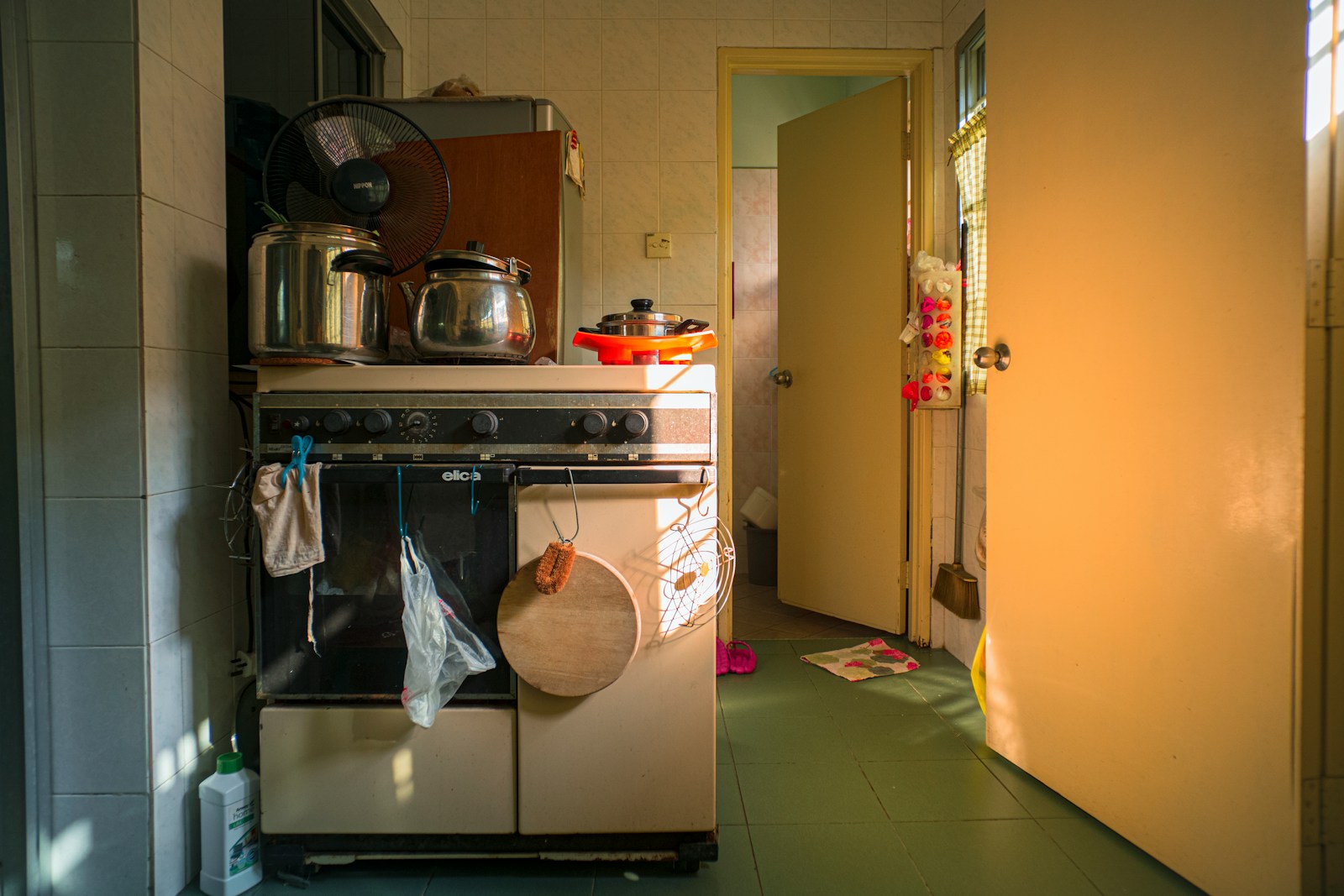
Step into an ’80s kitchen and you instantly recognize a world of bold color, busy patterns, and hardworking plastics that feel light-years from today’s sleek stone and steel. You saw these spaces in sitcoms, catalogues, and your neighbors’ split-levels, and they all seemed to share the same unmistakable ingredients. If you grew up in that decade, these nine details are the time machine that takes you straight back to weeknight casseroles and weekend dinner parties.
1) Avocado Green Refrigerators
Avocado green refrigerators were the undisputed scene-stealers of 80s kitchens, turning a basic appliance into a statement wall of color. Reporting on classic home trends notes that these avocado green refrigerators were so common that they became a visual shorthand for the era. You saw them paired with dark wood trim, busy wallpaper, and magnet-covered doors that doubled as family bulletin boards. The color choice signaled a willingness to treat the kitchen as a fashion space, not just a work zone, which is a sharp contrast to today’s preference for stainless steel and panel-ready fronts.
For homeowners now, the avocado fridge is a reminder of how quickly “must-have” finishes can date a room. Designers who look back at these appliances often point out that such strong hues lock you into a narrow palette, which can hurt resale value and limit future updates. Yet the nostalgia factor is powerful: retro-inspired brands still echo that green in small appliances, and vintage models sometimes get restored as playful centerpieces in eclectic, design-forward homes.
2) Harvest Gold Stoves
Harvest gold stoves were the warm, metallic heart of many 80s kitchens, coordinating perfectly with their avocado counterparts. Accounts of period interiors describe harvest gold stoves and ovens as a dominant choice, with glossy finishes that caught the light from fluorescent fixtures. You often saw entire appliance suites in this shade, from range hoods to dishwashers, creating a monochrome block of color that framed the cooking zone. The effect was cozy and slightly glamorous, especially when paired with brass-look hardware and patterned curtains.
Today, interior designers group these colored ranges with other elements you would “never see in a luxury kitchen in 2025,” favoring neutral metals and integrated fronts instead. For you as a homeowner or renovator, harvest gold is a case study in how trend-driven finishes can age, even when the appliance itself still works. Yet the color’s current revival in small doses, like enameled cookware or accent tiles, shows how selectively borrowing from 80s palettes can add character without overwhelming a modern space.
3) Wood-Paneled Cabinets
Wood-paneled cabinets defined storage in 80s kitchens, especially the combination of solid lower units and glass-front uppers. Period guides describe wood-paneled lower cabinets with heavy grain and raised-panel doors, topped by upper cabinets that showcased glass doors and decorative dishes. This layout created a clear visual hierarchy: sturdy, practical storage below, and display space above for wedding china, etched glassware, or souvenir mugs. The look leaned traditional, often in oak or walnut tones that deepened the room’s overall color scheme.
From a design perspective, these cabinets reflected a desire to show off possessions while still hiding everyday clutter. However, contemporary experts who list “Things Interior Designers Say You’d Never See In A Luxury Kitchen In 2025” often point to this busy mix of finishes as visually heavy compared with today’s flat-front or handleless styles. If you are updating an older home, refinishing or painting these cabinets can dramatically modernize the room while preserving the solid construction that made 80s millwork so durable.
4) Bold Linoleum Floors
Bold linoleum floors were the hardworking backdrop of 80s kitchens, covering large areas with pattern and color at a relatively low cost. Interior designers now single out linoleum flooring with bold patterns as a hallmark of older, budget-conscious spaces that you would not find in a high-end 2025 kitchen. In the 80s, however, these sheets of vinyl or linoleum were prized for being easy to mop, forgiving of spills, and soft underfoot compared with tile. Common motifs included checkerboards, faux brick, and speckled neutrals that hid crumbs between cleanings.
For you, the legacy of those floors is twofold. On one hand, they show how practicality often drives mass-market design, even when the result later feels dated. On the other, they highlight the current shift toward natural materials like stone and engineered wood in luxury projects. If you inherit an 80s linoleum floor, modern alternatives such as luxury vinyl tile can echo the resilience without repeating the loud patterns that designers now advise you to avoid.
5) Laminate Countertops
Laminate countertops were nearly unavoidable in 80s kitchens, especially in earthy tones that mimicked wood or stone. Design experts who outline what you will “never see in a luxury kitchen in 2025” often cite laminate countertops in earthy colors as a prime example of a once-standard feature that has fallen out of favor at the high end. In their heyday, these counters offered a smooth, wipeable surface at a fraction of the cost of granite, with speckled or faux-grain patterns that disguised wear. They were installed in tract homes, condos, and rentals alike, making them a visual constant across neighborhoods.
For homeowners now, laminate’s 80s ubiquity explains why it can drag down perceived value, even when newer formulations are more durable. Designers increasingly steer clients toward quartz, solid surface, or real wood for a more timeless look. Still, if you are working within a tight budget, modern laminates with subtle patterns can nod to the past while aligning more closely with contemporary expectations for a clean, understated countertop.
6) Vintage Pyrex Mixing Bowls
Vintage Pyrex mixing bowls in pastel colors quietly anchored 80s baking, and many of those sets are now surprisingly valuable. Reporting on collectibles notes that vintage Pyrex mixing bowls from that era, especially coordinated pastel sets, can sell for thousands of dollars on eBay. In their original context, these bowls were everyday workhorses, used for everything from cake batter to popcorn on movie nights. Their cheerful hues matched the era’s love of color, often echoing the tones of appliances, curtains, or table linens.
The modern collector market shows how ordinary 80s kitchenware has become a nostalgic asset. If you still have a full set tucked in a cabinet, you are holding both a design artifact and a potential investment. For designers staging retro-inspired spaces, these bowls offer an authentic, functional accent that instantly signals the period without requiring major renovations or permanent finishes.
7) Tupperware Storage Sets
Tupperware storage sets were the organizational backbone of 80s kitchens, filling drawers and cabinets with stackable plastic. Accounts of the decade describe Tupperware storage sets acquired through party sales, where hosts demonstrated burping lids and modular shapes. In practice, these containers held leftovers, packed school lunches, and corralled pantry staples long before glass jars became fashionable. Their pastel or earth-tone colors coordinated with the rest of the kitchen, and entire shelves were often dedicated to mismatched lids and bases.
For you, Tupperware represents an early wave of consumer interest in food preservation and bulk buying, trends that have only intensified. Designers today might prefer clear glass canisters for open shelving, but the underlying goal of reducing waste and keeping ingredients fresh remains the same. The brand’s enduring presence also shows how some 80s innovations transcended their original aesthetic, evolving with changing tastes while keeping the core function intact.
8) Fondue Pots
Fondue pots turned 80s kitchens and dining rooms into social hubs, especially during dinner parties and holidays. Coverage of retro collectibles highlights 80s-era fondue pots as items that Boomers often discarded, only to see them resurface as nostalgic treasures. These sets, typically featuring a central pot with color-coded forks, encouraged guests to gather around bubbling cheese or chocolate. The ritual fit perfectly with the decade’s love of themed entertaining, from Swiss-style nights to dessert-focused gatherings.
Today, the renewed interest in these pots on resale sites reflects a broader appetite for experiential dining at home. If you are curating a retro kitchen, a vintage fondue set offers both visual authenticity and a built-in activity for guests. It also underscores how certain 80s trends, once dismissed as fads, can regain cultural relevance when people seek slower, more communal ways to eat together.
9) Ceramic Breadboxes
Ceramic breadboxes were a charming constant on 80s countertops, keeping loaves fresh while adding a decorative touch. Period descriptions mention ceramic breadboxes shaped like loaves or fruits, often hand-painted with cheerful motifs. Positioned near the toaster or cutting board, they concealed store-bought bread and homemade loaves alike, protecting them from air and curious pets. Their sculptural forms softened the hard lines of appliances and cabinets, contributing to the cozy, lived-in feel that defined many family kitchens.
For contemporary homeowners, these breadboxes illustrate how storage once doubled as decor in a way that open shelving and minimalist canisters now handle. While you are unlikely to see oversized ceramic fruit in a new luxury kitchen, smaller stoneware crocks and jars carry forward the idea of functional display. If you inherit one of these 80s pieces, it can serve as a nostalgic accent that bridges generations every time you reach for a slice of toast.

Leave a Reply