

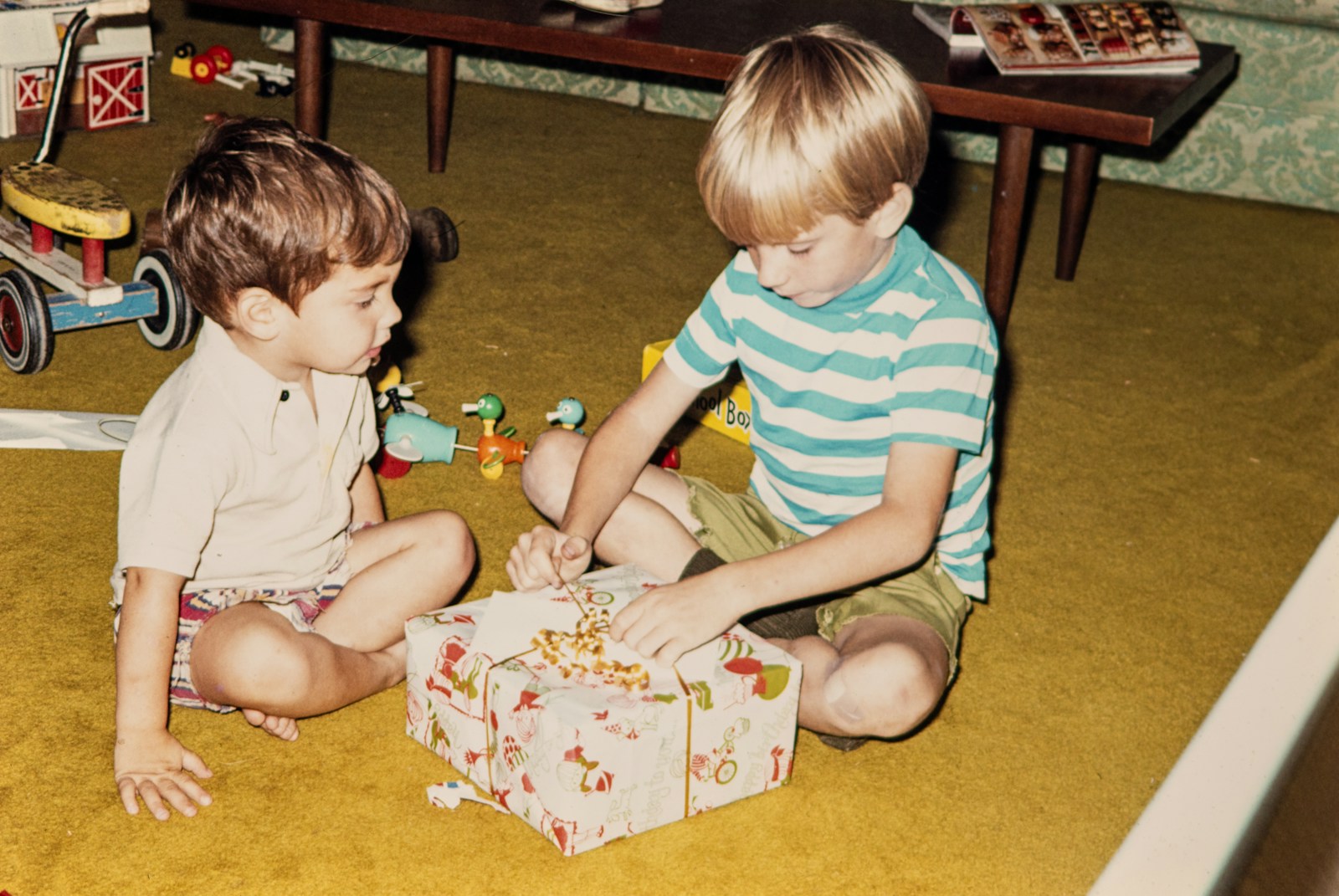
To understand what made a 1950s Christmas feel so distinctive, you have to look at the traditions that shaped it, from Irish feast days to global customs and even Halloween. Many of the rituals you recognize today grew out of older practices that crossed the Atlantic, blended with American culture, and defined how families in the post-war era decorated, shopped, and celebrated together.
1) The December 8th Celebration in ’50s Holiday Festivities
The December 8th Celebration in ’50s Holiday Festivities traces back to Ireland, where December 8th, the Feast of the Immaculate Conception, became the biggest Christmas shopping day in the mid-20th century. Reporting on Christmas in Ireland notes that in the mid-20th century, the biggest Christmas shopping day in Ireland was December 8th, the Feast of the Immaculate Conception, when rural families poured into towns. That surge of shoppers created a template for concentrated, one-day holiday buying sprees.
As Irish migrants settled in American cities, the idea of a single, electrifying kickoff day for Christmas shopping dovetailed with post-war consumer culture. Department stores in the 1950s leaned into similar peaks, turning early December weekends into crowded, festive events that echoed the Irish pattern of treating one date as the unofficial start of Christmas. For retailers and communities, this rhythm helped cement the season as both an economic engine and a shared social ritual.
2) Margadh Mor’s Influence on Mid-Century Gift-Giving
Margadh Mor’s Influence on Mid-Century Gift-Giving begins with its roots as a traditional Irish Christmas market fair. The Irish-language term Margadh Mor refers to big seasonal markets that, as described among 7 great Irish Christmas traditions, turned town centers into hubs of stalls, livestock sales, and last-minute purchases. These fairs were as much about meeting neighbors and catching up on news as they were about buying gifts or food.
In the 1950s United States, you can see clear parallels in the way downtown shopping districts and five-and-dime stores became crowded, social spaces in December. Window displays, sidewalk vendors, and seasonal sales recreated the bustle of a Margadh Mor, giving families a reason to linger rather than simply run errands. That market-style atmosphere encouraged browsing, impulse gifts, and a sense that holiday generosity was tied to being physically present in a busy, decorated public square.
3) The Christmas Box Custom’s Role in Seasonal Generosity
The Christmas Box Custom’s Role in Seasonal Generosity reflects an older Irish habit of tipping service workers at Christmas. Among the Irish practices cataloged as part of those same seven traditions, the “Christmas box” involved households setting aside money or goods for people who delivered mail, coal, or other services throughout the year. The box was both a practical bonus and a symbolic thank-you that acknowledged ongoing relationships.
In 1950s American neighborhoods, you can see this spirit in the way families left envelopes for milkmen, paperboys, and building staff, echoing the Irish Christmas box even when the name was not used. The custom reinforced a mid-century ideal that Christmas was a time to recognize everyday labor, not just exchange presents within the family. For workers who relied on modest wages, those small seasonal payments could meaningfully supplement income, turning courtesy into a quiet but important economic support.
4) American Letters Shaping Family Christmas Narratives
American Letters Shaping Family Christmas Narratives draws on another Irish tradition, the “American letter,” which appears among the classic Irish Christmas customs as a ritual of writing to Santa and to relatives abroad. In that context, letters carried news, money, and wishes across the Atlantic, and the act of composing them became part of the seasonal rhythm. Children were encouraged to put their hopes on paper, while adults used letters to keep far-flung families emotionally close.
By the 1950s, letter-writing to Santa had become a staple of American childhood, with parents saving notes as keepsakes and local post offices sometimes staging special responses. The Irish idea of the American letter, already associated with opportunity and connection, fit neatly into a culture that prized handwritten stories about the year gone by. For families, these letters helped structure holiday narratives, turning private desires and family updates into a shared, intergenerational archive of Christmas memories.
5) Seven Iconic Irish Traditions Blending into ’50s Celebrations
Seven Iconic Irish Traditions Blending into ’50s Celebrations recognizes that Irish Christmas culture was never just one or two customs. Contemporary reporting identifies 7 great Irish Christmas traditions, including December 8th shopping, Margadh Mor fairs, the Christmas box, and the American letter, among others. Together, these practices created a dense web of rituals that structured the season from early December through the New Year.
When Irish communities settled in the United States, especially in cities like Boston, Chicago, and New York, those seven traditions blended into the broader American Christmas. Elements such as candles in windows, which are highlighted among Irish American Christmas traditions, and emphasis on family gatherings meshed with post-war ideals of home and hearth. The result in the 1950s was a Christmas that felt both distinctly American and deeply shaped by Irish patterns of devotion, hospitality, and community care.
6) Global Christmas Customs Defining Post-War Merriment
Global Christmas Customs Defining Post-War Merriment reflects how the 1950s holiday season drew on a widening range of international practices. Modern guides to seasonal culture describe 8 Christmas traditions from around the world, from European markets to Latin American processions, that show how varied the holiday can be. Even if mid-century Americans did not know every detail, immigrant communities brought pieces of these customs into local parades, church services, and neighborhood parties.
Post-war prosperity and expanding media coverage made it easier for Americans to glimpse how Christmas looked in other countries, whether through travel writing, radio, or early television specials. That curiosity helped normalize ideas like outdoor light displays, caroling styles, and food traditions that had roots abroad. For you, looking back at the 1950s means seeing a decade when Christmas began to feel less provincial and more like a shared global festival, even as each community adapted the season to its own history.
7) Hanukkah’s Eight Nights Enhancing ’50s Winter Festivities
Hanukkah’s Eight Nights Enhancing ’50s Winter Festivities highlights how Jewish traditions sat alongside Christmas in mid-century America. Reporting on 9 Hanukkah traditions explains how lighting the menorah over eight nights, playing dreidel, exchanging modest gifts, and eating foods fried in oil give the festival its distinctive rhythm. These practices made Hanukkah a sustained, home-centered celebration that unfolded across the same winter weeks as Christmas.
In the 1950s, as suburbs expanded and public schools navigated religious diversity, Hanukkah became more visible in the broader seasonal landscape. Classroom lessons, neighborhood gatherings, and local news coverage began to acknowledge menorahs and dreidels alongside Christmas trees. For Jewish families, this visibility affirmed their place in American life, while for Christian neighbors it subtly reframed December as a multi-faith period of light, remembrance, and family time rather than a single-holiday monopoly.
8) Halloween’s Echoes in ’50s Christmas Preparations
Halloween’s Echoes in ’50s Christmas Preparations show how the holiday calendar built momentum toward December. Historical accounts of Halloween origins and traditions trace the festival back to ancient Celtic observances, later shaped by Christian and folk practices into a night of costumes, lanterns, and door-to-door visits. By the mid-20th century in the United States, trick-or-treating and neighborhood parties were firmly established.
In the 1950s, once Halloween passed, retailers and families quickly pivoted from pumpkins to tinsel, using the end of October as an unofficial starting gun for Christmas planning. The same children who roamed streets in costume would soon line up for Santa photos, and the habit of decorating houses for Halloween made it natural to string lights for Christmas. For communities, this sequence turned autumn into a continuous season of anticipation, with Halloween excitement feeding directly into the build-up for a ’50s Christmas.

Leave a Reply