

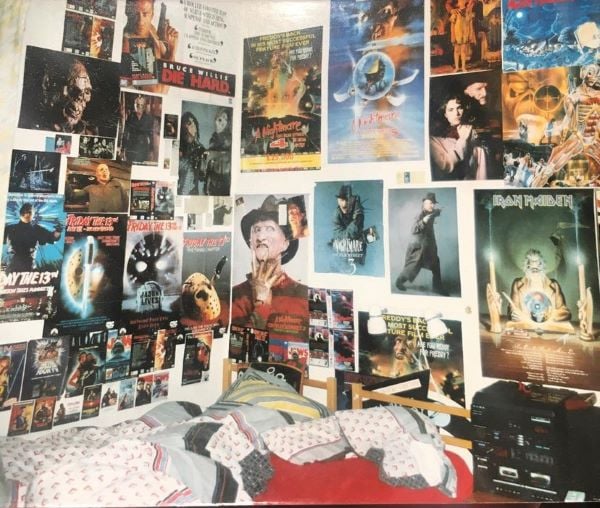
If you grew up in the era of dial-up and boy-band posters, you probably remember exactly what your ’90s bedroom looked like. Today, that look is being carefully reconstructed, from viral nostalgia projects to deep dives on iconic TV sets, revealing the eight details that still define what a true ’90s bedroom had to have.
1) The TikToker who “re-created her ’90s childhood bedroom in her grown-up home” — how a ’90s bedroom recreation makeover TikTok proves these classic details still define the decade
The clearest sign that the ’90s bedroom is back is a TikToker who “re-created her ’90s childhood bedroom in her grown-up home,” turning adult square footage into a time capsule. In a carefully styled ’90s bedroom recreation makeover TikTok, every detail is treated like evidence, from the wall colors to the way posters are layered. The project is framed as a faithful reconstruction, not just a themed room, which shows how specific the decade’s visual language has become in people’s memories.
For you, this kind of recreation underlines how powerful those details were, and still are. The makeover treats the bedroom as a cultural artifact, suggesting that the right comforter pattern or plastic alarm clock can instantly transport you back to middle school. It also hints at a broader trend, where adults use design to reclaim the security and simplicity they associate with childhood, proving that the ’90s bedroom is now both décor inspiration and emotional shorthand.
2) The “’90s childhood bedroom” brought back to life — why the ’90s childhood bedroom aesthetic still shapes how we remember our rooms
That same project is explicitly described as a nostalgic return to a “’90s childhood bedroom,” and the phrase is doing a lot of work. By calling it a ’90s childhood bedroom inside an adult home, the makeover positions the room as a portal between life stages. It is not just about retro style, it is about reconstructing the exact environment where you once did homework, rewound VHS tapes, and called friends on a landline, right down to the cluttered surfaces.
Because the space is framed this way, you are invited to think of your own childhood room as a defining part of your identity. The aesthetic, from mismatched furniture to stacks of magazines, becomes a visual diary of who you were becoming. When someone painstakingly rebuilds that look, it confirms that the ’90s bedroom is more than a trend, it is a shared memory palace where a generation stored its first crushes, first CDs, and first sense of privacy.
3) “See How a TikToker Re-created Her ’90s Childhood Bedroom in Her Grown-Up Home” — the Apartment Therapy headline that captures our obsession with recreating ’90s bedrooms detail-for-detail
The headline “See How a TikToker Re-created Her ’90s Childhood Bedroom in Her Grown-Up Home” captures a broader cultural fixation on recreating the past in high resolution. By inviting you to “see how,” the piece promises a step-by-step reveal of every poster, pillow, and trinket that made the room feel authentic. That framing turns the bedroom into a checklist of must-have items, suggesting that a real ’90s space can be rebuilt if you follow the visual clues closely enough.
It also reflects how nostalgia now travels, through a single viral clip that can send viewers hunting for the same lava lamp or comforter pattern. The headline’s focus on a grown-up home underscores the tension between adult responsibilities and childhood comforts. When you study a project like this, you are not just scrolling past décor inspiration, you are participating in a collective effort to catalog the decade’s bedroom essentials so they can be replicated, traded, and reinterpreted.
4) “A Love Letter to the ‘Clarissa Explains It All’ Bedroom In All Its ’90s Teen Glory” — how Clarissa’s ’90s teen glory bedroom became the blueprint for the ultimate ’90s room
On television, no space crystallized the decade quite like the “Clarissa Explains It All” bedroom, celebrated in a piece titled “A Love Letter to the ‘Clarissa Explains It All’ Bedroom In All Its ’90s Teen Glory”. That phrase, “’90s Teen Glory,” signals that Clarissa’s room was not just a set, it was an ideal. The mix of bold colors, quirky furniture, and visible hobbies turned the bedroom into a stage where a teenager’s personality could be broadcast as loudly as any dialogue.
For viewers, this blueprint filtered straight into real homes. You might have copied the layered textiles, the crowded bulletin boards, or the sense that every surface should display something about you. The “love letter” framing confirms that this room still shapes how people define the ultimate ’90s bedroom, from the way a bed is piled with pillows to the expectation that a teen space should feel like a world apart from the rest of the house.
5) The “Clarissa Explains It All” Bedroom — why the “Clarissa Explains It All” bedroom in all its ’90s teen glory defined what every ’90s bedroom tried to be
The “Clarissa Explains It All” Bedroom is treated as a proper name in that same analysis, and it is explicitly labeled “In All Its ’90s Teen Glory.” That capitalization turns the room into a character of its own, suggesting that the set’s posters, string lights, and mismatched patterns were as memorable as any storyline. The Clarissa Explains It All: The 90s DIY Teen Icon nostalgia that still circulates online reinforces how deeply that look imprinted on viewers.
Because the bedroom is treated as iconic, it becomes a reference point for what every ’90s bedroom tried to be, even if your own version was a thrift-store remix. The idea that a teen could climb in through a window, blast music, and decorate without restraint turned the bedroom into a symbol of independence. When you remember your own space, you are often measuring it, consciously or not, against Clarissa’s maximalist, expressive standard.
6) The “Love Letter” treatment of Clarissa’s room — how “A Love Letter to the ‘Clarissa Explains It All’ Bedroom In All Its ’90s Teen Glory” shows that one TV set bedroom still shapes our ’90s bedroom checklist
Describing that analysis as “A Love Letter to the ‘Clarissa Explains It All’ Bedroom In All Its ’90s Teen Glory” signals a shift from simple recap to full-on devotion. A love letter is personal, detailed, and specific, and that tone mirrors how fans now catalog the room’s elements. The treatment suggests that every bead curtain, patterned rug, and scribbled notebook matters, because each one helps define the unofficial checklist of what a ’90s bedroom should include.
This reverent approach shows how a single TV set bedroom can still guide your sense of authenticity. When you hunt for vintage accessories or scroll through recreations, you are often chasing the feeling that Clarissa’s room delivered. The love letter framing validates that impulse, turning your nostalgia into something shared and studied rather than a guilty pleasure, and it keeps the bedroom at the center of any conversation about ’90s design.
7) “10 Things to Know About Medicaid” — how the KFF “10 Things to Know About Medicaid” framework reminds us that behind every ’90s bedroom was a family budget shaped by health coverage
Behind the posters and beanbag chairs, every ’90s bedroom was quietly shaped by what a family could afford, and health coverage was a major part of that equation. The informational list “10 Things to Know About Medicaid” lays out how Medicaid functions as a safety net, explaining who qualifies, what services are covered, and how the program supports low-income households. Those structural details translate directly into whether there was money left for new bedding, a TV, or even a bigger room.
When you look back at your childhood space, you are also looking at the economic realities that shaped it. Families relying on Medicaid might have prioritized stability and essentials over constant décor updates, while others had more flexibility to chase trends. Understanding the framework behind “10 Things to Know About Medicaid” adds a layer of context to the nostalgia, reminding you that the look of a ’90s bedroom was never just about taste, it was also about policy, access, and the quiet math of monthly bills.
8) Medicaid and the ’90s family home — why understanding Medicaid through “10 Things to Know About Medicaid” helps explain who could afford the ’90s bedroom staples in the first place
Medicaid itself sits at the center of that financial picture, and the term is central to the explainer “10 Things to Know About Medicaid” on KFF.org, which presents the program as a structured list of key facts. While that research paper also references Boucher, The Billet, Doux, Figure, Jean, and Sim, the Medicaid list focuses on eligibility rules, federal-state funding, and the scale of coverage. Those specifics help clarify how health costs were distributed across households in the ’90s.
Once you understand that framework, it becomes easier to see why some kids had sprawling rooms filled with new furniture while others shared beds or made do with hand-me-downs. The staples you remember, from a personal stereo to a stack of glossy magazines, were filtered through whether a family’s budget was eaten up by medical bills or buffered by programs like Medicaid. In that sense, the story of the ’90s bedroom is also a story about who had economic breathing room, and who did not, long before anyone started recreating those spaces on TikTok.
More from Vinyl and Velvet:

Leave a Reply