

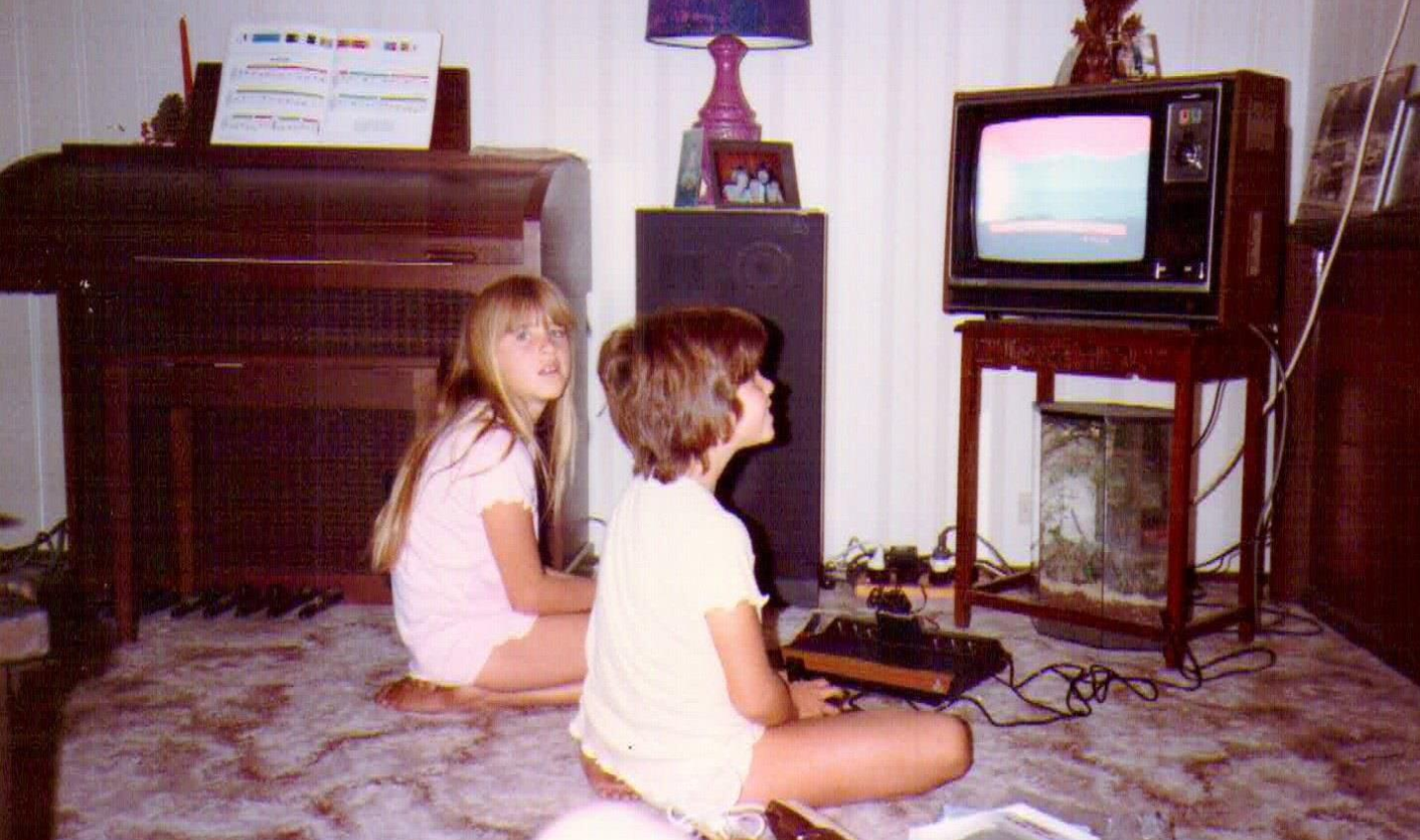
The classic ’80s living room was a carefully staged backdrop for family life, TV nights, and big hair, built from a handful of instantly recognizable objects. From bulky electronics to display cabinets that rarely got opened, these pieces signaled taste, status, and what you valued at home. If you grew up in that decade, you probably sat on, stared at, or dusted at least a few of the eight essentials below.
1) Console TV as the living room anchor
The console TV was the immovable centerpiece of the ’80s living room, a heavy box that doubled as furniture and entertainment hub. Reporting on lower-middle-class homes notes that a console TV often sat against a wood-paneled wall, treated almost like a shrine. Families arranged sofas and recliners around it, and the set dictated where you placed lamps, side tables, and even kids’ toys. Its sheer bulk made it hard to replace, so it stayed for years, quietly signaling stability and a focus on shared viewing.
Because the console TV was such a visual anchor, it shaped how you decorated everything else. Framed school photos, graduation portraits, and holiday figurines clustered on top, turning the television into a display ledge as well as a screen. That layering of tech and sentiment helped define the decade’s living rooms as spaces where family identity and mass media were tightly intertwined, and where upgrading the TV felt like a major life event rather than a casual purchase.
2) Wood-paneled feature wall
The wood-paneled wall was another unmistakable ’80s living room signature, especially in modest suburban and lower-middle-class houses. One account of that era’s décor describes a living room with a wood-paneled wall behind the main seating area, creating a darker, cocoon-like backdrop. Paneling was relatively affordable, easy to install over imperfect plaster, and durable enough to survive kids, pets, and cigarette smoke. It also gave the room a faux “den” feeling, even in small ranch homes or apartments.
That paneling carried social signals as well as style. It suggested a practical approach to home improvement, prioritizing long-lasting surfaces over trendier finishes. In many homes, the paneled wall framed the console TV or a display cabinet, so it appeared in every family photo and holiday snapshot. Today, designers often cite similar paneling as a detail that can make a room look dated, which shows how strongly this one material is tied to a specific ’80s moment in domestic life.
3) Glass-front cabinet of “good” dishes
The glass-front cabinet filled with “good” dishes that never got used was a quiet status symbol in the ’80s living room. Reporting on that period describes a glass-front cabinet standing near the seating area, stocked with special plates and glasses reserved for guests who rarely came. The cabinet itself, often veneered and ornate, was as important as what it held, signaling that the household valued formality and aspiration even if everyday life was far more casual.
Keeping those dishes on display but untouched created a subtle tension between appearance and use. Children were warned not to slam doors or play too close, and dusting the cabinet became a regular chore. That ritual maintenance reinforced the idea that certain objects existed mainly to show that you owned them. In the broader culture of the ’80s, where upward mobility and “having nice things” were constant themes, the living room china cabinet became a small but telling marker of hope and restraint.
4) Overstuffed sofa and matching recliner
The overstuffed sofa, often paired with a matching recliner, defined how comfortable an ’80s living room felt. Accounts of typical homes from that decade describe big, padded seating arranged to face the television, with arms wide enough to balance a plate of food during sitcom marathons. Many families chose durable fabrics and busy patterns that could hide stains, a practical choice in households where kids, pets, and guests constantly cycled through the room.
That emphasis on plush comfort reflected a shift toward spending more leisure time at home. Instead of formal parlor-style seating, you got deep cushions that encouraged sprawling and napping. The recliner, in particular, often became “dad’s chair,” a personal throne that signaled the end of the workday. Together, these pieces turned the living room into a relaxed command center, reinforcing the idea that the heart of the home was wherever you could sink in and stay put for hours.
5) ’80s living room essentials everyone recognized
Beyond individual pieces, the ’80s living room was defined by a cluster of instantly recognizable essentials that created a specific mood. A report on 6 living room essentials from that decade notes that these items worked together to produce a bold, nostalgic atmosphere. Whether you lived in a city apartment or a suburban split-level, you likely saw the same mix of patterned upholstery, statement lighting, and decorative accents that leaned into saturated color and graphic shapes.
Those shared essentials mattered because they made living rooms across the country feel strangely similar, even across income levels. The same kinds of coffee tables, wall art, and electronics showed up in very different neighborhoods, reflecting how mass-market retail and television advertising pushed a unified vision of “modern” home life. When people talk about ’80s nostalgia today, they are often remembering that entire package of objects and surfaces, not just one standout piece.
6) Grandparent-style pieces that are cool again
Some of the most memorable ’80s living room items are now being rediscovered as stylish, especially pieces you might associate with grandparents. Recent coverage of grandparent living room décor points out that items like solid wood side tables, patterned rugs, and classic lamps are back in demand. Younger homeowners are mixing these vintage finds with contemporary furniture, treating them as character-rich anchors rather than outdated clutter.
This revival shows how cyclical taste can be. What once felt stuffy or old-fashioned now reads as authentic and sustainable, especially when contrasted with disposable flat-pack pieces. For people who grew up visiting grandparents in the ’80s, bringing similar objects into a modern living room can also be a way to honor family history. The emotional weight of those pieces, layered over their new design cachet, helps explain why they are reappearing in trend-conscious spaces.
7) Lower-middle-class display habits in the living room
The ’80s living room also revealed a lot about class through what families chose to display. Reporting on lower-middle-class living rooms highlights how certain objects, from budget-friendly furniture to sentimental knickknacks, quietly signaled limited means and strong pride. The combination of a wood-paneled wall, a console TV, and carefully arranged decorative items showed a desire to make the space feel “put together” even when money was tight.
These display habits carried real emotional stakes. Parents often invested in one or two standout pieces, like a framed print or a special lamp, and then built the rest of the room around them. Children growing up in those spaces absorbed unspoken lessons about stretching resources, protecting prized possessions, and presenting the best possible version of home to visitors. Looking back, those choices help explain why certain ’80s objects still trigger such vivid memories of both pride and constraint.
8) Décor details that now read as dated
Many ’80s living room staples now show up on lists of features that make a space feel stuck in the past. Design experts who analyze dated dining and living rooms often point to heavy matching furniture sets, ornate window treatments, and overly coordinated color schemes as telltale signs. Those same instincts apply to the living room, where wall-to-wall carpeting, bulky entertainment centers, and fussy accessories can instantly time-stamp a home.
Seeing these details labeled as dated underscores how quickly mainstream taste can shift. What once read as polished and aspirational now risks making a room feel cramped or cluttered. For homeowners updating an ’80s-era space, the challenge is deciding which elements to keep for their nostalgic charm and which to replace so the room feels current. That balancing act shows how powerful the decade’s design choices remain, even when people are trying to move beyond them.
Supporting sources: 23 Things Everyone Had in Their House in the ’80s.
More from Vinyl and Velvet:

Leave a Reply