

Vintage Christmas decorations are no longer just sentimental keepsakes, they are a serious collectibles market where the right piece can be worth hundreds or even thousands of dollars. From mid-century aluminum trees to early 1900s cardboard villages, many of the most valuable items look surprisingly humble at first glance. If you know what to look for, the boxes in your attic or the shelves at a local thrift store could be hiding Christmas decorations worth a fortune.
1) Vintage Aluminum Christmas Trees
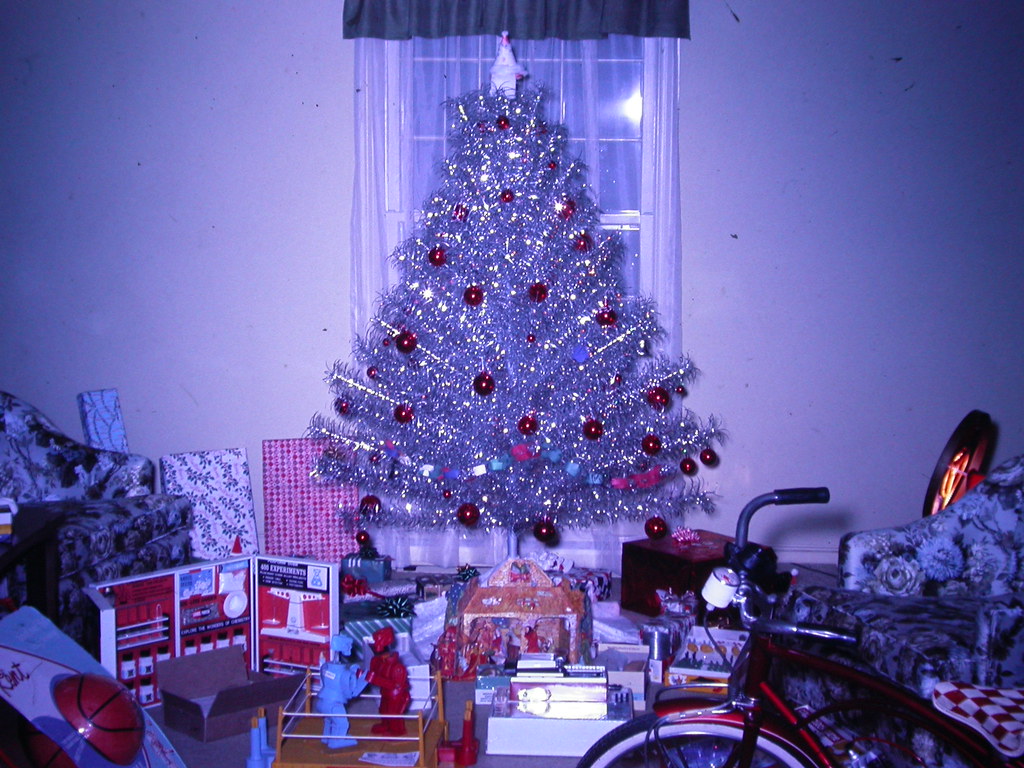
Vintage aluminum Christmas trees are among the most talked-about high-value holiday finds, with mid-century examples often selling for hundreds or even thousands of dollars when they retain their original branches, color wheels, and boxes. Guides to valuable attic decor single out these metallic trees as standout investments, noting that collectors pay premiums for rare colors and full-size models from the 1950s and 1960s in clean, untarnished condition among other attic treasures. Their futuristic look, once considered kitschy, now reads as peak retro style.
For you as a seller or buyer, the stakes are clear, a tree that looks like dated décor could actually function as a four-figure design object. Original rotating color wheels, intact paper sleeves for each branch, and manufacturer labels can all push prices higher. As more people rediscover mid-century design, demand for these trees has expanded beyond holiday collectors to interior design enthusiasts, which helps explain why prices have spiked and why careful storage and documentation matter so much.
2) Hand-Blown Lauscha Glass Ornaments
Hand-blown Lauscha glass ornaments from Germany are another category where seemingly delicate baubles can be worth serious money. Pre-World War II pieces from this village are known for intricate shapes like birds, fruits, and miniature household items, and pristine examples can fetch up to 500 dollars each according to collectors who track hidden Christmas valuables. These ornaments showcase the kind of detailed craftsmanship that is difficult to reproduce at scale today, which is why early Lauscha pieces are treated as functional art rather than simple tree decorations.
If you find old glass ornaments in family boxes, look closely at the metal caps, glass thickness, and painting style to see whether they resemble documented German blown-glass ornaments that have recently surged in value. For collectors, the stakes involve both scarcity and fragility, every break reduces the surviving pool, which helps explain why intact sets with original boxes can command such high prices. For you, recognizing these details can mean the difference between donating a box of “old glass” and insuring a collection of museum-worthy ornaments.
3) Original Bubble Lights
Original bubble lights, patented in 1939 by inventor Carl Otis, combine early electrical novelty with nostalgic design, making complete vintage sets surprisingly valuable. Collectors prize 1940s and 1950s strings where the liquid-filled tubes still bubble when warmed, and guides to attic finds report that desirable sets can range from about 200 dollars to 1,000 dollars depending on condition and packaging. The combination of a specific patent history and a very recognizable visual effect gives these lights a strong story, which often translates into higher bids.
For anyone sorting through old light strings, the key is to distinguish modern reproductions from early examples that match the look of documented Christmas Ornaments and lighting sold to serious collectors. Original boxes, intact cords, and unclouded tubes all matter, and so does safety, since older wiring may not meet modern standards. The broader trend is that early electric holiday technology, once considered disposable, is now treated as a snapshot of design and engineering history, which is why careful testing and expert appraisal are worth your time.
4) 1930s Shimmy Santa Figures
Shimmy Santa figures from the 1930s and 1940s, often made with composition bodies and simple internal mechanisms, represent some of the earliest animated Christmas decorations. Reports on valuable seasonal decor note that these Santas, with twinkling eyes and moving arms or hips, can command 300 dollars or more at auction when the paint, clothing, and motor remain original and functional. Their appeal lies in the way they bridge toy design and store-window display, capturing the moment when holiday figures first started to move on their own.
For collectors, the stakes involve both rarity and mechanical complexity, many of these figures were handled by children or displayed in shops, so surviving examples often show heavy wear. If you encounter a Shimmy Santa that still operates smoothly, you are looking at a piece that combines early animation with nostalgic charm. Because similar early seasonal figures have been compared to other high-value holiday collectibles in sources like vintage Halloween decoration guides, it is reasonable to treat working Shimmy Santas as serious antiques rather than novelty toys.
5) Early 20th-Century Putz Houses
Early 20th-century Putz houses, the small cardboard or paper villages inspired by Moravian traditions, are among the most historically rich Christmas decorations you can find. Detailed histories explain that the custom of arranging these villages around trees and train layouts grew into elaborate displays, with some sets now valued at more than 1,000 dollars when they include original lights, fences, and figures. Guides that invite you to Learn the Putz history and values emphasize how early examples from the 1900s and 1930s stand apart from later mass-market versions.
For you, the implications are significant, a dusty cardboard village in a box might actually be a complete early Putz set that collectors will pay handsomely to own. Look for hand-applied mica “snow,” cellophane windows, and stamped country-of-origin marks that match documented production from Europe or the Japanese Christmas export industry. Because these villages are fragile and often incomplete, intact groupings with original packaging are especially prized, and careful restoration decisions can affect both historical integrity and resale value.
6) Lead-Backed Vintage Tinsel
Lead-backed vintage tinsel garlands, especially those produced before the 1960s, are another surprising category where age and material composition drive value. Holiday antique overviews point out that older tinsel often used real silver or lead to achieve a heavy, shimmering drape, and that intact strands can sell for 100 dollars to 500 dollars when they retain their original luster and packaging. Because production of lead-based tinsel stopped for safety reasons, surviving examples are finite, which naturally increases collector interest.
When you evaluate old tinsel, weight and texture are key clues, earlier garlands feel heavier and hang more smoothly than modern plastic versions. Original cardboard sleeves or labeled boxes can further confirm age and origin, which matters for serious buyers. At the same time, you need to balance value with health considerations, many collectors display lead-backed tinsel in enclosed cases or away from children, treating it as a historical artifact rather than an everyday decorating material.
7) 1940s Department Store Christmas Villages
Lighted Christmas village pieces associated with major department stores in the 1940s and 1950s occupy a sweet spot between nostalgia and serious collecting. Attic-find reports note that ceramic or plaster buildings sold as store exclusives, including early lines that predate brands like Department 56, can reach values of up to 800 dollars per piece when they are rare designs with intact wiring and original boxes. These villages evoke the golden age of window displays, which helps explain their emotional pull and market strength.
Recent coverage of super rare village decor stresses that, like most collectibles, not every piece is valuable, some buildings trade for around 20 dollars while others from Department 56 or earlier lines bring in far more. For you, that means careful research into pattern names, production years, and retired designs is essential before you donate or discard a box of old village houses. As more people build elaborate Christmas towns, demand for historically significant pieces has grown, turning certain buildings into centerpieces worth insuring.
8) Rare Holiday-Themed Collectibles
Rare holiday-themed collectibles that go beyond standard ornaments, such as early paper decorations, die-cut figures, and mechanical displays, can appreciate in ways that mirror other seasonal antiques. Coverage of the most collectible vintage holiday decorations highlights how unusual materials, limited production runs, and strong graphic design all contribute to higher prices. When you apply that lens to Christmas, items like early store signage, advertising Santas, and promotional snowmen start to look less like ephemera and more like investment pieces.
For collectors, the stakes involve spotting crossover appeal, items that interest both holiday specialists and broader design or advertising enthusiasts tend to hold value better over time. The same logic that makes rare Halloween die-cuts worth hundreds also applies to Christmas, scarcity plus strong visuals equals demand. If you encounter holiday pieces that feel “too nice to toss,” especially those with manufacturer marks or artist signatures, it is worth checking recent sales before you assume they are only worth sentimental value.
9) Thrifted Christmas Ornaments
Thrifted Christmas ornaments, especially older glass or ceramic pieces, often mirror the fortune potential seen in other common secondhand finds. Reporting on common garage sale items worth a fortune shows how everyday decor can be dramatically undervalued at a few dollars, only to resell for hundreds once properly identified. In the Christmas category, that pattern appears when shoppers overlook brand markings, hand-painted details, or early production techniques that signal collectible status.
For you, the opportunity lies in learning to distinguish mass-produced modern ornaments from earlier, higher-quality pieces. Look for heavy glass, metal caps stamped with country-of-origin, and original boxes that reference specific lines or designers. Because many people donate or sell entire ornament collections without researching them, thrift stores can become unexpected sources of rare finds, and a few minutes of online comparison can turn a casual purchase into a significant profit or a centerpiece for your own tree.
10) Yard Sale Santa Collectibles
Yard sale Santa collectibles, from chalkware figures to early plastic blow molds, often hide in plain sight among boxes of holiday odds and ends. Coverage of yard sale items worth a fortune notes that seemingly ordinary vintage decor can be worth thousands when it comes from sought-after mid-century makers or limited production runs. When you apply that insight to Christmas, certain Santa figures, especially those from the 1950s, become prime candidates for closer inspection.
For collectors and resellers, the stakes are straightforward, a figure priced at a few dollars on a driveway table might actually be a rare design that commands a three-figure or even four-figure price online. Condition, paint quality, and original accessories like belts or toy sacks all influence value, as does documentation of the manufacturer. Because Santa is such a central holiday icon, demand for distinctive vintage interpretations remains strong, and that demand can quickly turn overlooked yard sale decor into a serious asset.
11) Vintage Holiday Table Sets
Vintage holiday table sets, including Christmas-themed dishware, serving pieces, and glassware, often appreciate in ways that parallel high-demand cookware lines. Guides to vintage cookware sets worth a fortune show how complete sets, rare patterns, and strong brand recognition can push kitchen items into the investment category. When those same dynamics apply to Christmas china or barware from the 1940s and 1950s, individual pieces can reach around 400 dollars, especially if they complete a hard-to-find pattern.
For you, the key is to think in terms of sets and patterns rather than isolated plates or mugs. Holiday tableware that includes matching serving bowls, platters, and cups tends to attract buyers who want a fully coordinated seasonal table, which supports higher prices. Original boxes, pattern names printed on the underside, and catalog documentation all help confirm authenticity. As more people embrace nostalgic entertaining, these vintage table sets function both as practical dinnerware and as collectible design statements.
12) Hidden Attic Garland Collections
Hidden attic garland collections, especially those dating to the 1930s, can rival the value of more obviously “special” antiques. Reports on valuable Christmas decorations point out that full sets of early garlands, whether made of glass beads, metallic foil, or intricate paper links, are increasingly rare because they were easily damaged or discarded after heavy use despite their collectible potential. When you find multiple strands stored together with original tags or packaging, you may be looking at a collection that commands significant interest.
For collectors, the stakes involve both completeness and visual impact, long, unbroken strands that retain their color and shine are far more desirable than short, repaired segments. Because garlands were often bought in multiples to decorate entire trees or mantels, matching sets can be especially valuable, particularly if they feature unusual colors or patterns. Before you assume a tangled box of garland is trash, it is worth carefully untangling and assessing each strand, since a little patience can reveal a coordinated set that appeals to serious decorators.
13) Early Santa Animation Toys
Early Santa animation toys from the 1920s and 1930s, including wind-up figures and mechanical displays, occupy the same high-value territory as other rare seasonal collectibles. Coverage of expert-approved holiday collectibles and parallel reporting on Halloween antiques both highlight how early mechanical pieces can be worth hundreds when they retain their original mechanisms and paint. For Christmas, that means animated Santas that nod, ring bells, or climb ladders are more than charming novelties, they are serious collectibles.
For you, the implications are clear, toys that still move as intended, with minimal restoration, are far more valuable than static or heavily repaired examples. Original keys, boxes, and instruction sheets can dramatically increase desirability, since they help document age and authenticity. Because these toys appeal to both toy collectors and holiday enthusiasts, competition for the best examples can be intense, which is why it pays to test movement gently and seek expert advice before attempting any repairs.
14) Garage Find Light Strings
Garage find light strings, especially those from the 1950s with distinctive bulb shapes and colors, can match the high-worth profile of other everyday discoveries. Reporting on valuable garage finds shows how items dismissed as outdated can sell for 200 dollars to 600 dollars once collectors recognize specific models or packaging. In the Christmas category, early C6 or C7 bulb sets with original boxes and graphics often attract this kind of attention.
For collectors and homeowners, the stakes involve both safety and value, older wiring may not be suitable for regular use, but the bulbs, sockets, and packaging can still hold significant worth. If you discover vintage light strings in a garage or basement, resist the urge to plug them in immediately, instead, document labels, inspect for damage, and compare them to known collectible sets. As interest in authentic mid-century holiday lighting grows, these strings increasingly function as display pieces rather than everyday decor, which can justify careful preservation.
15) Undervalued Yard Sale Nativity Scenes
Undervalued yard sale nativity scenes, particularly those from the mid-20th century, are another category where modest asking prices can hide four-figure potential. Lists of unexpectedly lucrative yard sale items emphasize that complete sets with original figures, stables, and packaging often sell for far more than the 100 dollars or less they might be priced at on a driveway table. When restored carefully, some nativity scenes can exceed 1,000 dollars, especially if they come from respected makers or limited production runs.
For you, the opportunity lies in recognizing completeness and craftsmanship, look for hand-painted details, real straw or wood in the stable, and matching scale across all figures. Replacement pieces or mismatched additions can lower value, while original boxes and instruction sheets can raise it. Because nativity scenes carry both religious and nostalgic significance, demand spans multiple collecting communities, which helps support strong prices for well-preserved examples that might otherwise be overlooked among piles of holiday clutter.

Leave a Reply