

The early 2000s were a strangely confident time, when low-rise denim, glitter, and clunky gadgets all felt like the future. Looking back, the things everyone agreed were cool say a lot about what that era valued: visibility, novelty, and a kind of shameless fun. From flip phones to Bratz dolls, each trend on this list once felt essential, even if it now lives mostly in nostalgia and old photos.
1) Low-Rise Jeans
Low-rise jeans were the unofficial uniform of the early 2000s, treated as a full-on statement rather than just another cut of denim. One history of the trend notes that “it wasn’t just a style, it was a statement,” as the low-rise look spread across malls and red carpets with almost no middle ground between waistband and hipbone, a shift captured in early 2000s fashion coverage. That visibility made the jeans a kind of social shorthand, signaling who was plugged into pop culture.
Pop stars drove the craze. By the early 2000s, low-rise denim was everywhere on stage and in magazines, with celebrities like Paris Hilton, Destiny, Child, and Britney Spears photographed in ultra-low waistbands, as detailed in a look at how celebrities wore low-rise jeans. Commentators later pointed out that the women who made the style famous included singers such as Britney Spears and actresses like Britney Murphy, a reminder, as one critique of the trend argued, that body expectations were tightly policed. The jeans were cool, but they also reflected the pressure to match a very specific silhouette.
2) Flip Phones Like the Motorola Razr
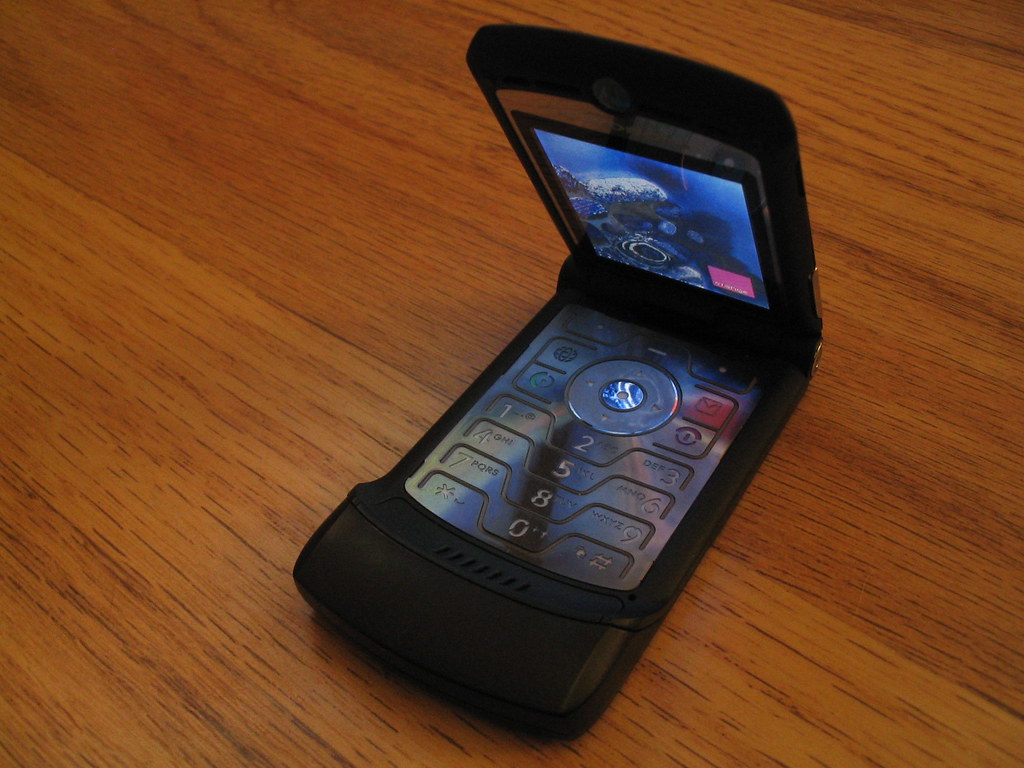
Flip phones, especially the Motorola Razr, turned basic communication into a status play. When the Razr arrived, its impossibly thin body and metallic shell made it feel more like jewelry than hardware, and early tech coverage treated the device as a must-have for anyone who cared about design. Snapping a flip phone shut after a call became its own kind of punctuation, a small performance that landline handsets never quite offered.
In high schools and college campuses, the Razr and its rivals signaled who was ahead of the curve. Custom ringtones, pixelated wallpapers, and tiny external screens let users show off personality within tight technical limits. The cool factor mattered because mobile phones were shifting from practical tools into social accessories, and owning a sleek flip phone suggested a person was already living in the always-connected future that the early 2000s kept promising.
3) Frosted Tips Hairstyles
Frosted tips turned hair gel and bleach into a cultural moment. The look, with short spikes capped in blond, spread quickly through music videos and teen TV, helped along by boy bands like *NSYNC and their carefully styled appearances on MTV’s Total Request Live. For young men, copying those frosted tips was an easy way to borrow some of that pop-star confidence without needing a record deal or choreography.
On school buses and in mall salons, the style signaled that someone was paying attention to what aired after school. It also reflected how the early 2000s blurred lines between everyday fashion and performance, as regular kids adopted stage-ready hair for daily life. Frosted tips may draw laughs now, but at the time they represented a willingness to experiment, and a belief that standing out in a crowd was worth the extra bottle of peroxide.
4) Bedazzled Clothing
Bedazzled clothing took the early 2000s love of shine and pushed it to the limit. Rhinestones marched across back pockets, hoodie logos, and even phone cases, turning everyday items into glittering billboards. Reality shows about aspiring pop groups, including behind-the-scenes series like Making the Band, showcased performers in sparkling stage outfits, encouraging viewers to recreate the same look at home with stick-on gems and handheld bedazzling tools.
Retailers leaned into the craze, with rhinestone jeans and logo tees flying off shelves at tween-focused chains such as Limited Too. For many young shoppers, those crystals were a first taste of customizing clothes, a way to claim a bit of star power on a mall budget. The trend also hinted at how fashion and entertainment were merging, as fans tried to match the hyper-styled, camera-ready aesthetic they saw on music channels and in glossy magazines.
5) Tamagotchi Virtual Pets
Tamagotchi virtual pets proved that a tiny plastic egg could feel like a real responsibility. Even into the early 2000s, kids clipped the devices to backpacks and belt loops, checking the pixelated screens between classes to feed, clean, or discipline their digital creatures. According to Bandai’s own reporting, more than 40,000,000 Tamagotchi units had been sold globally by 2004, a figure that shows how deeply the concept of a pocket pet had sunk into youth culture.
That number mattered because it hinted at a new relationship between children and technology. Instead of just playing games, users were expected to care for something that could “die” if ignored, turning beeps into emotional stakes. The popularity of Tamagotchi helped normalize the idea that digital companions could be meaningful, paving the way for later social apps and games that asked players to check in constantly or risk losing progress, status, or virtual friends.
6) Y2K Metallic Fashion
Y2K metallic fashion captured the early 2000s obsession with the future, even as the calendar had already flipped. Shiny silver pants, holographic tops, and reflective jackets appeared in teen magazines that framed metallic fabrics as the perfect way to dress for a new millennium. Features on Y2K metallic outfits paired those pieces with chunky platform shoes, promising readers they could look like they had just stepped off a spaceship and onto a dance floor.
In practice, the look turned school hallways and suburban parties into low-budget sci-fi sets. The trend showed how fashion was channeling both optimism and anxiety about technology, wrapping bodies in materials that looked more like hardware than clothing. Even if the future did not arrive with flying cars, metallic pants and platforms let people feel like they were dressing for a world where anything, at least in theory, might be possible.
7) Pogs Milk Cap Game
Pogs, the milk cap game, staged a surprising comeback on playgrounds around 2000. Long before that revival, industrious children in Hawaii had turned cardboard milk caps into playing pieces inspired by the Japanese game Menko, a history traced in a look at the weird origins of Pogs. By the early 2000s, those simple discs were once again stacked on cafeteria tables, where kids slammed heavy “slammers” to flip and win their friends’ collections.
Schools sometimes tried to ban Pogs because the trading and winning felt uncomfortably close to gambling, which only made the game seem cooler. The revival showed how analog trends could still compete with emerging digital distractions, as long as they offered social interaction and a sense of risk. For a brief window, a handful of cardboard circles could carry as much playground status as the newest handheld console.
8) AOL Instant Messenger (AIM)
AOL Instant Messenger turned home computers into social lifelines. In the early 2000s, logging into AIM after school was as routine as homework, with buddy lists lighting up as classmates came online. Features like buddy icons and carefully curated away messages let users broadcast their moods, crushes, and favorite song lyrics to anyone who clicked their screen name, turning even absence into a kind of performance.
The platform mattered because it shifted teen social life into a semi-private digital space, one that parents often struggled to monitor. Conversations that once happened on landlines or in person moved into chat windows, where screen names and status messages shaped identity. AIM helped normalize the idea that friendships and drama could unfold in real time on a screen, laying groundwork for the always-on social media culture that would follow.
9) Mini Skirts and Velour Tracksuits
Mini skirts and velour tracksuits defined a particular brand of early 2000s glamour. Stars like Paris Hilton were photographed in coordinated velour sets paired with tiny skirts or low-rise pants, an aesthetic captured in coverage of her 2003 outfits. The look blended casual comfort with conspicuous branding, as logos stretched across backs and hips in looping script.
For fans, copying that style meant embracing a kind of everyday luxury, even if the tracksuit came from a local mall instead of a high-end boutique. The combination of soft fabric and bold cuts reflected a broader early 2000s belief that loungewear could be aspirational, not just practical. It also showed how celebrity street style was starting to drive mainstream fashion directly, with paparazzi photos functioning as de facto lookbooks for an entire generation.
10) Lava Lamps as Dorm Decor
Lava lamps bubbled back into relevance as essential dorm decor in the early 2000s. Reports on home furnishings trends noted that sales of lava lamps jumped by about 30 percent as students snapped them up for college rooms, treating the slow-moving blobs as a low-cost way to make generic housing feel personal. The warm, shifting light offered a softer alternative to harsh overhead fixtures, perfect for late-night conversations and study sessions.
Beyond aesthetics, the lamps signaled a desire for retro cool in an era otherwise obsessed with the next big thing. Owning a lava lamp suggested a person appreciated analog quirks alongside new gadgets, blending 1970s nostalgia with early broadband culture. That mix of old and new helped define the early 2000s dorm room, where a glowing lamp might sit beside a bulky desktop computer and a stack of burned CDs.
11) Baggy Cargo Pants
Baggy cargo pants gave early 2000s fashion its slouchy, utilitarian edge, especially for women in skate and streetwear scenes. Skate magazines highlighted how oversized cargos paired with graphic tees and chunky sneakers created a look that rejected the ultra-feminine silhouettes dominating pop music videos. Multiple pockets were not just decorative, they held wallets, flip phones, and even small cameras, turning the pants into wearable storage.
The style mattered because it offered an alternative to the body-conscious trends of the same era. For many young women, baggy cargos felt more practical and less exposed than low-rise jeans or mini skirts, while still reading as undeniably cool. The popularity of the look hinted at a quiet pushback against narrow ideas of femininity, showing that comfort and movement could be just as stylish as curve-hugging cuts.
12) Bratz Dolls
Bratz dolls arrived in 2001 with oversized heads, dramatic makeup, and outfits that looked ripped from club flyers, instantly challenging Barbie’s long-held dominance. Industry reporting noted that within a short time, the line was generating about 500,000,000 dollars in sales, a sign that the dolls’ edgier fashion and diverse characters were resonating with kids who had grown up on early 2000s pop culture. Their wardrobes mirrored real-world trends, from low-rise jeans to metallic tops and tiny handbags.
Parents and critics debated whether the dolls’ heavy eyeliner and skimpy clothes sent the right message, but their popularity was undeniable. Bratz showed that children were paying close attention to the styles they saw on television and in music videos, and they wanted toys that reflected that world. In doing so, the dolls helped cement the early 2000s aesthetic in plastic form, turning a decade’s worth of fashion experiments into something kids could literally hold in their hands.
More from Vinyl and Velvet:

Leave a Reply