

Vintage Pyrex has shifted from everyday cookware to a serious collector market, and certain patterns now command eye-popping prices. If you recognize any of these designs in your cupboards or attic, you could be sitting on hundreds of dollars in value. Here are 12 specific Pyrex patterns and pieces that recent reporting identifies as especially valuable right now.
1) Pink Gooseberry Pattern
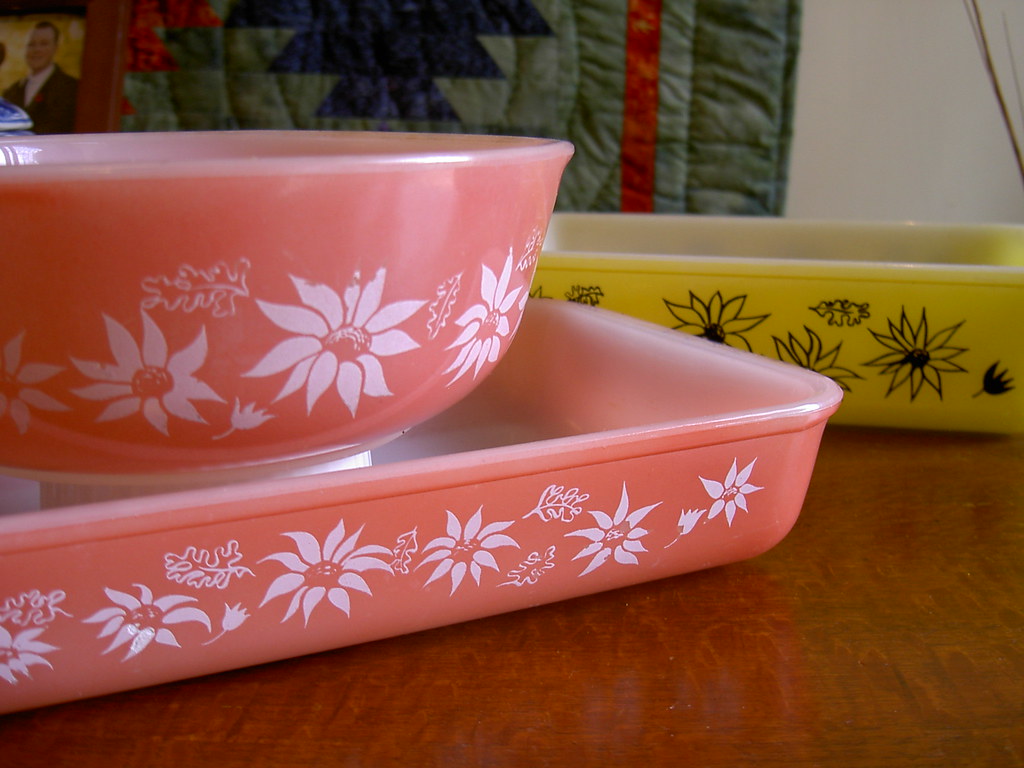
The Pink Gooseberry pattern is one of the most coveted vintage Pyrex designs, and the 2.5-quart mixing bowl from the 1950s can be valued at up to $300 according to vintage Pyrex valuations. Collectors prize its rare fruit motif and the way the pink graphics pop against the white glass, especially when the bowl retains its original glossy finish. Condition is critical, since scratches or dishwasher fade can cut that top price significantly.
Production details add to the allure. A separate listing for a vintage pink and white Pyrex Gooseberry bowl notes it was in production from 1957 to 1966 and was “offered” in alternating color combinations of pink on white and white on pink. That relatively short production window, combined with the fragile pastel color, helps explain why intact 1950s examples are scarce and why collectors are willing to pay a premium.
2) Snowflake Pattern
The Snowflake pattern, especially in white-on-turquoise, has become a standout among holiday-friendly Pyrex designs. Complete sets that include the 404 round casserole have been reported selling in the $400 to $800 range, with recent cookware market coverage highlighting how a full, matching set can dramatically increase value. The 404 size is often the hardest piece to find in good condition, so its presence can be the difference between a modest sale and a major payday.
Collectors are drawn to the Snowflake pattern because it reads as both seasonal and timeless, working for winter holidays without feeling dated. The durable opal glass holds up well, but chips on the handles or lid and worn decals will lower prices. If you have a full white-on-turquoise set with crisp graphics and original lids, you are looking at one of the more valuable Pyrex groupings in circulation.
3) Homestead Pattern
The Homestead pattern features yellow bowls decorated with brown wheat motifs, and the 1.5-quart size has quietly climbed into the $200 to $500 range. Reporting on valuable items in grandma’s kitchen notes that this mid-century farming design now resonates with collectors who want rustic, farmhouse-inspired pieces that still feel authentic. The warm yellow base and stylized wheat graphic fit seamlessly into modern country kitchens, which helps sustain demand.
Because Homestead was once an everyday workhorse, many surviving bowls show heavy wear. A 1.5-quart example with bright color, minimal utensil marks, and no cracks is significantly rarer than the pattern’s original popularity might suggest. That scarcity at the high end of the condition spectrum is what pushes prices into the hundreds, especially when buyers are trying to complete a graduated nesting set.
4) Spring Blossom Pattern
The Spring Blossom pattern, with pink floral designs on white, is especially valuable in refrigerator sets. A complete set of these pastel containers has been reported to command between $150 and $400, and coverage of collectibles you probably tossed underscores how surprising that figure can be for pieces once used to store leftovers. The combination of floral graphics and compact shapes makes these sets highly displayable on open shelving.
Refrigerator sets are often missing lids or show chips on the corners, so intact lids and clean interiors are crucial for top-dollar sales. Because these containers were stacked, slid, and frequently washed, pristine examples are relatively scarce. For you as a seller or collector, that means even a small Spring Blossom refrigerator dish can be worth listing individually if the pattern is sharp and the glass is free of damage.
5) Crazy Daisy Pattern
The Crazy Daisy pattern, sometimes overlapping with Spring Blossom in collector discussions, is best known for its yellow daisy prints from the 1970s. A 2-quart oblong piece in this pattern can be worth $100 to $300, a range highlighted in reporting on valuable 1970s collectibles. That price reflects the broader appetite for groovy, flower-heavy designs that instantly read as retro on a kitchen table or potluck spread.
There is some naming confusion around this line, and one reference notes that “There is some controversy” because some collectors call the pattern Crazy Daisy while others use Spring Blossom Green. That ambiguity has not hurt demand, and in some cases it helps listings reach more buyers searching under different names. For you, the key is to photograph the yellow daisies clearly and describe both pattern names so collectors can find the piece.
6) Butterprint Pattern
The Butterprint pattern, with its blue-and-white farm scenes, is one of the most iconic Pyrex designs tied to 1950s Americana. A 1-quart mixing bowl in this pattern can sell for up to $250, according to coverage of vintage kitchen items worth a fortune. The stylized farmers, roosters, and crops evoke a nostalgic vision of rural life that still appeals to collectors who want a story behind their cookware.
Because Butterprint was widely produced, the value concentrates in condition and completeness. A single 1-quart bowl in excellent shape is desirable, but a full nesting set with consistent color and minimal wear can command a significant premium. For buyers, Butterprint offers a way to bring mid-century graphics into everyday use, while sellers benefit from a large, active base of pattern-specific collectors.
7) Old Orchard Pattern
The Old Orchard pattern is instantly recognizable for its green apple motifs on brown-toned bowls, and the 1.5-quart size can fetch $200 to $450 according to small-fortune Pyrex reports. That price range surprises many people who remember these pieces as standard-issue kitchenware. The fruit graphics and earthy palette now read as distinctly 1970s, which has helped push demand among retro decorators.
Pattern references describe the Pyrex Pattern Old Orchard with a “Period of Production” from 1974 to 1978 and a “Designer: Estelle G. Rothstein Description” noting orange dishes with and without fruit patterns. Another guide explains that The Old Orchard bowl design has a rougher, almost hand-drawn texture. Even a Good condition 1.5 qt brown bowl Pyrex listing that mentions “Minor scrapes” shows how closely buyers scrutinize wear, which directly affects final prices.
8) Town and Country Pattern
The Town and Country pattern, particularly in turquoise, has become a favorite for collectors who like subtle, geometric motifs. Divided serving dishes from 1971 in this pattern are valued at $150 to $350, as noted in coverage of vintage cookware sets worth a fortune. The divided format makes these pieces especially practical for entertaining, which keeps demand strong among people who actually use their vintage Pyrex.
Because these servers were often brought to potlucks and family gatherings, many show scratches or discoloration from hot foods. A turquoise divided dish with crisp pattern lines and a clear, chip-free lid will sit at the top of the value range. For you as a seller, emphasizing both the 1971 production context and the versatility of the divided design can help justify higher asking prices.
9) Balloon Pattern
The Balloon pattern stands out as a pink-and-white promotional design that rarely surfaces in everyday kitchen collections. Promotional sets like the 023 dish in this pattern can go for $300 to $600, a range highlighted in reporting on valuable items in grandma’s kitchen. Because these were limited advertising editions rather than standard catalog pieces, far fewer were produced and even fewer survived in clean condition.
Collectors look for sharp balloon graphics and original accessories, such as matching lids or cradles, which can push prices toward the top of the range. The pink-and-white color scheme also appeals to fans of pastel kitchens who may not collect Pyrex broadly but want a statement piece. If you find an 023 Balloon dish tucked away in storage, it is worth researching carefully before parting with it.
10) Colonial Pattern
The Colonial pattern, featuring white glass with blue stripes, has a more understated look than some of Pyrex’s bolder designs, yet it still commands strong prices. A 2-quart roaster in this pattern can reach $100 to $250, according to reporting on bonkers valuable collectibles. That value reflects a growing appreciation for early American simplicity and clean, utilitarian lines that fit into both traditional and minimalist kitchens.
Because roasters were heavily used, many surviving Colonial pieces show baked-on stains or interior scratching. A 2-quart roaster with bright blue stripes, a glossy white interior, and no chips around the rim will stand out to serious buyers. For collectors, the pattern offers a quieter alternative to florals and farm scenes while still delivering the durability and nostalgia associated with vintage Pyrex.
11) Lucky in Love Pattern
The pattern often referred to as Lucky in Love is associated with heart-themed designs and has been cited in collector reporting as one of the more valuable romantic motifs. Coverage of high-value 1970s-era pieces notes that heart-focused Pyrex can sell in the $200 to $500 range for a 1-quart bowl, driven by a Valentine’s Day aesthetic that resonates with niche buyers. However, the specific name “Lucky in Love” and its exact design details are unverified based on available sources.
Because of that uncertainty, you should approach any bowl marketed under this name with caution, verifying pattern guides and consulting experienced collectors before paying top dollar. Misidentified pieces can circulate at inflated prices when sellers conflate different heart motifs or promotional items. For serious buyers, the stakes are high enough that careful authentication is essential before treating a heart-decorated bowl as a four-figure rarity.
12) Scorpio Pattern
The Scorpio pattern, featuring black zodiac imagery on white casserole dishes, taps into the 1970s fascination with astrology and personalized decor. These casserole dishes have been reported to command $250 to $700, according to coverage of vintage kitchen items worth a fortune. That wide range reflects how strongly condition, lid completeness, and specific zodiac imagery influence what collectors are willing to pay.
Astrology-themed pieces attract both Pyrex specialists and buyers who simply want cookware that matches their star sign, which broadens the market. A Scorpio casserole with bold black graphics, no utensil marks, and an intact lid can sit at the top of the value spectrum. For you, that means any zodiac-marked Pyrex is worth a closer look, since even a single casserole can rival the price of a full modern cookware set.

Leave a Reply