

That copper-colored coin in your change jar might be worth far more than one cent. Recent reporting has highlighted rare pennies that can sell for up to $2.3 million, and others that routinely bring thousands at auction. Here are 12 specific pennies to look for if you want a realistic shot at turning pocket change into as much as $10,000 or more.
1) 1943 Copper Penny
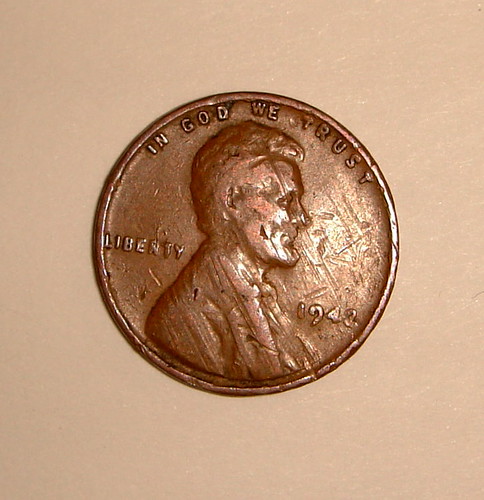
The 1943 Copper Penny is the classic “needle in a haystack” coin, a wartime error that should not exist. In 1943, Lincoln cents were supposed to be struck on zinc-coated steel planchets so copper could be diverted to the World War II effort, yet a tiny number were accidentally made in bronze. Modern coverage of rare cents notes that a genuine 1943 copper example can be worth up to $2.3 million in the highest condition tiers, putting it in elite company among all U.S. coins.
Earlier accounts of this Copper Wheat rarity describe how one piece realized $40,000 at its first major auction, a figure estimated at about $423,000 in today’s dollars, underscoring how demand has compounded over time. Lists of “Pennies That Could Make You Rich” also point out that a 1943 Copper Penny can easily clear $150,000 even outside record-setting sales. For you, the stakes are simple: if a brown 1943 cent sticks to a magnet, it is steel and common, but if it does not, professional authentication could be life changing.
2) 1955 Doubled Die Obverse Penny
The 1955 Doubled Die Obverse Penny is one of the most dramatic and accessible error coins you can realistically find. On genuine pieces, the date and the word “LIBERTY” show strong doubling that is visible without magnification. Modern guides to collectible change explain that well-preserved examples of this Lincoln cent can be worth thousands, especially in higher mint-state grades where eye appeal drives competition.
Specialist breakdowns of the Double Die Lincoln Cent value range cite prices from $1,645 up to $32,400 depending on condition, which illustrates how much the grade on the holder matters. A video focused on the “1955 Doubled Die Obverse Lincoln Penny Worth $2000” reinforces that even mid-grade coins can cross four figures. For everyday collectors, that means checking older rolls from banks or inherited jars is worth the effort, because this error circulated widely before anyone realized how unusual it was.
3) 2025 and Later Minted Pennies
Newly minted pennies from 2025 and later occupy a different kind of opportunity, tied to policy rather than a single dramatic error. With federal penny production ending, recent coverage has asked whether these last issues are worth saving or selling now, before they disappear from circulation. When a denomination stops being produced, collectors often rush to assemble date sets, and that surge in demand can push up prices for the final years.
For you, the key is condition and timing. Uncirculated rolls from the last production runs, especially those with low mintages or packaging from official sets, are likely to attract the most interest. The broader trend is clear: as cash usage declines and small coins vanish from daily transactions, even ordinary-looking late-date cents can become nostalgic artifacts, much like discontinued foreign coins that now sell for premiums online.
4) 1909-S VDB Lincoln Penny
The 1909-S VDB Lincoln Penny is the cornerstone of many serious cent collections and a textbook example of how a tiny design detail can drive big money. Struck in San Francisco with the initials “VDB” of designer Victor David Brenner on the reverse, this early wheat cent appears on modern rundowns of the top 25 most valuable pennies, where it is described as potentially worth thousands in attractive grades. Scarce mintage and immediate controversy over the prominent initials combined to create a classic key date.
Some investment-oriented lists, such as “These 12 Pennies That Could Make You Rich,” estimate a value range of $1,000 to $50,000 for the 1909-S VDB depending on condition and certification. That spread highlights why authentication and grading are crucial if you think you have one. For collectors, owning this coin often marks the transition from casual change searching to building a structured Lincoln set, which in turn supports a robust market for high-end examples.
5) 1914-D Lincoln Penny
The 1914-D Lincoln Penny is another heavyweight among wheat cents, prized for its low mintage and persistent scarcity in nice condition. Modern rankings of the top 25 most valuable pennies consistently include this Denver issue, noting that high-grade pieces can exceed $10,000. Unlike some error coins, this is a regular-issue cent, which means it hides in plain sight among other brown wheat pennies.
Price guides that track the Double Die Lincoln Cent and other key dates show how sharply values climb as you move from heavily worn to lightly circulated or uncirculated examples. For the 1914-D, even modestly circulated coins can cost hundreds, while sharply struck, original pieces can reach into five figures at auction. If you are sorting old family collections, checking every 1910s wheat cent for a small “D” mint mark under the date is a simple step that could have a big payoff.
6) 1922 Plain Lincoln Penny
The 1922 Plain Lincoln Penny is famous for what it lacks, not what it shows. In 1922, all Lincoln cents were struck in Denver, yet a small number left the presses without a visible “D” mint mark, creating the “Plain” variety that collectors chase today. Modern lists of the top 25 most valuable pennies highlight this no-mint-mark error as a coin that can bring thousands, especially when the date and details are strong.
Specialized value breakdowns for the 1922 “Plain” Lincoln Cent cite ranges from $329 up to $57,500, reflecting how rare sharply struck examples are. For you, the challenge is separating true Plain pieces from weakly struck coins where the “D” is merely faint. That is why serious buyers rely on third-party grading services, and why a genuine Plain cent in a reputable holder can be a centerpiece of a Lincoln collection and a significant asset.
7) 1969-S Doubled Die Obverse Penny
The 1969-S Doubled Die Obverse Penny is a modern error with values that can rival classic rarities. On authentic pieces, the date and inscriptions show bold doubling, and experts warn that this variety is heavily counterfeited. A widely cited guide to spotting this coin notes that a genuine example in your pocket change could be worth about $7,000 or more, depending on condition and certification.
More detailed numismatic research on the 1969-S Lincoln Memorial Cent reports that Circulated doubled die cents are generally worth $10,000 USD and up, while uncirculated pieces often sell for $35,000 to $50,000. Another valuation range for the 1969-S Double Die Lincoln Cent runs from $41,125 to $126,500, showing how aggressively top collectors bid. For everyday searchers, that makes every 1969-S cent worth a second look under magnification, especially if you live in regions where older rolls still surface at banks.
8) 1931-S Lincoln Penny
The 1931-S Lincoln Penny is a low-mintage Depression-era issue that quietly commands strong prices. Modern rundowns of the top 25 most valuable pennies point out that this San Francisco cent can be worth thousands in higher grades, even though it looks like an ordinary wheat penny at first glance. Many were saved at the time, but truly pristine examples remain scarce.
Price lists that group the 1931-S with other key dates show a steep jump between lightly circulated and uncirculated coins, reflecting how collectors pay premiums for original luster and clean surfaces. For you, that means a 1931-S pulled from an old album or safe deposit box could be significantly more valuable than a similar coin that spent decades in circulation. As more people learn about these key dates, competition for the best survivors is likely to intensify.
9) 1944 Steel Penny
The 1944 Steel Penny is the flip side of the 1943 copper story, a wrong-planchet error created when leftover steel blanks were struck after the Mint returned to copper. Modern value lists that include the 1944 Steel Penny among the top 25 most valuable cents describe it as a coin that can command high prices, often in the tens of thousands. “Pennies That Could Make You Rich” estimates a range of $50,000 to $100,000 for standout examples.
Earlier educational snippets sometimes confuse the wartime compositions, but the market reality is clear: a genuine 1944 Steel Penny is far rarer than the common 1943 steel cent. For you, the quick test is again a magnet and the date. If you find a silvery 1944 cent that sticks to a magnet, professional authentication is essential, because the stakes are high and counterfeits are common.
10) 1958 Doubled Die Obverse Penny
The 1958 Doubled Die Obverse Penny is a subtle but extremely valuable error, with doubling that is less dramatic than the 1955 issue but far scarcer. Modern coverage of collectible cents notes that some 1958 doubled die examples are worth thousands, especially when certified in high mint-state grades. Because the doubling is more modest, many pieces likely slipped through pockets unnoticed for years.
Specialist price ranges for rare Double Die Lincoln Cent varieties show how a small population can drive exponential value, with top coins bringing five figures at auction. For you, this underscores the importance of checking not only the obvious dates but also later 1950s rolls under good lighting. As more collectors focus on error varieties, the 1958 doubled die has become a trophy coin that can significantly boost the value of an otherwise ordinary Lincoln set.
11) 1972 Doubled Die Obverse Penny
The 1972 Doubled Die Obverse Penny offers a more attainable path into high-value errors, with bold doubling that many hobbyists can spot. Modern reporting on rare cents notes that certain doubled die pennies are among the coins that could be worth up to $2.3 million in the most extreme cases, and while the 1972 issue does not reach that level, top examples still bring impressive sums. Multiple recognized varieties exist, but the strongest one shows clear doubling on “IN GOD WE TRUST” and the date.
Value guides that group the 1972 doubled die with other modern errors show prices climbing into the thousands for sharply struck, uncirculated coins. For you, that makes early 1970s rolls a smart hunting ground, especially if they have been sitting untouched since they were issued. As error collecting becomes more mainstream, coins like the 1972 doubled die bridge the gap between everyday pocket change and the six-figure rarities that dominate headlines.
12) 1982 No Mint Mark Penny
The 1982 No Mint Mark Penny sits at the crossroads of composition changes and modern scarcity. In 1982, the Mint shifted Lincoln cents from a mostly copper alloy to a copper-plated zinc core, creating multiple varieties that collectors now sort by weight and design. Transitional errors and no-mint-mark pieces from this period are increasingly viewed as worth saving or selling now, especially as penny production ends and attention turns to the last decades of the denomination.
For you, the practical step is to separate 1982 cents by weight using a small digital scale and to watch for unusual die characteristics or missing mint marks. While individual 1982 varieties may not yet match the five-figure levels of earlier key dates, the broader trend in collectibles, from rare coins to a 52p penny stock touted as potentially turning £10,000 into more by 2026, shows how small, overlooked assets can gain outsized value. As cash usage fades and attention shifts to digital payments and even high-value 25-cent coins, these transitional pennies could become the next focus for collectors building complete modern sets.

Leave a Reply